Episode 1 · Guest: Nick Hutchison, Founder of BookThinkers
Nick Hutchison on Reading, Presence & Building BookThinkers
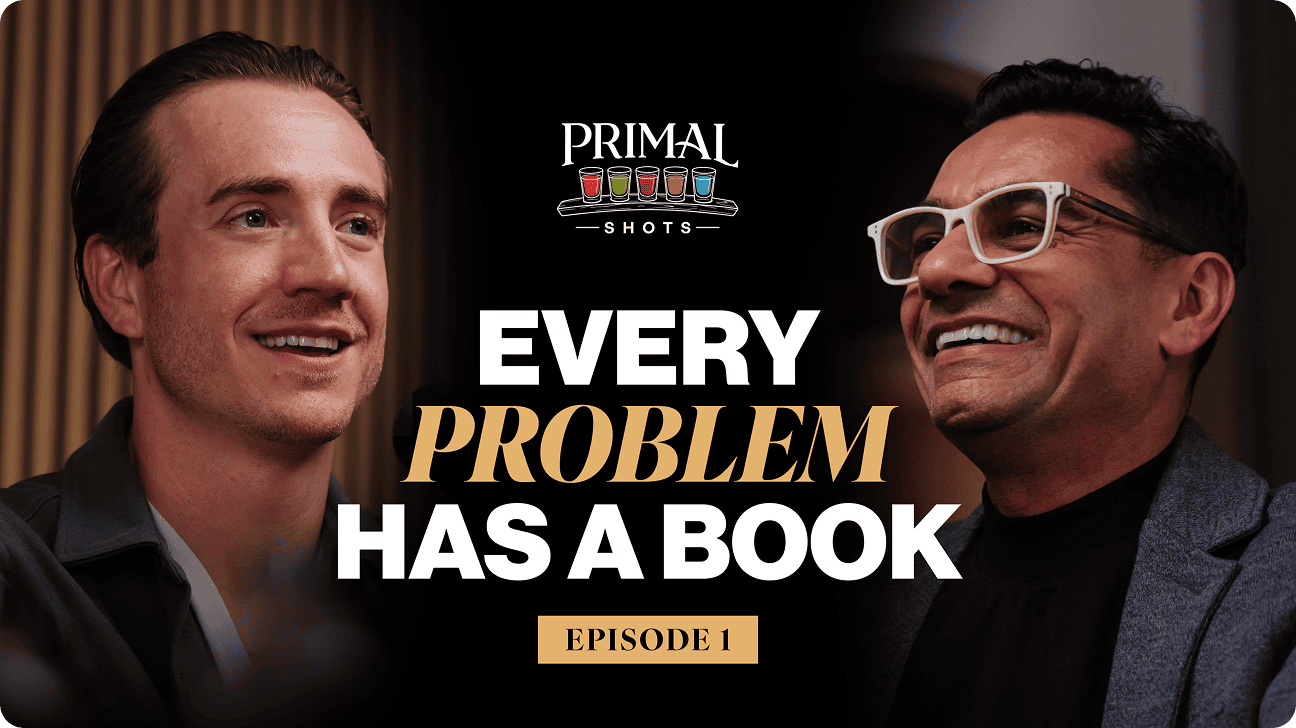
Nick Hutchison built BookThinkers into one of the leading platforms connecting authors with readers, but he wasn't always a reader himself. In this episode, Dr. Kavin Mistry and Nick trace how a single decision (grabbing ten books at a Barnes & Noble) turned into a seven-figure business, and why staying present might be the most underrated skill of the decade.
highlights
What You'll Learn
- Nick's five-minute grounding routine before his son wakes up (sunlight, bare feet, breathwork)
- Why “diluted focus” and “singular focus” both have a place in a productive week
- The penny-on-the-ground story that convinced Nick to quit his job
- Why Gen Z's declining reading comprehension worries him, and what he's doing about it
- How the Harvard longevity study ties quality relationships to a longer, healthier life
There is a book out there to solve every single problem that we face as H.U.M.A.N. beings.
— Nick Hutchison
Listen on:




Key Takeaways
Presence is trainable. Nick's morning routine (sunlight, grounding, breathwork) exists to interrupt the “ping-pong” between memory and anticipation before the day starts.
1/4
Focus isn't all-or-nothing. Nick spends 80% of his time on Book Thinkers and protects 20% for other pursuits, a ratio he ties directly to mastery research.
2/4
Long-form reading builds executive function. Nick connects the decline in physical book reading among young people to measurable drops in attention span and IQ.
3/4
Relationships outperform metrics. Citing the Harvard longevity study, both Nick and Dr. Mistry point to relationship quality, not fitness or diet alone, as the top predictor of a long, happy life.
4/4
Guest Bio
Nick Hutchison
Nick Hutchison is the founder of BookThinkers, an agency that has helped hundreds of authors bring their books to market. He hosts a podcast interviewing bestselling authors and has completed multiple Ironman triathlons.
Resources
SUBSCRIBE TO ALIGNED LIFE
Aligned Life Newsletter
Discover rituals, routines, and neuroscience-backed insights in Aligned Life, Dr. Kavin Mistry’s monthly newsletter, to help your brain and body thrive together.
Share With a Friend
Transcript
Dr. Kavin Mistry & Nick Hutchison
00:00Welcome & Introduction
Nick Hutchison:
Books changed my life. That’s gone a little punchy. Punchy? Yes. I have a tattoo on my neck that says Memento Mori, which is Latin for remember, you’re going to die when you realize you have a finite life. You start working on infinite things. And I want people to say Nick was a creator. He created value. He impacted people in a positive way. Nick, it raises your testosterone. So there you go. You’re gonna be even more muscular by the end of this, primal shot’s journey. Gen Z is the first generation in human history to have a lower average IQ and lower reading comprehension and lower math skills than the previous generation. There is a book out there to solve every single problem that we face as human beings. Cheers. Cheers.
Dr. Kavin Mistry:
Welcome to Primal Shots, where we go from the ground to the cosmos. And as the shots get healthier, the questions get deeper. And today, joining us on this primal journey is Nick Hutchinson, who is the founder of Book Thinkers, which has become one of the leading platforms for authors and influencers. I cannot wait to get into the conversation with him. So, Nick, welcome to Primal Shots.
Nick Hutchison:
I’m excited to be here. As the shots get healthier, the conversation gets deeper, so I’m excited for it.
Dr. Kavin Mistry:
That’s right, So, Nick, first off, I have to say, when I first interacted with you and book thinkers. And one of the things that really stood out was the ecosystem and the community you have created. And when I was looking at the roster of guests and I said, we have to have Nick because it has been very impressive what you’ve done with your platform. And I want to get into that. And I’m sure people are viewing this and listening to this. Want to learn more about you. But we will journey to this step by step. And so why don’t we just dive right in? the first thing for people in this day and age, it’s not about information, but it’s about transformation, right? you can get information from a book, but is it transforming you? That’s a whole different question. And one of the pivotal things for transformation is our ability to be present and have that awareness. And we’re going to start there. Our first shot, Nick,
02:14Grounding Shot: Morning Routine & Presence
Dr. Kavin Mistry:
This is our grounding shot. And the purpose of this is to bring us in the present. So cheers.
Nick Hutchison:
Cheers. I’m excited. Let’s taste it. Mm. It tastes great.
Dr. Kavin Mistry:
I love the taste of that shot. What do you think? What? Ingredients wise.
Nick Hutchison:
Oh, I told you, I’m going to be bad at this. Let’s see.
Dr. Kavin Mistry:
Carrot, Okay. You got it, lemon. All right. Okay.
Nick Hutchison:
It’s tangy I definitely. Three ingredients.
Dr. Kavin Mistry:
One more ingredient which you may or may not taste.
Nick Hutchison:
Turmeric.
Dr. Kavin Mistry:
Are. You are on the ball, you see? You said you were going to be bad at this. That is fantastic. So turmeric is the. I guess, power ingredient there. Because, one of the things is that in order to have clarity and be present in our day, one is there has to be a level of clarity and detox, and we start the day because we want to start off with a clean slate and approach the day with new eyes. And so that brings us to the question, Nick, with everything going on, and I know you’re building this book Thinkers platform, working with authors, working with other influencers. How does Nick start his day to be present?
Nick Hutchison:
It’s a great place to start. I am famous for having a very long, very detailed morning routine, so I don’t know how much time we want to dedicate to this, but I will say that my routine has changed a little bit since having my son Levi about 1920 months ago, and I have a little bit less time to myself than I used to, because he wakes up every day at 730. So I try to get a few foundational pieces of my routine done before he wakes up. I’ll wake up in the morning, I’ll brush my teeth, I go downstairs, I bring the dog out. Now, an important part of bringing the dog out is actually grounding in sunlight. So I go out into the backyard with my shoes off. I feel the grass. I feel the earth on my bare feet and in the corner of my backyard, over the fence and around my house is where the sun peeks through. So within five minutes of waking up, I get early sunlight exposure into my eyes. I try to look at the sun for as long as I can while I’m grounding, feed the dog, and then I go upstairs and I’ll do a couple of different things depending on where I am in life and at what stage my routine has progressed or regressed. But I’ll tell you about today. So today I sat down in front of my red light therapy device and I did three rounds of Wim Hof breathing, which is something that fluctuates with me sometimes I’ll be really into it for a few months. Sometimes I’ll trade it out for something else, just like silent meditation, which has been a big part of the last ten years, actually went and got certified, I guess, for Transcendental Meditation. So I did that for a long time. And so I changed what type of mindfulness activities I do every morning. And then I’ll do a little bit of journaling sometimes. Sometimes I’ll answer a few emails, I’ll get some reading done. But today, that’s the very first couple of things that I do when I wake up in the morning.
Dr. Kavin Mistry:
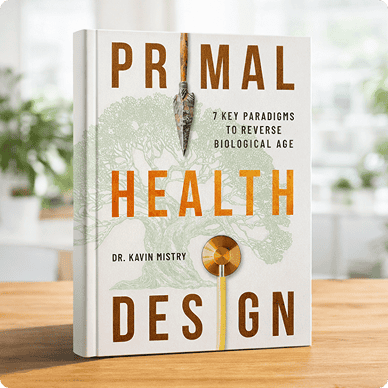
I love it, my book, the first chapter is connecting with the earth, and everything you said. Those are some of the key takeaways I talk about and so important. it’s amazing just the basic things that we can do to change our life. in terms of wellness. But I’m sure all of that really puts you in the present. Right. Gives you that clarity for the day. Because I think that just randomly beginning the day you can you get just caught up, right, with all the just, all the noise. Right?
Nick Hutchison:
And yeah, I think so too. When I started my personal development journey about ten years ago, I was an emotionally unintelligent person. And so I studied emotional intelligence. I wanted to have a little bit more control over what happens when an input enters my brain, just that little fraction of a second where you either react or are you choose a better option. And so I started meditating about ten years ago, and I found that through meditation, through the different mindfulness activities and exercises that I’ve participated in over the last decade, I’ve found a little bit more control. I have a little bit more of a choice in how I react, and that’s also created a lot of presence in my life. I feel more at peace. I’m not worried about what’s happening later in the day during my morning routine. I’m not worried about what happened yesterday during my morning routine. I’m in the moment and I love being in the moment. That’s where I feel at home. And so yeah, it’s important to start the day in control. Otherwise if I just get thrown into the chaos, I mean, the rest of my day is going to be a mess and I don’t want that.
Dr. Kavin Mistry:
Nick, from a neuroscience perspective, they say that we have all these wonderful faculties, right? But we tend to, in this day and age, tend to bounce back between our memory and our imagination. We think about regrets of the past or anxieties of the future, but we never exercise our awareness of the present. And that’s one thing I had to train is stop playing ping pong between the past and the future, because you’re always anticipating events. I have this trip coming up next month and everything like that. So you’re ping pong between the past and the future, but you’re not aware of what is in front of you, speaking of that. That brings us to
06:29Focus Shot: Mastery, Diluted
Focus & the 80/20 Rule
Focus & the 80/20 Rule
Dr. Kavin Mistry:
Our next shot, which is of our focus shot. And I will just have you dive right in and then we’ll talk about it.
Nick Hutchison:
All right. Cheers. Good. Cheers. Oh. That’s sweet. Sweeter than I thought it was going to be.
Dr. Kavin Mistry:
What do you think, ingredient wise?
Nick Hutchison:
I think. Cucumber. No.
Dr. Kavin Mistry:
Okay. Yes. One of them.
Nick Hutchison:
I think.
Dr. Kavin Mistry:
It’s an ingredient that you have tasted today. How about that? If that’s. That’s a.
Nick Hutchison:
Clue. Matcha. Green tea. Matcha. Nice.
Dr. Kavin Mistry:
Nick and I now I.
Nick Hutchison:
Can I had.
Dr. Kavin Mistry:
I had matcha tea right before this podcast. And so it was interesting about matcha, Nick. And you mentioned that you were cycling between coffee and matcha. What’s interesting about matcha? It has natural caffeine, but it’s paired with this ingredient called L thiamin. And what it’s a healthy and is a adaptogens. And it actually helps you maintain a balance, stress and focus. And so that’s our focus shot. And so speaking about focus here, I know that there are probably ten different things you can work on right. In terms of your business. And with everything happening with book thinkers and whatnot. And what are you focused on today? And then on, in this season, what is your where is your focus?
Nick Hutchison:
Well, just like you talked about balancing thoughts of the present and thoughts of the past, and what our goal is, really to be right in the middle. I piggy, I bounce back and forth between diluted focus and singular focus. I’m a multi passionate quickstart entrepreneur. I love chasing the shiny objects. I get a lot of sustainable energy from diversifying my focus in certain periods of life. But I know at the end of the day that in order to make progress in my business and therefore impact more people in a positive way. I have to use most of my time, leverage most of my time on the highest impact activities. And so today, my agency book thinkers, we have a full time staff of about 15 people. We serve hundreds of authors a year. That’s my primary focus. But every day I allow myself to focus on a couple of other activities as well. So I would say 80% of my day today is focused on bringing more value to my main business, which is book thinkers. And then 20% of my workday, I allow myself to chase those shiny objects. Now, outside of work, I try to shut the laptop and shut the phone off the minute the workday is over, because I’m also trying to be a very present and focused father and husband, and my wife and my son Levi, are a huge priority of mine, and I want to make sure that I show up every single day the best version of myself for them. And then if we add a third category. I’m also into the sport of Ironman triathlons. I just did my first half Ironman earlier this year. I have another one next weekend, and then I’ve got a full distance Ironman later this year. So I also spent a lot of time on my fitness in training, sort of the longer endurance activity. So like I said, diluted focus, multi passionate. But when I’m focused,
Dr. Kavin Mistry:
I love it. You look great by the way. Great shape you. You look like you’re in better shape since the last time I saw you. So you look you’ve been training. Yeah right. You’ve been training. Yeah. It shows, That’s awesome. one of the things you said, which I really like, is that you said you have a focus, but then you also have this wiggle room to play with some of the things that, maybe not in that main area that you’re working on. And what is interesting is, from my neuroscience perspective, right? we talk about this concept of mastery, right. And, you’ve heard the everybody’s heard about the 10,000 hour rule that, there are no experts there, just people who’ve done deliberate practice for 10,000 plus hours. What is interesting about that whole research is that when we start applying that to corporate, what has worked best is that you have to have an area of mastery where you’re spending 70%, 70 to 80% of your time, but then you have to leave that 20% to innovate. and so what was interesting about what you said is that you’re really following the recipe, whether it or not.
Nick Hutchison:
I didn’t know it but apparently.
Dr. Kavin Mistry:
But that is the recipe is that 7,080% of your time goes into mastery because you remain a master in that space, but then you have that 20% to work on innovation, to do something new. And, which, in the long run, that gives you the highest return. That brings us to our
10:29Endurance Shot: The Penny
Story & Quitting His Job
Story & Quitting His Job
Dr. Kavin Mistry:
Third chart. Nick. All right. This is the most colorful shot of our offering here. And. But here we go. Cheers. All right.
Nick Hutchison:
Yeah. It’s good. A little punching.
Dr. Kavin Mistry:
Punchy. Yes. Yes it is. Yes, What do you think?
Nick Hutchison:
I don’t know. It almost. The aftertaste was like a little bit of ginger. But it’s not the color of ginger, so. Like a, like, prune or cherry or something like that. I’m wondering where the color is coming from.
Dr. Kavin Mistry:
So you said you’re training for the Ironman. Right. So we talk about this is our endurance shot.
Nick Hutchison:
Okay.
Dr. Kavin Mistry:
Okay. And we talk about endurance. There are certain ingredients that are key players here. And one is beet juice.
Nick Hutchison:
Beet. There we go.
Dr. Kavin Mistry:
You see all the marathon runners, I’m sure, in your Ironman prep. that’s one of the things beet and it’s paired with pomegranate that’s giving you that very taste. But those two ingredients together they have polyphenols and nitrates which actually improve performance. And the kick is from a bit of cayenne pepper which gives it that kick which also is has a performance aspect to it. But this endurance shot segues into an important question that I want to ask you And I know last time I was at your Book Thinkers event and you shared a story which I want to hear a little bit more about. And, you took this idea of a platform from four authors from infancy to now, a seven figure company. And I know creating something like that is not easy. It has its ups and downs, and you’re dealing with different people. And I’m sure there are challenges that nobody knows about that only, and all the doubts and anxieties about starting a business like that. But maybe give us a little bit of a backstory. You had mentioned about leaving the traditional route and going down this path and about finding a coin, and that making a decision for you to follow this path. And maybe for the listeners and viewers of this, just walk us through that story, because I think it’s so important. Because endurance, it’s about what keeps us going. And I think all of us need that meaningful drive. And I want to know what was the meaningful drive that took you through that journey.
Nick Hutchison:
I love telling this story, so thank you for the opportunity. When I was growing up, what usually surprises most people that know about book thinkers is that I was not much of a reader. Growing up, I was more of the athlete stereotype, not much of the academic. And so I was always the capable student. I took AP classes, but I was famous for having a 0% homework average in AP calculus. Right? So that’s who I was in high school, and I carried a lot of that same energy with me into college. But when I was in college, I became fascinated by money and the idea of earning money when I graduated. So I took this internship girl. Going into my senior year of college at a local software company, it was a sales internship. And my boss at the time, Kyle, would bring me on these local sales trips and we’d be in the car sometimes for a couple of hours together. In fact, we came to New York City a couple of times from Boston just to show you how much time we spent in the car, and he would get sick and tired of listening to me tell him how great I was. And so he would say, hey, Nick, can we put on some business podcasts? And so I said, sure, as if I’d listen to them all the time. I’d never listen to them. But I said, sure. I wanted to be cool. And so he would play these long episodes where people would show up and they would talk about what they did to become successful. And as I continued listening to them both with my boss, Kyle, but also independently as I was as I would commute to and from work, I noticed that so many of these successful people in many different disciplines would give at least some credit for their success to the books that they had read, and a lot of the personal development and business classics continued to pop up over and over again. And so I was faced with this question one day of if all of these brilliant people who are making a lot of money, which is what I was interested in at the time, if they’re all giving credit to books, but I’m not a reader and I don’t think reading is cool. Am I missing the boat here? And I recognized that I was, so I went to my local Barnes and Noble. I grabbed about ten books, which was a lot of money for me to spend at the time, 20 to $25 a piece. And I went back to the office, and I fell in love with reading as a form of personal development, as a way to solve a problem or build a skill, or diversify a perspective, or live up to my potential. And as I fell in love with reading, my friends and family encouraged me to start sharing the books I was reading on social media. They were tired of hearing me talk about them. And so it was both an opportunity to express my creativity. But it was also an opportunity to find a community of like minded people. There had to be other people on planet Earth who loved reading and implementing personal development content. So to fast forward a little bit, I continued pouring some energy into these book reviews. It was like a blog style thing, and as my audience got bigger and bigger, I had authors knocking on my door, virtually asking if I could help promote market their books. And so I started Book Thinkers as a book review platform, kind of. And it was the greatest side hustle on the planet, getting paid from the world’s smartest people to read and implement material from their books. I mean, who wouldn’t love that? Especially a book reader like me. I mean, that was a big part of my identity. And so fast forwarding a little bit more, we started offering other services to authors. We’d fly out and help them film content, we would interview them for our podcast. And so to bring it to your point, we were out in LA and I still had my full time software sales job. I’m a couple of years out of college now. I’m making a good amount of money because I read and implemented a lot of sales books, breaking company records. The company I’m working for was acquired by multiple VCs, so more responsibility leading a sales team. Life is good, but I’m not happy. What really brings me energy is this book thinker side hustle that I have now. My side hustle book thinkers already had a couple of full time people in it. I was earning money through my full time job and then using that money to build infrastructure in my side hustle. So we’re out in Los Angeles one day, and in the morning I filmed content at Steven Pressfield house. And for those of the those in the audience that aren’t familiar with Steven, he’s the bestselling author of some nonfiction works on creativity, like The War of Art, but also some fictional books like The Legend of Bagger Vance, which got turned into a movie featuring Will Smith and Matt Damon. I mean, how cool is that as an author? Then we go, I actually go do a podcast, and then I go to Lewis house, his studio, and we’re in his studio for the rest of the day filming podcast content, and he invites some guests by, and it’s just the best day ever. So that evening I’m back at my hotel with a team member. His name is Luke, and we’re walking around this little area because we’re both doing the 75 yard program and we needed to get some outdoor workouts done. And so we’re walking around this area and we’re on the fourth or fifth or sixth lap around this little complex outside of the hotel. And I tell Luke, I say, and I would love to do this full time, but I just need a sign or something from the universe. And I look down and there’s a penny heads up right in the middle of the walkway. How could you miss it? That was my sign because earlier in the day, that morning when I was filming the interview with Steven Pressfield, he was talking about how he’s always been superstitious, about how he’s always looked for signs from the universe. And in that interview, he said, if he ever finds a penny that’s heads up on the ground, he knows it’s about to be a great day. It’s a little nudge from the universe saying, hey, you’re on the right path. And so I looked down at that penny and Luke looked at me and I said, I’m quitting my job on Monday. And I went back to the office. I quit my job on Monday, and I went full time into book thinkers. And to wrap up the story the following month, we doubled our revenue, not because of the additional time that I was putting into the business, but I believe it was just confirmation from the universe that I had made the big, bold decision and that it was the right one. And so that’s how I ended up in the business full time.
Dr. Kavin Mistry:
Oh, I love it, Oh my God, I think everybody is going to be looking for a penny on the floor after this.
Nick Hutchison:
I still look for that. Money is abundant. Nobody’s too good to pick up a penny.
Dr. Kavin Mistry:
Amazing, everything you said involves other people. None of this happens without other people.
Nick Hutchison:
That’s very true.
Dr. Kavin Mistry:
And that brings us to our next shot, Nick. And this one you got to stir a little bit. Okay. This is the one you’ve been waiting for. I know you were eyeing this one when you when we were putting this out. So
14:29Tribal Shot: Building the BookThinkers Community
Dr. Kavin Mistry:
This is our tribal shot.
Nick Hutchison:
Okay.
Dr. Kavin Mistry:
All right. Cheers.
Nick Hutchison:
Cheers.
Dr. Kavin Mistry:
Mm That’s very smooth. What do you think? Okay.
Nick Hutchison:
So some cacao?
Dr. Kavin Mistry:
Yes.
Nick Hutchison:
Yes. Which gives you some energy and reconnects to the Earth. It’s, like dirt. And it tastes great. Was there pepper at the bottom? No.
Dr. Kavin Mistry:
Not much, So the you catch, you caught the, star ingredient the performance ingredient in here which is tough to taste because it doesn’t have that much of a body. Is mocha root. And which is it’s a ingredient that helps with hormone balance in females. It balances their hormone in men. Nick. It raises your testosterone. So there you go. You’re going to be even more muscular by the end of this, primal shot’s journey. And but chocolate has always been about connection, right? We give chocolate? Valentine’s day. We with our kids, we share hot chocolate, during the holidays. But I believe creating the right tribe is very, important. And as you journey through building book thinkers, tell us a little bit about that aspect. Is that what are the relationships you are nurturing and that have been the most, treasured for you in this journey?
Nick Hutchison:
Well, as I highlighted a little bit earlier, books changed my life. I started to solve problems. I started to build skills. I started to live up to my potential. I started to diversify my understanding of the universe. And as a result, I found peace. And I think that’s what most of us are after. And so because books changed my life and I found a way to help authors get their books in front of more people. I found that’s my purpose. I think of authors as people with solutions, and I think of readers as people with problems. And it’s my responsibility on this planet to help connect the two. And so what brings me energy is building a deep relationship with somebody else. I’m a genuinely curious person. I think we all have so much value to provide each other. And the quickest way to remove imposter syndrome is just to realize that something today, audience that you didn’t know a couple of years ago. And if you could go tap your younger self on the shoulder, you could provide value. Imposter syndrome melts away. We all have something to offer. And so I’m that bridge. I love to help people understand the value that they can provide, and then I love to put them in front of the people they can provide that value to. So building deep connections through curiosity and then inspiring action. One of my favorite quotes is from Napoleon Hill. He says action is the real measure of intelligence, just like you highlighted before. Books are great, knowledge is great, but they’re nothing unless you take action on what you’ve learned. And that’s the catalyst for the transformation that we talked about earlier. So the people that I network with today, they are impact driven. They have a solution. They found that solution through a lot of trial and error, sometimes decades and decades of research. And then they’ve condensed all of that understanding into days of reading into books. And so I love books. as a way to change a life. Books are inexpensive, yet they condense decades of somebody else’s greatest life lessons, and sometimes millions or billions of dollars of research into something that you can use their practical, their physical. And I love them. So those are the people that I spend my time networking with and to come back to an earlier point as well. When I first started my journey ten years ago, I thought that financial success was success. Here I am, ten years older, and I’ve realized that’s not the case. I now admire people who have a more holistic sense of success. They have money, of course, but they’re using that money in a positive way. Money is an amplifier. It’s going to amplify negative activity or amplify positive activity. So I like people that are using it for impact. I like people that have a great family situation. I admire people who can build a business but also build a family at the same time. I admire people who are healthy physically. I think that I mean, this podcast, by the way, is aging me backwards. But I think that people who really focus on health and consuming products like this, they have a longer timeline to make a bigger impact. And we all know that the compound effect is real. Einstein, who we talked about earlier, called it the eighth wonder of the world. And so the longer that we accumulate knowledge and build businesses and have families, the more exponential our impact can be. And so if we live longer lives full of more energy, that we can have a greater impact. And I also love people that are spiritually connected, that are present, that are aware of something else and are connected to it. And so it’s the balance of all of those things that I admire, and those are the people that I like to spend my time investing in relationships. And you’re one of those people you really are. I’m excited that we’re building this relationship through this podcast right now. And.
Dr. Kavin Mistry:
I. Love it. You have it all. Love it. Thank you. And one of the things Nick you’ve said is that. And it echoes what, I believe in is that our true equity is our ecosystem. Right. And those relationships. when we look at the research. The longest running study from your neck of the woods from Harvard. Harvard. Yeah, right. You’ve heard about the the it’s the study. I think it’s going on 75 plus years. And they looked at all the factors in terms of what brings you health and happiness. And they looked at factors such as whether you smoke or not, your fitness level and everything like that. The number one factor was your quality of relationships, which was fascinating to me because that just shows. And, you said that you respect people who build good family units, which speaks a lot about that person, because I believe that if a person can maintain a healthy family, then they’re going to be a good business person, they’re going to make good decisions, and that’s the person I want on my team. and speaking of longevity and going looking to the future, it
18:00Cosmic Shot: Memento Mori & Legacy
Dr. Kavin Mistry:
Brings us to our last shot here. Okay, this one we definitely need to stir because it is the healthiest shot of all. All right. And this is our pinnacle of health. Nick, you’re definitely going to reverse your biological age after this one. So cheers. Cheers I’m excited. It’s got a little tang. Yeah
Nick Hutchison:
Oh is that ginger. What. What’s the taste. What’s the tanginess. From.
Dr. Kavin Mistry:
This one is tough. It’s tangy. because it has a citrus element to it. The bitterness you taste, the bitterness. After there is that bitterness, right? So the star ingredient here is bitter melon. And okay. It’s most people don’t use it. It’s used in eastern cultures. It has tremendous benefits in terms of blood sugar control. And in many countries it’s used as such. The only thing is that it’s tough to consume because of the bitterness, and most people just don’t even go near it. So but if you could see it’s fairly tasty. The shot is fairly taste.
Nick Hutchison:
Mind the bitterness. Like grapefruit and. Stuff. Yeah,
Dr. Kavin Mistry:
So if you if you’re able to pair it right, as we did here, you can actually, make a shot that can be very healthy. And, but it symbolizes to me, the bitter truth in life is the fact that we all have an end point. There’s an expiration date, right? Sometimes we think we have a infinite life. But we don’t. We have finite lives, but at the same time, we have the ability to make an infinite difference. And the question I want to ask you, Nick, here, is with everything you’re working on, with book thinkers going the way it is going. I know you have this great event coming up in July, which is a your annual Book Thinkers conference, and looking forward to being there with you and where what is the legacy that you see? I know you have a little one and I’m sure you’re thinking about that, right? And I guess maybe I my kids are older and I’m closer maybe than you are to that question, but I’m sure back of your head you’re thinking that what is the lesson? What is the impact I want to leave behind? And where do you see book thinkers going from here?
Nick Hutchison:
It’s actually more front of mind for me than I would say most people my age. In fact, I have a tattoo on my neck that says memento mori, which is Latin for remember you’re going to die. And so I see that every single day. I’m fascinated by death. I know there’s a finite amount of time that we’re all going to have on this planet, and that’s saying YOLO, you Only Live Once is funny because most people use that phrase as an excuse to do something crazy or reckless. I use that phrase as a way to reprioritize and refocus my time and energy. I don’t want to waste it. We’re only here for a limited amount of time, and so I’m very conscious of that. So many of the authors that have written the books that I read, they talk about their mortality, they talk about the regrets that they have in life. They talk about the things that they wish they did differently. And I’m here to read those books, to absorb that understanding and to change my life as a result of it. And so, yes, we’re all going to die, and it’s our responsibility to make the time that we have on this planet the best time ever. And so I have a lot of fun. My wife and I travel a lot internationally, and we definitely experience a lot of what life has to offer. When I was younger and when I didn’t have my son, I did more of the adrenaline extreme sports type stuff. Now it’s about building a foundation that my children can leverage for the rest of their lives. And when I when I’m on my deathbed and I look back at my life, I want to say, wow, I really went for it and I really did the thing. And I don’t have many regrets. I’m very proud of the life that I lived. up to my potential. I impacted the world in a positive way. I left it better than when I came into it. And unfortunately, today we live in such a distracted society where people are consuming far more than they’re creating. And I want people to say Nick was a creator. He created value. He impacted people in a positive way. And yes, I could get hit by a bus tomorrow. We all could. But at the same time, I might live for another 100 years and so I might as well leverage the compound effect and build some leverage. Now, while I have the energy, and while I’m aging backwards and getting healthier and so I just I love life so much and I want to make the most of it, I really do. And so for my son, one of the best pieces of advice that I’ve been given so far is that our responsibility as parents is to help our children become who they’re meant to be, not craft them into what we want them to be, but help them become who they already are. And so my wife and I, we want more kids. Of course. But for our son, Levi today, I just want to create a reality where he feels unconditional love and support. And he has a role model. I somebody said to me once, if Levi grows up to be exactly who you are today, would you be happy? And I said, yes, I would be. I’m proud of where I am in life. Yeah, I’ve got a long way to go. Yeah, I have a couple of regrets, but I’m doing the thing I would love if he was this healthy. This happy had such a great relationship like I do with my wife, was spiritually connected. And I’m going to continue that for as long as humanly possible.
Dr. Kavin Mistry:
I love that answer. I’m a bit ahead of you in terms of children. I have two boys and that’s how I see myself as well. I want them to see their parents trying and out there. I did not want to settle for a job and a paycheck. And I just wanted to show them that, hey, let’s make an impact. in my the last chapter in my book, we talk about seven paradigms. It’s about connecting with mortality. And the beautiful thing about connecting with mortality is when you realize you have a finite life, you start working on infinite things. It’s a paradox. And the people who think they have an infinite life, which is not true. They’re the ones who are doom scrolling and sort of wasting time because they think there’s always tomorrow. But when you realize you have a finite life, you want today to count.
Nick Hutchison:
Yes.
Dr. Kavin Mistry:
Right. And I love what you said, and I think, I hope your son grows up like you because we need another Nick. We definitely need another Nick. Nick, as we wrap up here,
24:05Rapid Fire & Closing
Dr. Kavin Mistry:
Three rapid fire questions.
Nick Hutchison:
Hit.
Dr. Kavin Mistry:
Me. All right.
Nick Hutchison:
I’m feeling good after all. You’re good. Yeah.
Dr. Kavin Mistry:
You look younger. From for an hour ago. So, three rapid fire. Question number one. Favorite book.
Nick Hutchison:
The four hour workweek by Tim Ferriss.
Dr. Kavin Mistry:
Awesome. I love that book, too. Two. One habit that you would recommend that would change people’s lives tomorrow.
Nick Hutchison:
The sauna.
Dr. Kavin Mistry:
Sauna. Okay. Okay. Love it, I like the steam or dry.
Nick Hutchison:
I like a dry sauna.
Dr. Kavin Mistry:
You dry. Dry sauna. Okay, I’m more of a steam guy, but close enough. Last one. One person you would credit the most impact in your life.
Nick Hutchison:
Mm. My mom. Yeah. Growing up, I had the greatest parents ever. So many people, so many of my friends. They say when I have kids, I’m going to do this differently. And for me, I said, when I have kids, I’m going to try to replicate what my parents built for us, which is a household full of unconditional love and support. And I think my parents helped me, but also my three younger brothers become exactly who we were meant to be. We’re all happy, healthy and great relationships, and I give my parents a lot of credit. But my mom specifically, just that unconditional love and support, I think, is the foundation that a young person needs to then go take some risks and have the confidence that if it all falls apart, I can lean back on my mom and my dad. And so I’ll say, my mom’s probably had the biggest impact on me out of everybody.
Dr. Kavin Mistry:
I love it, I say the same thing about my dad. His work took us to Africa. Give me. these experiences. We lived all over the world. 22 houses, but I. It was the most blessed life up till now. And, I love that you mentioned your mom. Nick, you survived our primal journey today. And as we leave the listeners and the viewers here, what is one message you want to leave them with?
Nick Hutchison:
Something we talked about before. There are these studies coming out today that say that Gen Z is the first generation in human history to have a lower average IQ and lower reading comprehension and lower math skills than the previous generation millennials. So I’m a young millennial, and that’s sad because I guess we’ve been able to track things like IQ now for a couple hundred years, and it’s progressively increased bit by bit, generation over generation. And now we’re seeing a decline. for a couple of different reasons. The data points out that short form content on our cell phones is shortening our attention span. Therefore, we can’t learn as efficiently. And all of that time consuming content, rather than creating content, is hurting the development of our prefrontal cortex. And so from very young ages up through six years old, and then all the way up through 20 years old, your executive functions develop as a result of creation when you’re bored and you fill your time by creating a game or reading a book or collaborating with other people. That’s how you build the skill of delaying gratification and effective communication. Yet kids today aren’t getting access to those executive function, development capabilities and facilities because of the short form content and the consumption of social media. And then we’re replacing the long form content, like physical paper books with audio only. Or, again, just scrolling on social media. And so I think kids are really missing out on how great long form physical books have been for the development of the human brain and for IQ and reading comprehension and all of those other measurable baselines. And so I just want to say that there is a book out there to solve every single problem that we face as human beings. There’s a book to help you acquire any skill or adopt any perspective. And so I think one of my missions now, Kevin, is to help make physical paper books attractive again to young people, because this atrophying of IQ and reading comprehension and everything else social communication skills is sad. And I don’t like to see it. There’s so much power in physical books. They help you lengthen your attention span and develop great ideas. One of the great things about a book is that an author will lay out a premise, and then they’ll start to layer in supportive evidence, supporting evidence, case studies, testimonials, research all of that foundational knowledge leads to a different perspective. Like you say at the end of your book, paradigm shifts. And that can’t happen. If I just say a cool quote to you, you’re not going to change your life. But if you read a book, you might. And so that long form content is important for us in order to create change and transformation. And I just hope that somebody listening or watching this podcast says, yeah, maybe I’ll give a physical paper book another try if they haven’t read one in a couple of years.
Dr. Kavin Mistry:
I love it, Nick. I think people listening and viewing this will go from not just information, but transformation. I think everything you’ve mentioned. It’s something that people could implement. And the last bit that you mentioned. I’m totally on board with you. It just jives with everything I’m reading in neuroscience and everything I’m seeing on my screen as a radiologist. But thank you for everything you’re doing with book thinkers. Thank you for creating that ecosystem. I’m glad to be on this journey with you because I think part of wellness, the world I’m coming from, it’s also about connection and creating that tribe. And you’re doing it so well. So thank you and thank you for being on the show and taking the Primal Shots journey with us.
Nick Hutchison:
Thank you for reversing my biological age.