“Your psychology will never rise higher than your physiology allows.”
— The Aligned Life Newsletter : Physiology is Psychology
Key Takeaways
- Vagus nerve exercises like breathwork and cold exposure shift the body into recovery mode, improving stress resilience and longevity
- Biological age, not chronological age, predicts healthspan, and it can be reversed through movement, stillness, and circadian alignment
- Strong physiology is the foundation of strong psychology: mental clarity, focus, and calm begin in the nervous system
What Are Vagus Nerve Exercises and Why Do They Matter?
- Nervous system regulation
- Sleep quality
- Emotional balance
- Cognitive clarity
- Longevity
How Physiology Shapes Psychology
Can Stress Be Healthy? The Role of Hormesis
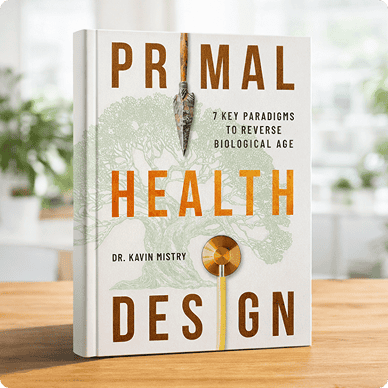
Stress, in the right dose, is medicine. This concept, which is discussed in my book, Primal Health Design, is known as hormesis. It means that short bursts of controlled stress build resilience rather than erode it.
Cold plunges and deep breathing all act as hormetic stressors. These intentional challenges:
- Increase heart rate variability (HRV)
- Improve mitochondrial efficiency
- Activate anti-inflammatory pathways
- Strengthen vagal tone
The result? A body that’s adaptive, flexible, and calm under pressure.
This is what I call biological coherence: when your body’s stress responses are in sync with your life’s rhythm.
→ This idea is explored further in my Mistry Solved video series on YouTube and socials.
How Breathwork Resets the Vagus Nerve
- Close your eyes gently
- Inhale through the nose
- Exhale through the nose
- Simply watch the breath—no control, no judgment.
The Science of Stillness: Healing the Nervous System
Stillness is the antidote. Even 21 minutes of intentional stillness recalibrates the nervous system, lowering cortisol, restoring immune function, and lengthening telomeres.
Stillness doesn’t mean withdrawal, but alignment. It’s what allows the nervous system to repair so the mind can perform.
How Biological Age, Not the Number on Your License, Defines Longevity

“Chronological age is the number on your driver’s license. Biological age is how old your cells and systems actually function. It reflects DNA methylation, inflammation levels, telomere length and organ health.”
That’s the age that matters. And it’s not fixed.
Even your metabolic age, a measure of how efficiently your body processes energy, can shift depending on your daily habits.
A sluggish metabolism, driven by high insulin resistance and low muscle mass, accelerates cellular aging. On the other hand, a flexible, efficient metabolism, fueled by strength training, movement, and nutrient-dense food, keeps your biology younger than your years.
These internal markers are far more reliable than a birth date when it comes to predicting your risk for disease, cognitive decline, or energy loss. The great news? They’re also far more responsive to change.
I also shared lifestyle practices that support healthy biological aging:
- Strength training builds lean muscle, preserves bone density, and supports insulin sensitivity. Muscle is metabolically active: it helps regulate glucose and protects against frailty.
- Sunlight and morning movement anchor your circadian rhythm, which governs hormonal balance, mitochondrial repair, and sleep quality.
- Human connection is an often-overlooked longevity factor. Genuine social bonds regulate stress hormones, strengthen immune response, and enhance heart rate variability, each directly tied to longer lifespan and improved quality of life.
Together, these practices add years to your life and expand your capacity to fully live those years with energy, clarity, and resilience.
Vagus Nerve Exercises: A Daily Blueprint for Resilience
| Practice | Duration | Effect |
|---|---|---|
| Cold exposure (shower or plunge) | 30–60 sec | Improves mitochondrial efficiency + vagal tone |
| Box breathing | 2–4 min | Lowers heart rate + stabilizes focus |
| Grounding (barefoot walking) | 10–15 min | Reduces inflammation + regulates circadian rhythm |
| Morning sunlight | 10 min | Balances melatonin + cortisol |
| 21-minute stillness practice | Daily | Resets nervous system + enhances clarity |
Ready to Reset Your Stress and Reverse Your Age?
Every choice you make today from your breath, movement, and moments of pause is shaping your biological age.
Your nervous system can be trained, your stress response can be rewired, and your longevity can be reclaimed.
Primal Health Design is my blueprint for reversing biological age and designing a life that’s aligned with your physiology, purpose, and potential. While you read, the Primal Reset Program is a guided immersion into the science, tools, and rituals discussed in the book that recalibrate stress, build resilience, and create mental clarity.
Both are designed to work together: one to teach you how, the other to remind you why. Together, they’re the foundation for living, and aging, by design.
You weren’t designed to merely survive stress.
You were built to transform through it.