

Episode 4 · Guest: Nick Hutchison, Founder of BookThinkers
Don Rogers on Creatine, Protein Trends & the Future of Functional Nutrition
Don Rogers formulates food and beverage products for some of the wellness industry's biggest and newest brands. In this episode, he and Dr. Kavin Mistry talk through why creatine has moved from a bodybuilding supplement to a cognitive health conversation, where protein sourcing is headed next, and why simple, honest formulation beats hype every time.
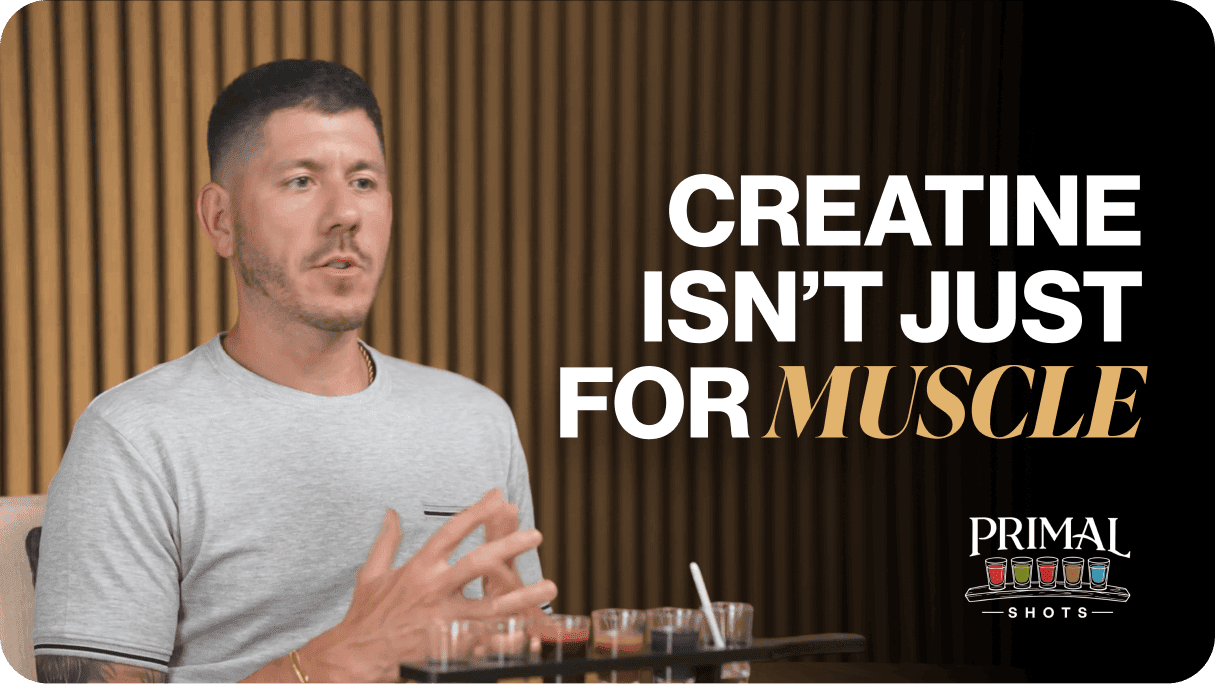
highlights
What You'll Learn
- Why creatine monohydrate is emerging as a cognitive health ingredient, not just a muscle builder
- Where protein sourcing is headed as whey and milk protein supplies tighten
- The friction points that sink new CPG brands, and what separates the ones that survive
- Why Dr. Mistry believes medicine is shifting from reactive to proactive
- Don's morning routine: no phone, no noise, just nature
Before you reach for a product or a supplement, let's design our life so that it is aligned with our primal way of living.
— Dr. Kavin Mistry
Listen on:




Key Takeaways
Creatine's reputation is changing. Once known purely for muscle building, creatine monohydrate is gaining traction for its neuroprotective and cognitive benefits.
1/4
Passion is a formulation filter. Don says the brands most likely to survive are the ones whose founders stay personally connected to the product, not just the trend.
2/4
Supply constraints are reshaping protein. Tightening whey and milk protein supply is pushing formulators toward vegan and fermented protein sources.
3/4
Design your life before you supplement it. Dr. Mistry's Primal Health Design philosophy: fix sunlight, movement, and grounding first, supplements come after.
4/4
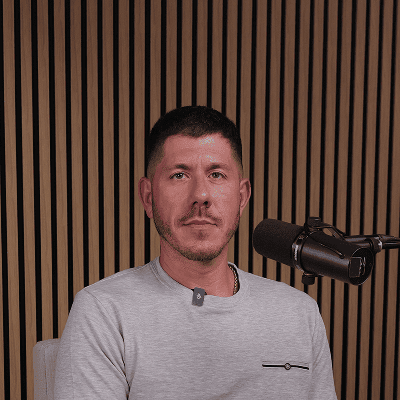
Guest Bio
Don Rogers
Don Rogers works with PTM Food, a food and beverage formulation company based in New Jersey, helping both established brands and startups bring wellness products to market.
Resources
SUBSCRIBE TO ALIGNED LIFE
Aligned Life Newsletter
Discover rituals, routines, and neuroscience-backed insights in Aligned Life, Dr. Kavin Mistry’s monthly newsletter, to help your brain and body thrive together.
You'll get an archive of all past newsletters!
More Episodes and Blogs
Share With a Friend
Transcript
Dr. Kavin Mistry & Don Rogers
00:00Welcome & Introduction
Dr. Kavin Mistry: We got to get a food guy on the show to try these shots. We see protein being incorporated into everything. Creatine is another ingredient that is trending. It’s just absolutely everywhere. Not only for the benefits of muscle building, but cognitive health. And I think that’s becoming a big conversation. Before you reach for a product or a supplement, let’s design our life so that it is aligned with our primal way of living. Welcome to Primal Shots, where we journey from the ground to the cosmos. And as the shots get healthier, the questions get deeper. And joining us today is Don Rogers from PTM Food, one of the foremost food formulators on the East Coast, located in New Jersey. So excited to talk to him about what is happening in the food industry, specifically as it relates to health and wellness. And so, without further ado, welcome, Don, to the show.
Don Rogers: Doc, thank you so much for having me. Happy to be here.
Dr. Kavin Mistry: You’re ready for this? Ready?
Don Rogers: Yeah. Born ready.
Dr. Kavin Mistry: When we thought of Primal Shots, I was like, we gotta get a food guy on the show to try these shots. We make all of these by hand, and it has to be made like the morning of or the day before. So I’m so looking forward to your reaction to all of these, and so let’s dive right in. Okay, so our
02:14Grounding Shot: Starting the Day with Nature
Dr. Kavin Mistry: First shot, Don, is our grounding shot, okay? And this symbolizes really how we start our journey. But I want you to try it. So cheers, and let me know what you think.
Don Rogers: Alrighty. Go. Good. Very good. Smooth.
Dr. Kavin Mistry: Ingredients wise? Tell me.
Don Rogers: Definitely carrot. Okay, check. Maybe some turmeric.
Dr. Kavin Mistry: Oh, wow. Okay, could be. He’s definitely a food taster.
Don Rogers: Yeah, maybe. I mean, I get something green, maybe a little bit of celery, something like that. But I get a lot of dominant carrot. Maybe another root vegetable, but a lot of carrot.
Dr. Kavin Mistry: Right, There are different types of carrot. So that’s what you’re tasting, apart from the regular orange carrot. So these are some of the more exotic carrots, along with the orange, and turmeric. That’s the key spice ingredient here. Apart from the root vegetables, it symbolizes the grounding aspect of it. But turmeric also has that anti-inflammatory component. Starting the day with clarity, carrots have to do with clarity, vision, health. And turmeric also gives you that anti-inflammatory, cleansing component to start your day. I believe in this day and age that’s so important, right, that we start with clarity. And Don, so as it relates to your work, I know you are probably seeing all sorts of trends, all sorts of different products, wellness products about different things to start your day and whatnot. Out of everything you’ve seen, are there any product lines or any particular things that resonate with you, that you’ve implemented in your life? What is it that you have implemented from knowing all this, for yourself? And how do you start your day?
Don Rogers: I think as far as it is related to our industry, more and more products are specific, whether to a certain feeling or whether to suit a certain need or a lifestyle. I think that’s where we’ve been formulating more and more. So that could just be a specific age range or a certain season of life that people are in, or a certain type of need that they have, and that could be dietary, that could be something they’re lacking, a deficiency. And I think we continue to go down that path further, and there’s a lot of other lifestyle additions that people are taking or supplementing outside of what we do, that are pairing with that. So I think the normal consumer is more intelligent about what they are taking and their own regimen, and I think that carries on to food and beverage. For myself, certainly, turmeric is something I’ve incorporated for a while. It’s a lot of anti-inflammatory, cognitive health, and just overall wellness, starting my day. Usually, especially this time of year, it would be with nature outside. Calm, quiet, to start the day. Not a lot of noise, not any music, nothing. Probably just me, sunshine, cats roaming around. And that’s about it right now. If I’m going to the gym, I get out of the house quick. Otherwise, walking around the yard, doing what I can before everything gets real hectic. I’m very present about it, there’s no emails, there’s no phone calls until that part of the day actually starts.
Dr. Kavin Mistry: Do you get any actual grounding in, like, any barefoot walking or anything like that?
Don Rogers: Yeah, as much as I can. Grateful to have a decent piece of property, a small farm. So yes, very much so, to be out there with the animals and birds chirping.
Dr. Kavin Mistry: Yeah, absolutely, that means a lot to me. Oh, that’s wonderful, I love hearing that. In the eastern cultures, particularly in Japan, there’s this term, I don’t know if you’ve heard of it, it’s called shinrin-yoku. The term means forest bathing. And what is interesting about it is they’re doing all this research where they found that a 20 minute walk in the forest can dramatically change your bio physiology. They would actually do blood samples of people before taking this forest walk, and then blood samples after 20 minutes. They have these treatment trails, 20 to 30 minutes, and they’d do before and after lab work. And your blood chemistry changes just by the end of that walk. I thought that was so fascinating, how much nature and that grounding aspect impacts us. And I think some of that is so lacking these days, right? A lot of us are reaching for the phone, for that digital connection. But we’re missing that nature connection, as you’re talking about.
Don Rogers: Sure, yeah. It’s not everybody that has that time that can slow down. There’s a lot of demands in contemporary life, right, and there isn’t that moment. So I’m very grateful and very present of that, especially as I’ve gotten older, even more so. You need that time to slow down so you really can give it your all when it matters.
Dr. Kavin Mistry: Right, And the clarity is important because that really puts things into focus on what you really need to address that day. And also speaking of focus, brings us to our
06:29Focus Shot: Formulating for the Right People
Dr. Kavin Mistry: Second shot here. This is our focus shot. So cheers.
Don Rogers: Cheers. Ginger, for sure. Ginger, check. Yeah, it’s a green component.
Dr. Kavin Mistry: Now I’m gonna really push your adept taste buds here.
Don Rogers: Let me feel stumped on this one. Definitely a green component. Borella? Not quite.
Dr. Kavin Mistry: Not quite, okay.
Don Rogers: I mean, definitely some ginger. And maybe just, I don’t know. That was a good guess.
Dr. Kavin Mistry: That was a pretty good one, because it has that earthy green kind of flavor, and the color is good on it. So yeah, people go, sometimes they guess like wheatgrass and whatnot. But the core ingredient is matcha.
Don Rogers: Okay, all right.
Dr. Kavin Mistry: And that’s the core ingredient. The spicy ingredient you guessed, which is the ginger. What’s interesting about both of these, ginger pairs really well with caffeinated products. If you look at any traditional eastern drinks, like in India, chai, you start off your day with your morning chai.
Don Rogers: Right, yeah.
Dr. Kavin Mistry: But a lot of the chai recipes, one of the core ingredients is freshly grounded ginger, they have fresh ginger that you boil with the tea, and it pairs really well with the caffeine in the tea. But here it’s paired with matcha. I would say matcha is a level up from just regular tea or even coffee, because matcha, apart from the natural caffeine component, has things like L-theanine, which is an adaptogen. So not only do you get the focus part from the caffeine, you’re getting the stress adaptogens too. It really gives you those two tools to handle that focus.
Don Rogers: Yeah.
Dr. Kavin Mistry: So but speaking about focus, I know that in your industry you probably get lots of people wanting to develop products and wanting your help as a formulator. Maybe you get lots of proposals. So one aspect is, how do you sort through all of that for yourself and your team, what are the products that you focus on, what resonates with your ethos as a company, and apart from that, for you personally, where are you focused in taking PTM Food from where you are?
Don Rogers: Yeah, I think with the products, first it’s the people we work with, a lot of very large brands that have boards making decisions, that have been acquired by larger companies, and that’s great, the people got to be good. And then we’re working with startups that are just beginning to get their feet wet in the industry, and that’s great too. So it really has to be great people, because if they’re great people, that’s who we want to get on the phone with, that’s who we want to speak to, and that’s who we want to work for. That really is the biggest decider. It wouldn’t necessarily be how large the project is, or how easy it could be. If there’s a good phone call, a good meeting, then that’s what we want to do. And I know that people with the right attitude, the right kind of flexibility, will be successful, versus overthinking, overstressing, and creating a self-fulfilling prophecy that everything’s going to go wrong. It will, if you believe that. So just believe that it’s right, and it will be. And that’s who we want to be partners with. We’re always very heavy into protein products, and that’s just what we’ve done, more now than ever, that’s where the interest is. So I have so much of that I’m vetting, in all different formats, ready to drink, ready to mix, a shake, a high acid product, fitting all different lifestyles. For bodybuilders that may want 40 grams per serving, to a more lifestyle beverage that’s less than ten grams of protein per serving. Market’s very tight, so there’s a lot of innovation around it in vegan spaces and also fermenting proteins, which I think is going to be not only necessary now but really create a more sustainable source of protein. So to do work in that space, and have a talented group of formulators in our lab that can do that, really to create good products ahead of the curve. That is why I see a lot of us doing a lot of functional products, a lot of supplementation. But we were really founded as protein formulas, we keep doing that, in all kinds of formats. Where I want to see us go is where we’ve been going, and we’ll keep getting there. It’s organic growth with the people we work with. So if there are more needs for them, more spaces they want to get into, it’s about not being afraid to get them there. Taking the knowledge we have and applying it to a new space, maybe a new product type, a new process, getting the equipment required, and growing with them. That’s what we’ve always done, and what we’ll continue to do. We’ve had a lot of growth this past year, a lot of very talented people join our team, and the growth they’ve helped support has made even more growth and interest in the work we’re doing. So the more we do, the more response and impact we’re having, the more we see the inquiry, different product spaces, different equipment. There isn’t a certain dollar number it has to get to, it’s just continuing to grow and evolve with the people we work with.
Dr. Kavin Mistry: I love it. And I mentioned protein as being sort of one of the big drivers these days in terms of products, right, a lot of people are pushing more protein content. Have you seen any change in terms of the types of protein? I know whey was sort of the big one, back in the day, everybody wanted whey products. And again, that may still be the hero, but do you see that evolving in the past few years, in terms of trend-wise and everything you’re seeing?
Don Rogers: Yeah, I mean, whey is still number one for a lot of formats. And then the shortage in that market has led to a shortage of milk proteins too, for different applications. I think whey is still king. I also think ultra-filtered milk in a lot of products is extremely popular, we’ve seen larger brands pivot most or all of their portfolio to utilize that. We’ve seen acidified whey in acidified beverages, protein sodas and things of that nature. But all around, I do see that the supply constraints are putting renewed interest in vegan proteins and other formats.
Dr. Kavin Mistry: If I’m out there as somebody listening to this and looking to develop a product, trying to look at it as a 15, 20 year horizon, that I want this product to really last, from a sustainability point of view, are there any particular ingredients you see that are going to be tough to source in the future?
Don Rogers: Yeah, I think that right now protein is almost becoming cost prohibitive, so looking for those alternatives. We’ve worked through, over the past 12 plus years, many different supply constraint issues, but this one is so different, because the supply is tight and the demand doesn’t seem to decrease, because we see protein being incorporated into everything, junk food, beverages, fast food, anything like that. But also what I know is that any time there’s a shortage is a great time to bring more farming and agriculture online to supply that. So I don’t think I would ever persuade anyone against it, because some of the greatest brands we’ve worked with wanted to do something, they chased it, and they made it happen. So if you have the will to do that, sure, but just know what you’re getting into, with something that is extremely competitive and can be expensive, and there isn’t unlimited supply.
Dr. Kavin Mistry: Got it. Yeah, well, that segues us into our next shot here, Don, and this is our
10:29Endurance Shot: Friction Points & Creatine's Rise
Dr. Kavin Mistry: Endurance shot. As we were talking about really what keeps people going, and companies going, I think this is symbolic to that. So cheers.
Don Rogers: Cheers. All right, very good. I think the color might give it away. And then I’m getting, possibly cayenne, I would say.
Dr. Kavin Mistry: Okay, all right, so two for two, very good. There’s one more ingredient paired with beet, to give a little more of a citrusy element to it, and bring in that sourness. So it’s paired with pomegranate here.
Don Rogers: Okay, all right, good stuff.
Dr. Kavin Mistry: And the reason here, if you look at beet and pomegranate, both of them, when you talk about endurance, they have high levels of polyphenols, which are very good health-wise, and they also have high levels of nitric oxide, which helps dilate vessels. When you talk about endurance, runners are using beet powder, beet juice, and whatnot. The cayenne adds that spice element, and just kind of keeps you sharp, keeps you on the edge. So I wanted to pair it that way. But talking about endurance, I know you help people start different companies, different brands, and people are very ambitious upfront because they’ve got this great idea they want to bring to market. Nothing is ever a smooth road, right? There are always bumps and valleys that people have to go through in building that brand. So my question is, once people begin a brand, what are the friction points that you see, as somebody starting, let’s say, a CPG brand? What are some of the friction points that they hit, and from your experience, in terms of the brands you’ve seen really succeed, how have they overcome that? What kept them going?
Don Rogers: Yeah, the friction points, I think first and foremost would be not being able to tune out a lot of noise, staying true to the product you created and going with that, believing in it, versus responding or adjusting a product, a brand, or marketing to every negative comment or every piece of feedback. I don’t think that shows a lot of confidence in what you’re doing and what you’re building, and it’s also going to create consumer confusion. You have your regular supply issues, which could happen at any time, raw materials, packaging, that’s kind of normal, a need to raise money, huge friction point because you may have POs you cannot fulfill. But still, these have fixes. I think if you are a founder and an owner of this brand, just staying clear on your vision for that seems to create the most success, and just believing in that. We’ve had brands we’ve worked with for the same period of time that have gone in incredibly different directions, solely because of the person who founded it and led it. One had enormous confidence, and the other had a lot of doubt, and would oftentimes look for reasons why it couldn’t, rather than reasons why they could. That’s a true entrepreneurial spirit, and I think that’s what drives it. So the most successful have really built a brand for tomorrow. They’ve believed that they will, and then they do, and then they’ve gone on to many other successful things, and helped other people use that knowledge, and be grateful for everyone that comes across, grateful for every customer, grateful for everyone who’s there. I can’t say that enough, it’s stressful, it’s fast, it’s competitive. If it’s anybody in the fitness or bodybuilding space, there’s a lot of competition and ego involved. So to stay grounded, to believe in what you’re doing, and be kind while you’re doing it, that’s a lot of things sort of fighting each other. But if you’re able to do it, you will be successful. Anybody we’ve worked with for a long time that has had a lot of success has then pivoted to pass that on, to mentor and teach others, and really understand the full meaning of it, maybe less driven by the money, but more about the mission.
Dr. Kavin Mistry: Do you, when people come to you with ideas, and let’s say you look at their trajectory and you say, wow, they’re up for some friction, do you prep them? Is that something you tell them upfront, or you let them discover that on their own?
Don Rogers: Yeah, I always tell them upfront. I don’t want to be a part of that conversation where it’s discovered on their own, because there are limitations to the science, limitations to the process, and limitations to what a new brand with not unlimited capital can do. Not every product, every ingredient, can be processed the same way. If there’s a package you desire, we need to formulate what can be processed in that package, that type of PET or aluminum or whatever it might be, and we have to make a product that is stable and safe. So all those points we very clearly outline and want to discuss. There are points where maybe we can’t come to an agreement, because something the client desires doesn’t exist or isn’t stable, or maybe there’s just another roadblock, like manufacturing line time that isn’t available right now. Creatine is another ingredient that is trending, it’s just absolutely everywhere, not only for the benefits of muscle building but cognitive health, and I think that’s becoming a big conversation. A couple of years ago, there wasn’t much we could do with it other than put it in a powder, but a lot of innovation has now led to stable creatine in beverages or even food products. That reminds me of a product we were working on a couple of years ago that maybe we just couldn’t get where it needed to be, but today we could. So sometimes things just have to wait, or the technology has to follow. But I would always want to caution, because a big part of what we do is the formulation, and equally important is the commercialization, we make sure it has a path to commercialize.
Dr. Kavin Mistry: Very interesting about that point you made about creatine. I’m coming from the neuroscience side, and everybody thinks, you’re like a gym bro, taking creatine, got a bigger pump, more intensity in your workouts. But now the conversation is really switching, when I look at it from a neuroscience side, in terms of the neuroprotection, and the popular form is creatine monohydrate, that’s the one the bodybuilders used. Are you working with different types of creatine now that are more accessible or more drink friendly?
Don Rogers: So the one that is more beverage grade is still creatine monohydrate. And then as far as ready to mix applications, you also work with the hydrochloride as well. But yeah, no doubt the monohydrate is the most studied, and that seems to be where the most data points are.
Dr. Kavin Mistry: So you foresee that more and more drinks are going to come out with creatine, for that kind of neuroprotective component or the mental health component?
Don Rogers: Yeah, I think there’s some coming right now, I think there will be more. I think there’s brands pairing it with protein also, but a nice product would be one that’s just creatine in there, at five grams, which is kind of where a lot of the products are at, or want to be. And that is something, unlike protein, where there is supply, they can keep making it, it’s a little easier to produce.
Dr. Kavin Mistry: But I think a next component of building a brand is really the teams we put together to implement this. And that brings us to our next shot down here. You may have to mix this one a little bit. That’s our
14:29Tribal Shot: Building the Right Team
Dr. Kavin Mistry: Tribal shot, okay. And the ingredient you can probably guess by the color itself, but the embedded ingredient, I’ll let you figure out. So here we go, this is our tribal shot. Cheers.
Don Rogers: Definitely chocolate, I’ll give you that. It doesn’t taste like cocoa or cacao for sure, some mushroom component.
Dr. Kavin Mistry: You’re on the right track. It’s maca.
Don Rogers: Maca.
Dr. Kavin Mistry: So maca is a root, as you probably know, you probably have products that have maca in it, and it has that earthy taste. So the chocolate is the hero, the cocoa is the hero, and maca is kind of like the performance ingredient here. Maca traditionally is a root that has hormone balancing properties, particularly in females and males. They used to use, or still do use, maca as an ingredient to boost testosterone in men, and it’s one of those, some testosterone-boosting formulations use maca root. But looking at cocoa and maca, they both combine for this tribal shot, and it symbolizes really the component that, we need to have products, we need to have profits, but we need to have people along with that. Just a product and profits does not drive a company forward, you need the people part of it. There are many different components, and I’m sure you can’t wear all the hats, right, there are people doing very specific functions in your company. How have you navigated that, having that tight inner circle to take the company forward?
Don Rogers: Yeah, well, there was a point in time when it was three of us and we wore every hat. And even before that, when Pete was working by himself, he wore every single hat, and then when Ryan joined him after that, so you do fake it till you make it a little bit. Everything we were doing still had quality, integrity, and detail behind it, but there was a lot of things we had to figure out on the fly, or go work at different facilities to make it happen. And the belief that it would all be under one roof one day came true. It’s a scary thought sometimes, but it all happened. And I think those learnings have enabled us to see what a team could do, where people would be best suited, and how everyone can work together. It is very difficult to find the right people with the right set of education and the right amount of talent. So I think anytime we’ve been interviewing or looking for people, it’s about who they are, their own natural skill set, combined with education. So when we have a team working together, and everyone’s gelling, we see what people gravitate to, people have different strengths and interests, so we want them to work on things they’re passionate about, and bring their own interests into that as well. Everyone can work and develop everything, it isn’t just one set of knowledge applicable to all different product formats. When we look at other companies, competitors of ours, or anyone we might be interviewing, oftentimes they’re working on one product type over and over, so there isn’t a lot of other knowledge in processing or different applications. So we want to make sure everyone has a well-rounded grasp on everything we work on, and hope everyone enjoys the space they’re in. But as a company that’s still growing, it’s definitely something we’re still learning, and we’re learning from them, from their past experiences at other, larger companies, a different way of operating. So listening to them, trying to be as good a listener as possible, but also letting go too, because of these things we did a couple months ago, giving them the responsibility and having faith in them. So hiring good people, thankfully everyone is great, getting along and really gelling together, giving them the freedom to work and create, and that has worked out really well.
Dr. Kavin Mistry: Oh yeah, love hearing that. So for somebody listening to this, let’s say I have a product idea, and I’m willing to put in the effort, go through all the friction points we talked about, but anything great requires a high level of co-creation, collaboration, and the lingo I like best is, it requires an ecosystem to really bring it to life. So for somebody listening, with this great product idea, what is your advice in terms of putting that ecosystem together? Because it’s not just about formulation where you guys come in, there’s the legal aspect, the production aspect, the marketing aspect. What is an approach they can use to put something like that together?
Don Rogers: Definitely don’t overcomplicate it, from either a branding perspective or just a formulation and product perspective. I think simple does sell, so if it’s high quality and simple, it’s easy to sell to potential buyers, customers, at trade shows, and communicate that. Maybe don’t get into something you’re not passionate about, I think anyone can see right through that. There’s some people we’ve worked with for a long time, and when the passion is gone, so is the innovation. So just follow something you’re passionate about, and build a team of people around you that can work together and believe in what you’re doing. If you’re looking for other partners or investors, vet those relationships, take your time with that. I would be careful about giving up control of something I nurtured and put my heart into, giving up a majority or a role in the company to somebody who wasn’t there from day one. For other people we’re working with, or brands I admire, the founders stay very involved, it’s their vision, and nobody else is going to drive it. We have some great clients who don’t overthink what they’re doing, but they have such belief in it, and that resonates with their customer, with these wild flavor launches, just the excitement behind it, isn’t an overthought focus group, because that’s just not the space we’re in right now, it’s newness, something quick to respond to. And it’s that kind of excitement the owner brought to it that works its way down to the customer. So I think if you fully believe in something, just stick with your gut.
Dr. Kavin Mistry: Yeah, I think that intrinsic passion behind the project is so important. And I think a lot of times people lose steam, that passion goes away, and like you said, when the passion goes away, the innovation goes away, and then the brand suffers.
Don Rogers: For sure.
Dr. Kavin Mistry: And speaking about passion, it brings us to our
18:00Cosmic Shot: Proactive vs. Reactive Medicine
Dr. Kavin Mistry: Last component here, and this is our cosmic shot. You may have to stir this one a little bit. What’s interesting about this shot is, it’s a blue color, because we wanted it to symbolize something unique for cosmic. Everything here is organic and natural, no artificial ingredients, and we were researching how we could make this blue. Interestingly, the color here comes from butterfly pea flower, it’s sort of like a natural dye that comes from this flower, and what’s crazy is the amount of natural blue color it releases in water, it’s fascinating. I thought it was such a unique ingredient, and we really wanted to incorporate it in this cosmic shot. So that’s why it’s blue, now everybody knows the secret. But if that stirred up, let’s dive into our cosmic shot here. Cheers. All right, give it to me, Don.
Don Rogers: I got, like, a celery or a melon. Also maybe it’s like grassy green, but then there’s also, like a melon or citrus component.
Dr. Kavin Mistry: Right, and there’s a bitterness component.
Don Rogers: Yes, definitely. That’s why I can’t find, like, the green, like a wheatgrass or something.
Dr. Kavin Mistry: Yeah, but it’s not any ordinary melon, it’s bitter melon, which is not so common, you’re not going to find it in most grocery stores, but it’s available in specialty stores, a lot of Asian food markets have it. The key reason being, bitter melon has a lot of health benefits, particularly for blood sugar, insulin control, metabolic health. It’s used in eastern cooking, and the challenge is it’s so bitter that you have to pair it properly to make it tolerable, so here we combined it with other ingredients like cucumber, to take the edge off that bitterness. So you’re getting the benefits of that bitter melon, but the bitterness of this cosmic shot is symbolic of, I guess, the bitter truth that we may have infinite ambitions, but our life is still finite. And in this finite life, we want to work on things that live on, that have some infiniteness. That’s the challenge, what is the legacy component, the larger vision we’re chasing in everything we do. In terms of the brands you’ve seen succeed, what is it they’re chasing as a larger vision, that has helped them? And the second part is for you personally, what is it you’re chasing from your company? Where do you see yourself going in the next ten, 15 years?
Don Rogers: Yeah, for the brands, mostly just a better quality of life in different ways, that could be better health overall, better fitness, endurance, lifting more, running more. Some are bringing nutrition to people, groups, continents that don’t have it. So I think overall, delivering better nutrition, better products, that’s almost entirely what we’re working on, whether consumer facing brands or raw material suppliers we do proof of concept work for. Just improving people’s lives, year over year, growing the opportunity to do so. I think that’s very clear with anybody we’re currently working with, and with somebody new too. They want to have an impact, it isn’t usually too much vanity, it’s about doing something well for others. There’s a lot of times we’ll look back and say, can you believe we did that? So you always got to put things out there. A couple years ago, we said, it’s getting crowded in here, we need that space, we need to do it, and we’re pretty much at that number now. But I think, thinking back to when Pete was on his own, 20 years ago, trying to do this, with the encouragement of his mother, realizing that dream could be, it all just sort of happened very naturally. It wasn’t about greed, it wasn’t about excess, it was just about keep working, keep doing good and honest, but it’s hard work. I don’t know if there’s any big, mission, big pie in the sky, but as long as we keep doing what we’re doing, it’s very humbling, the people that recognize that, and that’s become more and more.
Dr. Kavin Mistry: One of the key roles you guys play, whether you realize it or not, is that you’re driving this wellness industry forward, you’re kind of like the gatekeepers as to what products are going to drive the future. And we talked about creatine, maybe transforming the mental health space a little bit. So I think it’s a very big role you guys play, because you’re the first to see some of these things coming, and really influencing where things are going. So along those lines, looking at the future of health, from my perspective, coming from the neuroscience side, I think what we’re seeing now is that medicine has traditionally been a very reactive model, right? You get a headache, then you go to the doctor, get your aspirin. That’s a very simplistic example, but that’s how it’s been. You get the shoulder issue, then we do the MRI, then maybe you need the PT, or shoulder replacement surgery. We wait till the problem surfaces, and then we react to it, hence the reactive medicine model. I believe the balance is shifting more towards a proactive model, where people realize, I need to protect my mental health, I need to protect my physical health, so I’m going to implement routines and products into my wellness routine, design a routine so that I don’t get the headache, I don’t get the shoulder pain, so I don’t need the surgery. So looking through that lens, are there any trends you’re seeing? We talked about protein, and creatine, apart from that, anything else? Where do you see things navigating, even outside products you deal with directly, looking at the whole industry from a 30,000 foot overview?
Don Rogers: Yeah, I think there’s almost a solution for everything, or at least something that can support it. A lot of the innovation presented to us from scientists working on raw materials addresses whatever the challenge may be. Aside from the work we do, peptides are a tremendous life changer for everybody, and the more that becomes widely available, or whatever validation comes behind that, is very powerful. If there’s further education about one’s own deficiencies, and how they can make up for that with supplementation, wherever that may come, I think that’s it. It’s never one size fits all, there’s not one diet suitable for everybody, same thing with any kind of supplement regimen. So for the inquiries we get, particularly with food and beverage, it’s more specific to certain needs and certain people, where they are in their life. I’m also very aware that a large portion of this country doesn’t have access to the right supplementation, nutrient-dense food, or the time to exercise for wellness, and that’s a bigger, broader conversation. I hope that if it becomes more available and accessible, we’re lifting everybody together, not just those who can afford it. That’s one thing I hope. We’re part of bringing things to market, and the more affordable and accessible these things become, hopefully the better lives people can live.
Dr. Kavin Mistry: No, that’s a great point, right, you could have a five star supplement, but if it’s only accessible to a select few financially, then what is the change you’re really driving with that? And the other thing you mentioned is that the product and supplement piece is almost secondary to some of the other elements that need to be in place. We started off this journey talking about being in a calm place, having exposure to nature. My book is titled Primal Health Design, and the whole concept was, really, before you reach for a product or a supplement, let’s design our life so that it is aligned with our primal design and primal way of living. Part of that is connecting with the basic elements, connecting with the ground and the earth, connecting with how our body should function in space. In my world, as a radiologist looking at people’s spines every day, it’s not just about exercise, it’s about how we align ourselves every day. I look at people aging on my screen every day, just from the way they’re engaging with technology, being hunched over, looking at a laptop. So until you correct these fundamentals, connecting with the earth and your body, then you can move on to connecting with food properly, which is where you guys come in, and then adding on supplementation. I guess everybody listening should be cognizant that sometimes you don’t want to wake up and begin your day with that magic supplement, that’s not the solution all the time. Even though, from my advertising point of view, it sounds cute to say take one of these and you’ll be fine. Do you see brands approaching it that way, this is what people are going to take when they wake up in the morning? Have you seen people come up with those types of ideas, maybe a little bit of overpromise, relying on the consumer to know the other pieces of the puzzle, or assuming the consumer is already in a certain lifestyle?
Don Rogers: That’s interesting. I mean, we’ll definitely warn against any large claims, unsubstantiated claims, anything like that. But nothing goes too broad, pretty much everyone we work with is aboveboard, doing the right things, getting the right kind of terminology and regulatory compliance in their language, which is very important.
Dr. Kavin Mistry: Don, you made it through our journey here, and you survived. And as we wrap up here, I’m going to give you, let’s do a
24:05Rapid Fire & Closing
Dr. Kavin Mistry: Rapid fire round. Three questions, don’t overthink it, whatever comes to your head. One book that has impacted your life.
Don Rogers: It is this little Deepak Chopra book, I don’t even know how it came into my possession, it’s somebody else’s, really. It’s about, I think, the seven laws, it’s literally in my car right now, I’ll bring it to the beach. It’s literally just about being present, and about the little things you can do, and the engagement you have with people, the seven spiritual, I don’t know, it’s pretty well known, I’m drawing a blank on the spot. But that is probably, unfortunately, one I haven’t read as much as I’d like to, but it’s definitely one I try to take with me, and take that advice, because it really is just about being present, and a lot of simplicity in that. And then I think what it unlocks, personally, I love it.
Dr. Kavin Mistry: Yeah, I love it. And I’m sure that kind of awareness probably drives your day, right, having that sort of focus on clarity and presence.
Don Rogers: Yeah, it does. It’s something that has to be reminded, it’s not automatic, it has to be deliberate, it has to be intentional, it doesn’t happen automatically. But yeah, I love it.
Dr. Kavin Mistry: Yeah. Second question. One daily habit that is a must for you starting today.
Don Rogers: Moving, stretching, cold water on my face, weighing myself, sticking to goals, that’s probably just those few minutes in the morning that are identical every single day of the week. I think it always starts that way, from somebody who used to be much more of a night owl, up all night, didn’t have the same routines. Now I think just those few morning rituals out of bed make the whole day, so I’m never running out the door, everything feels planned, feels deliberate.
Dr. Kavin Mistry: Oh, that’s fantastic. Yeah, that’s what I teach, a lot of people will ask me, what supplements should I take? And for me, my advice is almost the same, how you begin your day and end your day will determine the quality of your day.
Don Rogers: Yeah, like you said. That morning routine, that AM routine, and that PM routine, determines the quality of your life.
Dr. Kavin Mistry: It’s almost like a suspension bridge, right? You got these two supports, and all hell can break loose in the middle, but as long as you have that AM and PM pillar dialed in, you can have a great day, regardless of what happens in the middle. We have these bookends that kind of need to happen.
Don Rogers: I very much feel that way. And you’re so right that the morning coincides with the night, got to get to bed on time, doesn’t sound fun, it’s not, 365, but it’s the majority of the time, in order to achieve the things you want throughout the day.
Dr. Kavin Mistry: Absolutely. All right, third question. One person that has impacted you the most.
Don Rogers: Yeah, that’s easy, definitely my husband. Together, we’ve just allowed each other to fully be, and without that love, without that companionship, it wouldn’t have. For us, it’s maybe reliving things in childhood that maybe weren’t the way they could have been, or memories we have together, or just childish antics, whatever it is. I think you hear a lot of marriages where love sort of fades or weakens as time goes on, maybe there’s this big grand wedding and then everything else kind of goes south. We had a little tiny $28 wedding at the courthouse, and I think love has grown stronger since, we’ve been together 16 years and married for ten. There’s nobody else like that, just a drive to always keep going, and make the best out of a bad situation, no doubt.
Dr. Kavin Mistry: Oh, that’s so beautiful. Thank you for sharing that. So for all the listeners on this podcast, you’re the expert coming in from the food industry outside, and people have these ideas of creating something, they say, I got this family recipe I maybe want to bring to market. So what is one sort of encapsulated piece of advice you can give them, if people have these ideas, what is the takeaway you’d like to give for all these people listening, from that perspective?
Don Rogers: I think it’s professional and personal, and it’s just, gravitate to what feels natural, if the shoe doesn’t fit, don’t wear it. And that should be where you’re approaching it, if you’re launching a CPG brand too, because if there isn’t passion behind the product you’re creating, if you’re just thinking, this is a hot trend and I’m going to get into this, you’re so removed from it, and I do think that quality can be seen. So if you’re connected to the product you’re creating, especially if you’re going to make yourself the face of it, then I’m not going to say you can’t fail, but I think the chances of failure are a lot lower. If you believe in something, others will believe in it, believe in the brand. And that can come from all walks, things you enjoy, recipes you’ve created at home, that we can then create, standardize, stabilize, and make a product you can share. That’s what I would do, just follow the passion, and that’s applicable to a wide range of industries.
Dr. Kavin Mistry: Yeah, I love it, I mean, that applies to many different things, but particularly here, you have to follow that passion, because it is very personal. I think people would say, well, I’m making a product and it goes out into the world, but you’re talking to potential buyers or retailers, or people through social media who might be your customers, and nobody can sell it like the people who are really part of it, really attached to it.
Don Rogers: And that’s what I’ve seen, and you asked me before about the biggest success, it’s the owners who took it, who are still with it today, or took it as far as they could to a bigger acquisition, whatever they chose, but they stayed connected the whole time, they didn’t pass off that responsibility, that passion, to anybody else, because nobody else was going to care the way they did. And that’s it, it’s hard work, there’s no secret, there’s no fast track, it’s just hard.
Dr. Kavin Mistry: I absolutely agree, I think that’s a beautiful message. And we were talking about this before, with all the digital technology and AI, we’re now so keen on recognizing authenticity, and I think when people are selling something, you can easily tell, is there heart in it, is there passion in there? And if the passion is not there, you just won’t be able to pitch it properly, nobody will buy into that vision. But I love it, that you’re viewing this industry from your lens, I think we need more people like you driving that, because I think people like you are instrumental in bringing the right type of products to market, and you’re influencing the future of health and the future of this industry. So thank you for everything you do.
Don Rogers: Thank you, and it’s been a pleasure, I learned so much, and hopefully people listening to this are inspired to create something meaningful from their ideas, their recipes, and their experiences. Yeah, thank you so much for having me.
Dr. Kavin Mistry: Thank you, Don. Yeah, guys, thank you for joining us here today on Primal Shots. We had Don Rogers with us today from PTM Food, going on this journey from the ground to the cosmos, and we really unpacked a bit about what it takes to take an idea, a family recipe, this passion, and maybe convert it into a marketable product. If you are part of this journey, and if you have that type of goal, then I believe this episode will give you a lot of the tools, and maybe the insider tips you need to bring something unique to the market. So I hope you enjoyed it.