Key Takeaways
- If you’re asking why am I always tired, the issue is often not your sleep quantity, but biological misalignment
- Persistent fatigue is commonly driven by circadian disruption, mitochondrial inefficiency, and nervous system overload
- Fatigue after eating and wondering why do I get tired after I eat often point to metabolic and circadian mismatch
- Human energy systems evolved around sunlight, movement, earth contact, breath, and meaning
- Rest cannot restore what disconnection continues to drain
If I’m Sleeping Enough, Why Do I Still Feel Exhausted?
If you’re exhausted despite sleeping seven or eight hours, you’re not broken, and you’re not lazy.
I hear this question constantly in my medical work, in lectures, and from high-performing individuals who “do everything right”:
Why am I always tired even when I sleep enough?
The short answer is simple, but not easy to accept:
Sleep alone cannot restore a body that is biologically disconnected from how it evolved to generate energy.
As a board-certified neuroradiologist, I spend my days interpreting the downstream effects of modern life on the brain, the nervous system, and the cellular engines that power human vitality. Chronic fatigue is rarely a failure of effort. It is almost always a signal.
And signals are meant to be understood, not silenced.
Is Chronic Fatigue Really About Sleep?
No. Sleep is essential, but it is only one input in a much larger biological system.
Human energy depends on:
- Circadian rhythm alignment
- Mitochondrial efficiency
- Nervous system regulation
- Metabolic flexibility
- Environmental signaling (light, temperature, movement, grounding)
- Purpose and emotional coherence
When these systems fall out of sync, you can sleep “enough” and still wake up depleted.
This is why so many people experience:
- Morning exhaustion
- Brain fog by mid-morning
- Fatigue after eating
- Second wind late at night
- Dependence on caffeine just to feel normal – read our Blog on Mushroom Coffee being a healthy alternative to caffeine
This isn’t aging.
This is disconnection physiology.
Why Are So Many Americans Exhausted Despite Sleeping More?
Because modern life has stripped away the biological signals that tell your cells how to produce energy.
- We wake without sunlight.
- We sit for most of the day.
- We eat out of rhythm.
- We stare into artificial light late at night.
- We rarely experience temperature, movement, or stillness the way our biology expects.
Your body did not evolve for comfort.
It evolved for signal-rich environments.
When those signals disappear, energy production falters.
What’s Actually Happening Inside Your Body When You’re Always Tired

1. Mitochondrial Underperformance
Mitochondria are not powered by calories alone.
They are regulated by sunlight, circadian timing, movement, temperature variation, and breath. When these inputs disappear, cellular energy output drops, no matter how well you sleep.
This is why chronic fatigue often appears even when blood work looks “normal.”
2. Circadian Rhythm Disruption
Your biology expects:
- Bright light in the morning
- Darkness at night
- Food during daylight hours
When those cues blur, hormones like cortisol, melatonin, insulin, and leptin lose rhythm.
This is why people ask:
- Why do I get tired after I eat?
- Why do I crash in the afternoon?
Post-meal fatigue is often a timing problem, but it is also deeply influenced by what you eat.
Your metabolism does not respond to calories alone; it responds to the type of food you eat, how processed it is, when you eat it, and your hormonal and nervous system state at the time. Because the gut communicates directly with the brain through neural, hormonal, and immune pathways, food quality and timing influence not just digestion, but mental clarity, energy, and post-meal fatigue.
Meals dominated by refined carbohydrates, ultra-processed ingredients, or inflammatory fats demand a disproportionate insulin response, divert blood flow toward digestion, and suppress cognitive energy shortly after eating. This is why many people experience brain fog or heaviness even after meals they believe are “normal.”
I explore this in detail in my gut-first nutrition framework, where food is treated as information, not just fuel.
When meals emphasize whole, fiber-rich plants, healthy fats, and polyphenol-dense foods, digestion becomes metabolically efficient rather than draining. These foods stabilize glucose, support the gut microbiome, and reduce inflammatory signaling, allowing energy to remain available for the brain instead of being pulled into damage control. Timing matters, but food quality determines whether digestion becomes a burden or a source of clarity.
3. Nervous System Overload
Chronic stimulation without recovery traps the body in low-grade fight-or-flight.
In this state:
- Sleep becomes shallow
- Rest feels unrefreshing
- Energy becomes fragile
Restoration does not come from pushing harder or adding another productivity tool. It comes from teaching your nervous system how to return to safety. When the body remains in a constant state of alert, energy is diverted away from repair, digestion, and cognitive clarity. Intentional pauses throughout the day—slowing your breath, stepping outside, creating moments of quiet—signal to the brain that it is safe to restore.
Give your body the conditions it needs to recalibrate: slower breathing, periods of quiet, and moments of nervous system relief, so energy can be conserved, repair can resume, and resilience can rebuild naturally.
When Fatigue Is a Signal, Not a Personal Failure
By now, you may recognize yourself in this pattern.
Persistent tiredness that doesn’t respond to sleep. Energy that fades despite effort. A sense that something fundamental is off, even though you’re doing what you’ve been told should work.
This kind of fatigue is rarely about discipline or motivation. It appears when the body has lost access to the conditions it relies on to regulate energy effectively. Modern life has quietly removed many of the signals that once guided human biology: natural light, rhythmic movement, real food, periods of stillness, and a sense of purpose rooted beyond constant output. When those instructions are missing, energy production becomes inefficient, and exhaustion follows.
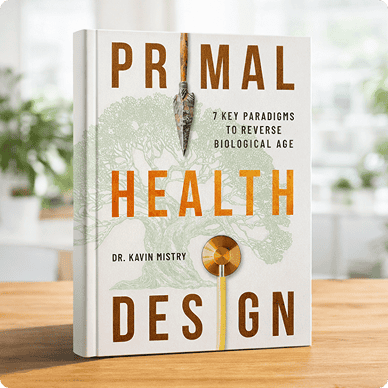
That understanding shaped Primal Health Design. The book lays out a medical and ancestral framework for understanding why modern humans experience chronic fatigue and how energy is restored when biology is brought back into alignment with its original design. It connects neuroscience, metabolism, circadian rhythm, and lived human experience into a coherent blueprint for rebuilding vitality at the cellular level.
If this blog resonates, the book takes you deeper offering clarity, context, and a structured way to understand what your body has been asking for all along.
→ Purchase Primal Health Design to understand the root causes of modern fatigue and how to reverse them.
Purchase options:
Why Fatigue After Eating Is So Common
When patients tell me they feel exhausted after meals, I don’t rush to blame the food itself.
I look first at the biological context surrounding that meal because digestion is never an isolated event. The body interprets food through a lens shaped by circadian rhythm, light exposure, movement, stress levels, and nervous system state. What and when you eat matters, but so does the condition your body is in when digestion begins.
If you eat late in the day without morning sunlight, after long periods of sitting, or while your nervous system is still carrying stress, digestion becomes metabolically inefficient. Blood flow and energy are redirected toward managing glucose spikes, hormonal imbalance, and inflammatory signaling rather than supporting mental clarity and sustained energy.
The result is the familiar post-meal crash: heaviness, brain fog, or the urge to withdraw rather than engage.
This pattern is not a sign of weakness or poor willpower. It reflects how human physiology allocates energy under suboptimal conditions. When digestion occurs in alignment, with daylight, movement, calm breathing, and biologically appropriate food choices, it supports energy rather than draining it.
Post-meal fatigue is best understood as feedback from a system asking for better alignment rather than a failure of discipline. Those signals are meant to be listened to, offering real-time guidance that helps prevent temporary fatigue from becoming a chronic pattern.
Why Sleep Alone Isn’t Fixing Your Fatigue (At a Glance)
Fatigue often persists not because the body is broken, but because modern life no longer provides the signals human biology depends on. This chart shows the gap between what your core systems need to function optimally and what they are commonly given instead.
Title: Why Modern Life Drains Energy
| System | What It Needs to Function Well | What Modern Life Often Provides |
|---|---|---|
| Mitochondria | Natural light, regular movement, environmental contrast | Indoor lighting, prolonged sitting |
| Circadian Rhythm | Bright mornings, dark evenings | Screens, dim days, late nights |
| Metabolism | Daytime eating, recovery windows | Constant snacking and late meals |
| Nervous System | Calm, nature exposure, slow breathing | Alerts, urgency, constant stimulation |
| Energy Output | Purpose, focus, meaningful engagement | Fragmentation and distraction |
How to Restore Your Energy by Re-Aligning Your Biology
This framework is not about perfection or radical change. It’s about restoring a few essential signals your body has been missing and allowing physiology to do the rest.
Begin with light and timing.
Getting natural light early in the day helps reset your circadian rhythm and improves energy regulation across multiple systems. Let evenings grow darker and quieter to signal recovery. These simple shifts improve sleep quality and hormonal balance without effort or intensity.
Support your metabolism by eating most of your food during daylight hours and allowing time between meals. This gives your body space to regulate blood sugar and energy production instead of remaining in a constant digestive state that leads to fatigue.
Calm the nervous system intentionally.
Brief pauses throughout the day (slower breathing, stepping outside, moments without stimulation) signal safety to the brain. When the nervous system settles, energy is conserved for repair, clarity, and resilience rather than stress response.
Finally, protect your energy by reducing fragmentation. Focused attention, meaningful work, and aligned relationships help direct energy instead of scattering it. When engagement has purpose, energy output becomes steadier and more sustainable.
Health improves when these signals are reintroduced consistently. Not all at once. Not perfectly. But often enough for the body to recognize familiar patterns and restore balance on its own.
You’re Not Tired. You’re Disconnected
The real question isn’t why am I always tired.
It’s this: what has my body been separated from for too long?
Fatigue is not a personal failure or a lack of discipline. It is biological feedback: your system communicating that the signals it depends on for energy, clarity, and repair have been disrupted. When light, movement, rhythm, nourishment, stillness, and purpose drift out of alignment, the body adapts the only way it can: by conserving energy.
In Primal Health Design, I explain the deeper biological story behind modern exhaustion, why sleep alone no longer restores us, and how reconnecting with primal signals allows energy, focus, and resilience to return naturally. The book provides the framework to understand what your body has been responding to all along.
The Primal Reset Program then helps translate that understanding into daily rhythm and lived practice, offering structure and guidance so insight becomes sustainable change rather than another idea to manage.
Start with the book to understand your biology.
Support that foundation with the Primal Reset Program to embody it day by day.
If you’re ready to stop chasing energy and begin restoring it at the source, this is where the work truly begins.
— Dr. Kavin Mistry, M.D
Frequently Asked Questions
Q. Why am I always tired even though my labs are normal?
A: Because standard labs don’t measure circadian health, mitochondrial efficiency, or nervous system tone.
Q: Is fatigue just part of aging?
A: No. Fatigue is often the first sign of biological misalignment, not age.
Q: Why do I get tired after I eat healthy food?
A: Because timing, light exposure, and stress state matter as much as food quality.
Q: Can stress alone cause chronic fatigue?
A: Yes, especially when recovery and environmental cues are absent.