Key Takeaways
- The true mastery meaning has little to do with hustle, visibility, or constant output
- Mastery is a trainable neurological state, not a personality trait
- A world engineered for distraction keeps the brain locked in shallow attention
- Focused attention is the gateway to learning, insight, and innovation
- Deep work reshapes the brain through neuroplasticity and myelination
- In the AI era, deep understanding allows humans to make better decisions, notice what others miss, and respond with clarity instead of urgency.
- Mastery is not only a productivity strategy; it is a health strategy
January has always felt like a psychological reset. A new calendar brings renewed energy and fresh intentions, even if many of them quietly fade by mid-month. This pattern is often blamed on a lack of discipline, but that explanation misses something deeper.
We are trying to create meaningful progress in a world that actively fractures attention.
Instead of promising more productivity apps, better systems, or longer hours, this moment calls for a different aim – one that feels almost countercultural in its simplicity.
Not the performative version measured by visibility or output, but real mastery: the calm, focused state where learning compounds, thinking sharpens, and meaningful work begins to feel coherent again.
Mastery is not a personality trait, and it is not reserved for the gifted. It is a trainable neurological state.
Understanding the true mastery meaning may be one of the most important shifts we can make as we move into 2026.
A World Engineered for Distraction
The human brain did not evolve for notifications, infinite scroll, or dopamine-on-demand. The human brain evolved to focus on one thing at a time, learn from what it experiences, and stay engaged with the world around it.
Modern life, however, constantly pulls attention in every direction at once.
Phones buzz constantly. Tabs remain perpetually open. Meetings multiply, often replacing focused work rather than supporting it. Distraction today is no longer accidental, it is designed.
Every alert, swipe, and headline competes for the same neural circuitry that once helped our ancestors scan the savanna for predators. Neurologically, the brain does not easily distinguish between an existential threat and an unread message.
The result is a nervous system locked into shallow attention.
Shallow attention can make you feel busy and productive, but at the end of the day it rarely leads to work that feels finished, meaningful, or worth the effort.
You read more but understand less.
You consume without integrating. You stay busy while moving nothing truly important forward. This is not a motivation problem. It is a neurological one.
What is the True Meaning of Mastery
Mastery is the ability to develop deep skill and understanding by focusing consistently on something important over time.
Neuroscience is clear on this point. What you focus on repeatedly reshapes your brain, because the brain physically adapts to whatever you use most. This process is known as neuroplasticity.
When attention is fragmented, learning remains superficial. When attention is sustained, neural networks strengthen, myelination increases, and information moves from short-term storage, into durable long-term memory.
The prefrontal cortex acts like the brain’s control center, helping you stay focused, ignore distractions, and decide what deserves your attention. However, it has limits.
Every time you switch tasks or get interrupted, your brain has to reorient itself, use extra energy, and start over, making mistakes more likely and focusing harder to sustain. Despite popular belief, multitasking does not exist neurologically. The brain is simply switching rapidly between tasks, exhausting itself in the process.
Focused attention, by contrast, creates coherence. Perception, cognition, and intention begin to align.
This alignment is the foundation of mastery.
From Digital Noise to Focused Attention

The path to mastery is not about doing more. It is about subtracting intelligently.
Attention is a finite biological resource. Every distraction is a withdrawal from the same cognitive reserve needed for learning, creativity, and decision-making. Relying on willpower alone rarely works, because willpower is metabolically expensive and unreliable. Most people don’t lose focus because they lack discipline.
They lose focus because their environment makes it almost impossible to stay attentive for long.
Simple shifts often matter more than dramatic ones: fewer alerts, fewer inputs, fewer open tabs, and longer uninterrupted blocks of time. The brain needs periods of quiet to integrate information and recognize patterns. When attention stabilizes, something subtle but profound happens. The mind feels calmer, yet thinking becomes more efficient. Comprehension deepens. Patterns that once felt invisible begin to emerge. This is where mastery starts to take shape.
The Neuroscience of Deep Work
The concept of deep work, popularized by Cal Newport, reflects a well-documented neurological state. During sustained, distraction-free concentration, several processes occur simultaneously.
Relevant neural circuits fire repeatedly, strengthening synaptic connections. Myelin, the insulating layer around neurons, thickens along frequently used pathways, increasing speed and precision. At the same time, the part of the brain responsible for mind-wandering and mental noise becomes quieter, making it easier to think clearly and stay present.
This explains why deep work feels effortful yet deeply satisfying.
The brain is being used the way it was designed to be used. Surface-level engagement cannot reveal nuance. Only sustained focus allows the mind to integrate information across domains and transform complexity into clarity.
Innovation does not come from speed. It comes from depth.
What’s the Difference Between Shallow Attention and Real Focus?
Aspect | Shallow Attention | Focused Attention |
Learning | Superficial | Durable & integrated |
Memory | Short-term | Long-term |
Chronically elevated | Better regulated | |
Creativity | Copying or reactive | Thoughtful and original ideas |
Satisfaction | Fleeting | Enduring |
Why Mastery Matters More in the Age of AI
As artificial intelligence accelerates access to information, the value of depth increases rather than diminishes. AI can retrieve, summarize, and optimize. It cannot cultivate perception, meaning, or wisdom.
True mastery changes how you see. A master clinician notices subtle patterns others overlook. A master leader senses cultural shifts before metrics appear. A master craftsman understands nuance that cannot be reduced to instructions.
The shallow mind copies. The focused mind creates.
Those who can focus deeply will differentiate themselves. Those who cannot will remain busy, and increasingly replaceable.
A Primal Perspective on Mastery
From a Primal Health Design lens, mastery is fundamentally a matter of biological alignment. For most of human history, attention and action were inseparable. Our ancestors engaged in focused, embodied tasks: hunting, crafting, navigating terrain, teaching skills through repetition.
Modern life has disrupted this loop.
Work is often disembodied. Interruptions are constant. Urgency is frequently artificial.
Reclaiming mastery is not about rejecting modern tools. It is about restoring the conditions under which the human brain thrives: focused attention, meaningful challenge, adequate recovery, and clear purpose.
This is why mastery is not merely a productivity strategy. It is a health strategy.
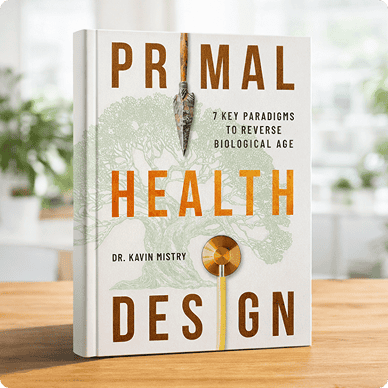
If this perspective resonates, my book Primal Health Design explores how aligning biology, focus, and purpose allows us to reclaim our most human capacities in a modern world.
Designing 2026 for Mastery
Mastery does not happen accidentally. It must be designed.
Choose fewer priorities. Protect time for deep work. Create rituals that signal focus and safety to your nervous system. For many people, morning hours are especially valuable, as cognitive resources are freshest and distractions are minimal.
If recent years were about survival and adaptation, let 2026 be about refinement and excellence.
You do not need more information. You need integration. You do not need more tools. You need fewer distractions. And you do not need more hours. You need deeper ones.
Your Invitation
As you step into 2026, ask yourself one simple question:
What would my life look like if I truly understood, and lived, the meaning of mastery?
If this perspective resonates and you’re ready to apply it more deeply, the resources below will guide you in building focus, clarity, and mastery step by step.
Buy Primal Health Design today:
- Primal Health Design — the book
- The Primal Reset Program — a guided journey to restore focus, energy, and mastery across body, mind, and purpose
Do not aim to do more this year.
Aim to go deeper.
What will you choose to master in 2026?
Frequently Asked Questions
Q. What is the true meaning of mastery?
A: Mastery means developing deep skill and understanding through sustained focus and practice over time. It is not about working harder or longer, but about staying with something long enough for real learning, insight, and improvement to take place.
Q: Is mastery something you’re born with, or can it be learned?
A: Mastery is not an inborn trait. It is a trainable neurological state. Anyone can develop mastery by learning to focus their attention, reduce unnecessary distractions, and practice skills consistently over time.
Q: Why does focus matter so much for mastery?
A: Focus allows the brain to learn efficiently. When attention is sustained, the brain strengthens the pathways it uses most, making skills more reliable and easier to access. Without focus, learning stays shallow and progress resets repeatedly.
Q: Why does modern life make it so hard to focus?
A: Modern environments are designed to interrupt attention. Notifications, constant information, and artificial urgency keep the brain in a reactive state, making sustained focus difficult. This is not a personal failure, it is a design problem.
Q: What happens in the brain when you focus deeply?
A: When you focus deeply, the brain strengthens the neural pathways involved in that task and quiets mental noise. This makes learning stick, improves memory, reduces stress, and allows clearer thinking. Over time, this process supports mastery.
Q: Is deep work the same thing as mastery?
A: Deep work is one of the main ways mastery is built. It refers to periods of uninterrupted focus that allow the brain to learn, integrate information, and improve skills. Mastery develops through repeated deep work over time.
Q: Why does mastery matter more in the age of AI?
A: As AI makes information faster and more accessible, human value comes from understanding, judgment, and insight, not speed alone. Mastery allows people to think clearly, notice what others miss, and make better decisions in complex situations.