

Guest: Dominic Chianese, actor and musician
Dominic Chianese at 95: Longevity, Purpose and Living in the Moment
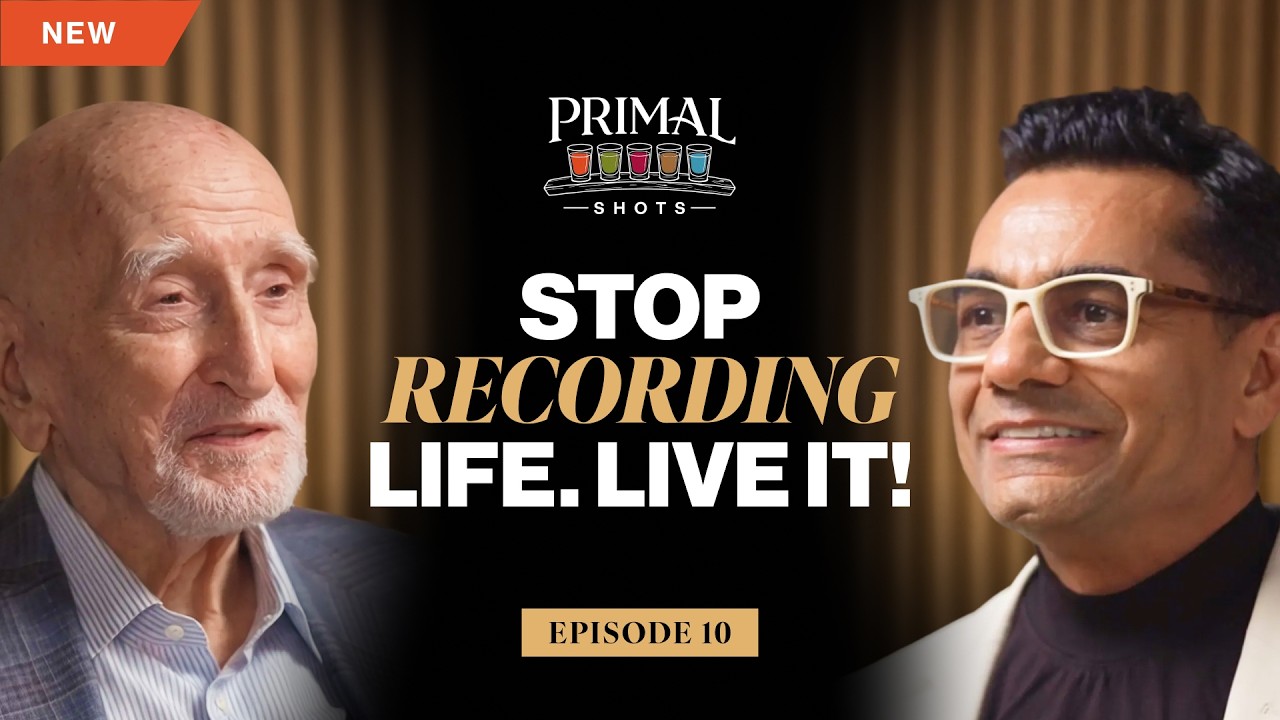
What does it mean to live fully at 95? Actor and musician Dominic Chianese joins Dr. Kavin Mistry on Primal Shots for a conversation about the experiences, relationships and beliefs that continue to shape his life. Dominic reflects on growing up in a loving Italian family, learning music by listening to his grandfather, and finding a calling in performance. He discusses the importance of relaxation in acting, the role of faith in his daily life, and his desire to give back through music and community. Their conversation also explores the relationships that matter most, the value of reconnecting with family, and what can be lost when we spend more time documenting life than experiencing it. At its heart, this episode is about staying connected to what makes us human, regardless of age.
highlights
What You'll Learn
- How Dominic's early family experiences and his grandfather's music shaped his path
- Why relaxation and presence matter to Dominic's work as an actor and singer
- How faith, service and music continue to give his life meaning
- Why reconnecting with family remains important to him
- What Dominic means when he encourages people to experience a moment rather than photograph it
Enjoy the moment. Don't take a picture of it.
— Dominic Chianese
Listen on:




Key Takeaways
A meaningful life is built through relationships and engagement. Dominic returns to family, music, faith and the people he meets as sources of connection.
1/3
Presence is a practice, not a performance. He describes relaxation as central to acting and singing, and encourages people to experience the moment rather than only document it.
2/3
Purpose can keep evolving. His reflections on music, giving back and reconnecting with his son offer a personal perspective on contribution later in life, not a prescription for healthy aging.
3/3
Guest Bio
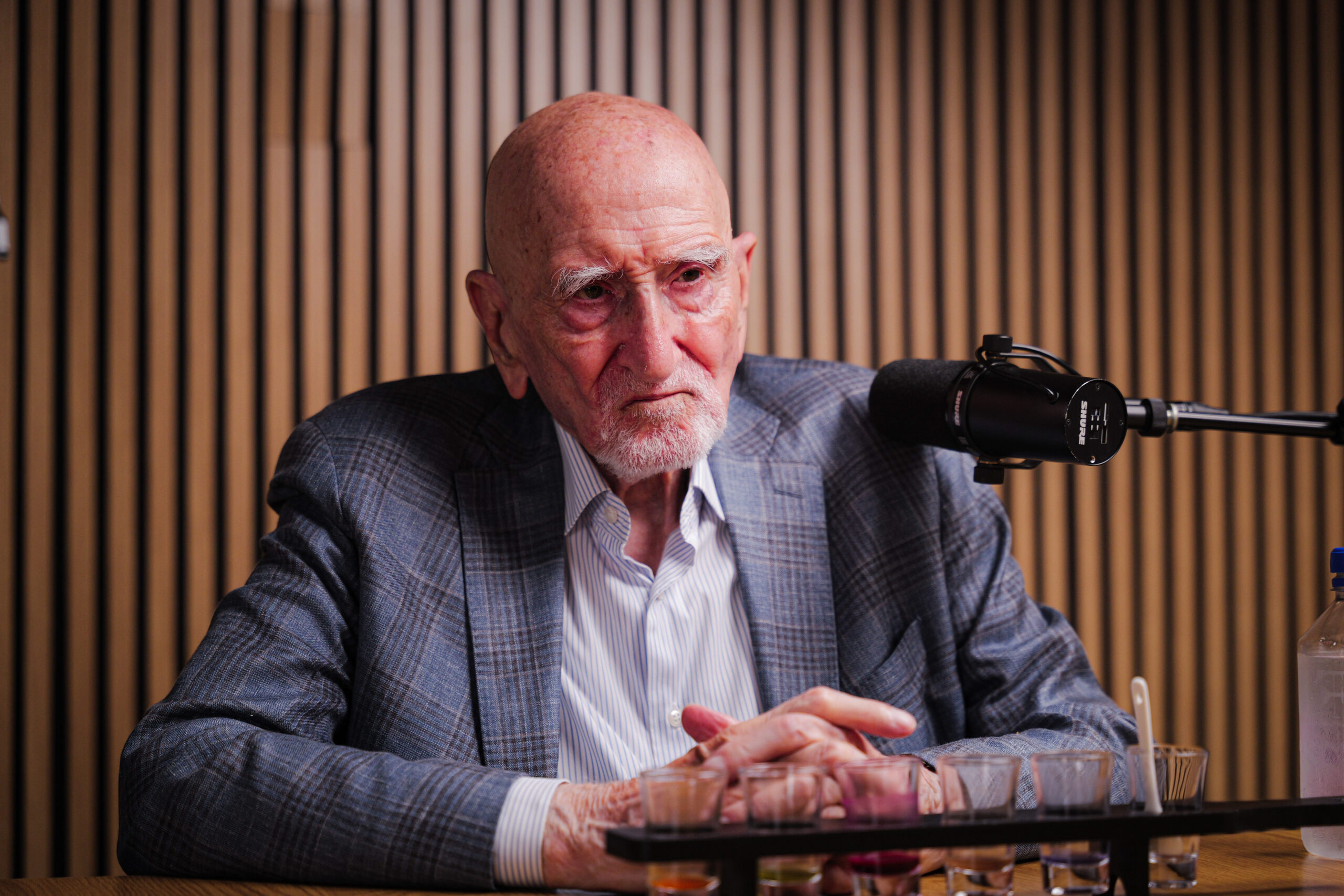
Dominic Chianese
Dominic Chianese is an actor and musician. In this conversation, he reflects on his Italian family upbringing, his grandfather's influence on his music, his work as a performer, and the importance of faith, family and service in his life.
Resources
SUBSCRIBE TO ALIGNED LIFE
Aligned Life Newsletter
Discover rituals, routines, and neuroscience-backed insights in Aligned Life, Dr. Kavin Mistry’s monthly newsletter, to help your brain and body thrive together.
You'll get an archive of all past newsletters!
More Episodes and Blogs


Share With a Friend
Transcript
Dr. Kavin Mistry & Dominic Chianese
00:00Welcome & Introduction
Dominic Chianese:
Al Pacino without a belief in me, I never had attained any kind of success. That is really. That’s like royalty. The fact that I couldn’t be with my son at times, this is something I want to make up for. And now I can do that. And you can’t fool the audience. And the camera does not lie. In order to perform as an actor or a singer, it must be relaxed. Tension is the enemy. The real is becoming rare. The AI driven world. I think what people are starving for is that real aspect of life. Especially for the young people. Enjoy the moment. Don’t take a picture of it because even end up with thousands of pictures, but you won’t have many moments.
Dr. Kavin Mistry:
Welcome to Primal Shots. And as the shots get healthier, the questions get deeper. We journey from the ground to the cosmos. And today we have a special guest, Dominic Chianese. Today we’re going to find out about the man behind the actor, so please help me welcome. Dum dum, such an honor to have you on the show.
Dominic Chianese:
I’m really excited and happy to be able to talk. I love being interviewed. I really do. I love it,
Dr. Kavin Mistry:
and we’re going to take you on this journey. And again, the element here is to take you on a wellness journey as well as diving deeper into what makes us human. And I was so excited when I got this opportunity to meet you, because very rarely do we meet people where 90 plus. You’re 95 mentally, right? That in itself, I think, is a standard we should all be striving for, right? To be as vibrant, as engaged as you are. And but I can’t wait to dig deeper and learn more about you. What got you here?
02:33Grounding Shot: Relaxation, Faith & the Music of His Grandfather
Dr. Kavin Mistry:
And without further ado, let’s start with our grounding shot. So. Cheers.
Dominic Chianese:
Cheers.
Dr. Kavin Mistry:
See you. You’re liking the taste there.
Dominic Chianese:
I like the. Taste. I like the taste. My nose is a little too big for the glass, but I love the taste.
Dr. Kavin Mistry:
So my question to you, Don, as we sit here and we begin this journey, is, as somebody who is 95. Yes, you’ve lived a long life and you’ve had good days. You’ve had bad days. We all do. How do you make sure it’s going to be a great day to day? How do you begin the day so that it’s it’s you set it up to be something memorable.
Dominic Chianese:
My point is, uh, it’s only been the last 5 or 6 years where I realized the, uh, the efficacy of prayer and getting relaxed. That drink was very relaxing. In order to perform as an actor or a singer. You must be relaxed. Tension is the enemy. It stops you from performing because you’re tense. So I feel that in doing my life. Let me put it this way. I got help from God because when I wasn’t paying attention. He still took care of me. That’s the way I believe. I believe in the faith. So now I try to give back to the community everything that I received from from life. Even though I had bad times, I had to. I have been very fortunate to choose a career that I knew I was meant to do. So I was grounded in, uh, since I’m four years old. I entertained people, and I love people, and I love to please people.
Dr. Kavin Mistry:
No, I certainly I’ve certainly see that through your life, um, that you not only pursued acting, but along with that, there was always the element of how many people are bitter, better off because you lived. And I saw that in just you’re just reading up on the history and, you know, as a teacher and, and I know you used to perform for the elderly.
Dominic Chianese:
Definitely. Yeah. In the, in, in the nursing homes.
Dr. Kavin Mistry:
Yes. And so, you know, a lot of people go into the entertainment industry more for the fame and finances and everything like that. And even though you had that element, but I think that wasn’t what you were chasing.
Dominic Chianese:
Wasn’t my. Motive,
Dr. Kavin Mistry:
it wasn’t what you were chasing. And so when you begin your day down, do you what is what is your prayer? What is your prayer for the day?
Dominic Chianese:
You die. Prayer is always the Christian prayer that God loves me. And when I. The more I realize that, the more I can relax and be and be open to people. You see, I’ve been very lucky, doctor K, because that was the first grandson I was showered with love. So it’s fortunate. I was fortunate in a big Italian family to be the first grandson. You are showered with love and hugs and kisses, so that gave me a great start. And even at four years old they would ask me to sing. And I was blessed with a nice voice that I which I inherited from my father, who inherited from my grandfather. You know, they were singers. There were crooners, not professionally. They would just sing while they were, you know, while they were preparing. Preparing, you know, to eat. They’d sing. The Neapolitan, uh, aspect of my life was always very important. And that was my actually my first language that I heard as a child. They would be speaking Neapolitan, you know. And my father was born here, but he would speak dialect. It’s a dialect. And, uh, and I found out when I was 62. And the first time I had gone to Italy, I was in Naples, and I was I was understanding the waiters, you know. So the point is that, uh, I was lucky enough to to be in a very loving family. And the first child, you know.
Dr. Kavin Mistry:
Every year your grandfather taught you how to sing.
Dominic Chianese:
He taught me how to sing from the heart. Yeah, without telling me. He just. I just listened to him. I would imitate him. Uh, he would sing by the window, and he never looked at me. But he was a smart man. He understood his. He had five, six, six grand, six grandsons, two granddaughters, granddaughters. He left to the women, but he knew his grandsons and he knew I loved music. So I’d be looking. I’d be visiting him in the summer and there would be two windows. He’d be on the left window and they’d be over in the right window, and it’d be a Philco radio between us. And without looking at me, he’d just started singing. But then he busted Man Island on a gondola boat, and I didn’t understand the words, but I could feel that he was feeling it. He’s the man that came here at 23 and never saw his mother again. Never saw Naples again.
Dr. Kavin Mistry:
Wow.
Dominic Chianese:
And you see now, of course, over the years I realized what the translation was. But at the time he was doing something, just singing. And yet the vibrations are incredible. And I would just listen to him. But he never looked at me. He’d be. He’d be by an open window. And my grandmother was there too. And she’d say, open the window because she would smoke these smelly cigars, you know. So it’s a beautiful thing from my childhood. And that was, you know, 12 years old to 20 that I had had them all that time.
Dr. Kavin Mistry:
I was very close to my grandfather as well. And my last name, mistery, means woodworker. And so I come from a long lineage of woodworkers. And so my grandfather was a master woodworker, and like you said, your grandfather sang just naturally. And my grandfather. He never taught me woodworking, but he would just do it, and he would allow me to come to the work, his workshop and just be there. And I would just watch him just feel the wood and and just he saw the potential of each piece of wood, not as the raw state, but what it could be. And it was about preserving that wood in a capacity in a, in a piece of furniture, but still honoring that wood. And so there was so much artistry in that. And I saw that and I said, wow. I mean, you know, that just to have that vision of creating something. Right? And and in your case, I was creating music.
Dominic Chianese:
Yeah. He stonemason but he but but it’s the way he’s that’s the way he sang.
Dr. Kavin Mistry:
I mean, that’s his feelings. You can smell the sawdust, I suppose.
Dominic Chianese:
Yes. I still smell it now. And I close my eyes.
10:24Focus Shot: Teaching from the Heart & Reviving the Voice in Youth
Dr. Kavin Mistry:
Yeah. So it brings us. We start our day, we’re grounded, and all of these things give us that clarity to approach our day. Right? Because we, we, we have these memories, the lessons we’ve learned. But at the same time, we have to live our life right now. Yeah, right. And we have to make a choice as to what are we going to focus on? You know, there are probably ten different avenues we can take. And that brings us to our second shot here. Yes. That is our focus shot focus. And the goal here is that what is it that we’re going to focus on in life. So. Cheers.
Dominic Chianese:
Cheers.
Dr. Kavin Mistry:
All right. Let’s see what you do with that in terms of ingredients. Duh.
Dominic Chianese:
That to me that had a spice to it. Pepper. It had a strength to it as opposed to the smoothness of the first. It had something like it’s like you’re putting gas in a car.
Dr. Kavin Mistry:
I like that. I like that. So the green is from matcha matcha matcha T, which is about used for focus attention. But the spice you’re tasting, which was a great pickup, is ginger.
Dominic Chianese:
Ah, yes. Okay, that’s what you’re saying. That’s what it is. That’s what you’re tasting. Yeah. Very, very subtle.
Dr. Kavin Mistry:
But it’s ginger. You’re right. But it brings us to the topic of. Damn right now you had this wonderful life. Career in acting, musician. Uh, as a as now, with a family and and, you know, I know you have a great relationship with your son and everything ahead. And what are you focusing on right now in your life?
Dominic Chianese:
I’m focusing now on the, uh, The the I want to help the community youth the I see, I see so much, uh, bad performances. I see so much the youth that they neglect the words of songs. They neglect the words of narration. They they sing the music instead of the words. Which is a big mistake, because the words are the words have the vibrations, and the human voice is better than any instrument in the world. I saw that losing that opportunity by having noise overcome the voice, and I’m trying to get them to understand. I know it’s an uphill battle because, you know, they they’re not using their ears, they’re not listening to each other, and they’re not even listening to their own heart. And this this is taking place through the national anthem. I have sung the national anthem. I’ve had the great opportunity to sing it in every major sports event in New York City in the last 30 years. So the national anthem is a story, but the youth, I want them to concentrate on that story, to focus on always on the communication of the story. They think about their voices and they become egocentric and they’re worrying about their performance. That’s not the right. They have to learn the story. So it’s all about memory, doctor Kate, they refuse to memorize. They’re lazy.
Dr. Kavin Mistry:
Tom, I was reading the one of the stories, um, that you were a teacher in a school, and you taught them this play, and it was a performance that you you had the whole class prepare. And I broke it when they when they performed, people were in tears and they were they were on their feet and maybe share a little bit about that. What is it? What is it that you. What was that element that you brought out in these kids?
Dominic Chianese:
What? The help of my wife. At the time, we took a play by Bertolt Brecht called The Caucasian Chalk Circle and prepared it so that it would be a show that ten year olds could do. It took out all political statements, and it was a story about who was the real mother of the child.
Dr. Kavin Mistry:
Mm.
Dominic Chianese:
And, uh, I had to, uh, I had to take I had to rebel against the curriculum. It was a public school curriculum. The same curriculum I had when I was their age. Ten year olds, you know, we’d get in the yard and everybody. They couldn’t chew gum. It was like, get in a line. Don’t talk going up the steps. There was so much regimen for ten year olds. And these children, some of them had nothing to eat. There were. There were poor children. There were. There came from working class families. And I wanted to get them. I wanted them to. To ask for education. I wanted to use from them what I knew was it what was in there. And it didn’t happen for the first year because they asked me to teach them geography, science, the planets, things that I wasn’t interested in. If they let me do it my way. I had to do it my way. So what I did was I rebuilding as a system. And I said, children, we’re going to do a play. All of a sudden they were open.
Dr. Kavin Mistry:
Wow.
Dominic Chianese:
They were. And they said, oh, oh, you know. And there was 34 children, and they all had a part in the play. And I never had to go on the stage. Only once I went on the stage because I remember Jose. He was he was a military leader. And I said, Jose. Don’t worry about it. He said, I’m afraid. Mr.. Mr.. Mr.. I was starting to call me Mr.. Carnegie, you know. He said, I’m afraid I said, listen, you’re you’re a troop leader. You gotta you got to show how brave you are. Anyway, I gave him the only time I stepped on the stage to talk to Jose. That curtain went open 45 minutes. An hour later, that was standing ovation by all the fifth grade, including the teachers. The next day, the principal said, I couldn’t do that. He said, you can’t do that, Dominic. City Hall. That kind of thing. And I left the teaching profession. I probably would have stayed in the teaching profession, but fate was strong enough to change him, you know, after I went after a year and a half.
Dr. Kavin Mistry:
Do you feel that element that you brought out in those ten year olds? That that is that voice you want to revive now.
Dominic Chianese:
You had to be there. It’s so wonderful that the top moment the the league girl decided she didn’t want to take the baby and take it out of the burning castle, so another girl took over who was kind of dangly. She was funny and people were laughing and crying at the same time. And that girl once said to me, I want to be a poet someday. It makes me so. It gives me a warm feeling to know that I hope these children and I felt guilty that I had to leave the system. They wouldn’t let me teach my way. I can only teach what I know that what I really know in my heart. The children picked that up. There were different class when I they became real students and I had to leave them.
Dr. Kavin Mistry:
That’s so special, you know? And we don’t have teachers like that anymore. We don’t have teachers who teach from the heart. Yeah. You know, and it’s unfortunate that our system doesn’t reward that, you know, because a lot of those lessons, uh, we they’re not learned from books, but they’re they’re where they’re learned from sort of a heart to heart.
Dominic Chianese:
Oh, yeah.
Dr. Kavin Mistry:
Because I was in the same kind of school that they were in. You know, I came from the same kind of, uh, public school education.
Dominic Chianese:
Uh, it’s really about money because you need a lot of money to to take the time to teach, to get to take out the what’s in those children’s hearts. It takes a lot of, you know, and superficiality doesn’t work.
Dr. Kavin Mistry:
Pastor Tom, when we speak of the heart. And one of the things I’m looking over your career and is. What is most impressive to me is that it was not a straight road.
Dominic Chianese:
A lot of knowledge. No. Not literally. Thanks.
Dr. Kavin Mistry:
Right. But I think what was the main thread going through? Everything is the word you use your heart. Your heart was always in the right place, you know. And you mentioned about the school not accepting your teaching techniques and then what your intention was, was for the kids, but your heart was there. Yeah. I think your heart was in the right place. And I believe that heart has carried you through everything.
Dominic Chianese:
Thank you. Doug, that came here. That’s 100% right. I really believe that.
20:25Endurance Shot: Acting, Willpower & What Keeps Him Going
Dr. Kavin Mistry:
And to that, we’re going to drink our next shot because this is our endurance shot, Dom. Endurance. Endurance is what keeps us going. Oh. Can we talk about your heart that kept you going? And we’re going to dig a little deeper into that. So. Cheers.
Dominic Chianese:
Cheers. That is a little kick. Can I have some water now?
Dr. Kavin Mistry:
Yeah. Endurance. Yeah.
Dominic Chianese:
Mhm. That is really.
Dr. Kavin Mistry:
Mhm. I’m sure I’m sure you taste that one Dom.
Dominic Chianese:
Wow. That’s like royalty. That purple color you know. But it’s strong.
Dr. Kavin Mistry:
When we talk about What keeps us going? And it’s interesting. You know, you come from a Italian background as I come from a eastern Indian background, right? And one of the philosophies from where I come from is that we should all align our life with our inner drive and what the traditional Indian cultures believe that all of us have a innate inner constitution. Some of us are thinkers. Maybe like myself, we like to take complex concepts and research and make it applicable to daily life. And that gives me a lot of satisfaction if I could, if I can simplify things for people. Right. And that gives me a lot of purpose. Some people are connectors. They they like to be around people. They like to form relationships and that’s what juices them. And some, like yourself, are creators because you find joy in performing. You find joy in creating. You find joy in the art of of what it means to bring out that human element or that human reaction and performing in people. And and I see that throughout your work. And and it’s always been there, you know, whether people recognized it or not in the schools or in everything you do, but maybe shed a little bit more light on what is it, what what what keeps you going? Like what what was it about the singing, about the acting that that you treasured.
Dominic Chianese:
I gave you? I can give you many, many examples. But it’s basically the fact that I like when people laugh and they have fun. I just got a big kick out of that that I helped spark that, uh, that that moment of joy. I remember one particular example, I think was in the Bronx, and the community college had a line in a play, in a musical play, which I did, and the line was, I’m going to take the sister Sara and Guys and Dolls. I’m going to take her out to dinner. And she says, dinner. I says, yes, sir, we’re going to go to Havana. And she says, Havana. And I said, where would you like to go? Howard Johnson’s. And the audience roared with laughter and almost knocked me over. And they said, oh my gosh, I want to do this the rest of my life. I was 26 years old at the time. The audience applauded that line, and they were laughing and laughing, and I was the one who caused them to laugh. So that that kind of stuff gives me a big kick. I like that. I like to bring out the talent in people too, very much. I, uh, I think that’s when I, when I had finally gone to nursing homes, I, I would sing to the elderly, but I would get them to sing. Uh, and I’d like to bring it out in people. I guess it’s the teacher and me. And my dad was right. You know, he was really right. I’m basically a teacher. You know, he was 100% right. But I had a teacher. I had to do it my way, you know, be an actor. That’s how I came to learn that I was really an actor. But I’m really a teacher.
Dr. Kavin Mistry:
I love. It. I love. It.
Dominic Chianese:
And acting is a collaborative. And I love that fact. You know, I love the fact that I can. Be part of the the total picture. I always see the bigger picture.
Dr. Kavin Mistry:
Than when I saw. When I see your roles. Uh, look at, uh, you know, the role you played in Godfather to and specifically also beyond that, Uncle Junior and Sopranos, and you embodied that character so well. And what was what was driving that? Do you think that it was your upbringing in the Bronx or was it. Was it the hat? How did you bring that believability, that that authenticity to that role?
Dominic Chianese:
The training of an actor is based on, uh, the use of the the. Since the body is the only instrument they have, they have to relax. I’ve learned that until you relax, you can’t concentrate. And once you concentrate, you’re focusing on the the situation and the play and then the. The most important thing is willpower. Mhm. So you have to develop willpower that maintains the illusion. And that’s the talent too. You have to have a talent for that. The I remember one of the teachers. They would say I’m like what is your name. And I’d be saying Dominic. And then you said, tell me where you live. And I would say something, then ask another question. Your mind has to focus, really focus. And the willpower to maintain that illusion. Until I had to learn.
Dr. Kavin Mistry:
That was the humor in Sopranos. Was that natural, or were the jokes yours? Or was it written by.
Dominic Chianese:
They were written by the writer, by the writers. And they knew I could deliver comedy. And of course, it’s how you deliver it is very important, timing wise. But I always had that inner rhythm. I always, I always knew comedy even when I was young. And I came from my upbringing with my father, my uncles, everybody, and the Italian-American community. Uh, they knew how to work. They say wisecracking. You know, my father said, if you ask my father something like, Tony, what time is it? He said, why you got to take a pill?
Dr. Kavin Mistry:
You said there was that that timing kind of thing, you know? Yeah. It’s a question of, uh, listening and then reacting in, in a perfect precision.
Dominic Chianese:
Absolutely. Yeah. It’s listening basically. You know, it’s really listening. And, uh, I owe a lot to my mentors at Brooklyn College, both of them. And to Philip Burton, who told me one time we were doing Three Sisters. He said, uh, I’m going to give you the role of a virgin. And the Russian colonel with a beautiful white uniform, charming the three sisters in the first act, and I did that very well. Philip said, you were very well, he says. But in the second act I didn’t believe a word you said. I said, what do you mean, Mr. Burton? He said, I just didn’t believe you. And the next thing he said to me, you know, I was 29 years old. Maybe you shouldn’t be an actor. And I’d got my attention a mile, you know. And I said he said believability. I just didn’t believe you when you were saying goodbye. Then I realized there was some I wasn’t, I wasn’t making. I could make the audience laugh or how do I make him cry? So I started to take, uh, I take some, uh, sing studies where the Wonderful world would cover HB Studios, who gave me a, uh, a scene to do. And I was doing a scene with a young girl, and she got very frightened because I was a serial killer type of thing. Was that the kind of senior play call Climate of Eden? She got so scared, she knocked over the flat in the classroom. 17 people said, wow. So I thought I did a good job. And then Walt said the same thing to Philip. Burton said, I’d come here. Dominic says, I went. She says, I didn’t believe a word you said. You’re a good faker. He said, you can scream and yell. You don’t explode. But that’s not that’s not emotional. That’s unbelievable. He could tell, but you can’t fool the audience. So then I realized this is serious. And I started to hang out around the Actor’s Studio and met Al Pacino. And I met and met doctor. I met the teachers, and they’re all saying that you have to approach it in a different way. You approach it, approach it knowing that you bring your life experience into it. And what gave me a perfect, uh, exercise. And we have to time, I’ll tell you. He would say, sit in a chair and relax. Just sit and relax and think of something. Color a pet, a human being. But don’t tell me what it is. He said, I want you to be really relaxed. So after about 20s, everybody in the class was watching. I said, I’m relaxed now. And he said, you sure? I said, yeah, I’m pretty sure. He says, all right, so what are you thinking about? I said, I’m thinking about my grandfather. Oh, what was his name? I said, Domenico, I took after him. He said, what did he do? I said he was a stonemason. He seemed to tell me more about him. I said, yeah, you heard about. He’d come home and, uh, he’d take his, uh, his little hammer, which was very heavy. And. And the bike. I put it on the table and. And the table was made beautifully by my grandmother. She’d have this little things that she did that I’d on a beautiful tablecloth, and he put this heavy iron metal on it. I remember that as a child. And I would try to pick it up and I couldn’t pick it up, but that was his trademark. And I started talking about my grandfather. He had big hands, I said, and he ought to describe his hands. So I started to describe his hands. I started to cry. He said, keep talking, keep talking. I said, well, he had hands, you know, he had very strong hands. He can throw a lot because I have hands like my mother’s side. Moreau he was a chef. He was a very tiny man. Uh, and he kept crying and kept coming out. And he said, just keep talking, keep talking. And he said, class, that’s acting. It was coming from the inside. And I realized that when you when you approach, when you’re trying to develop a character to be believable, you have to bring something in your life that’s going to make it believable. And, you know, that’s that’s that was that’s what you use that the entrance into it, the method you use and the method I think has got nothing to do with the method acting, just relaxing training. It’s not a style of acting. I love it. So that’s what happened. And, uh, and ever since that time, then by that time I was 32 years old and I took another agent, nine years for me to perfect it. You know, by the time I got to Godfather, I didn’t know how to do films. I just did stage work. But the stage makes you an actor. That’s another thing I want to tell the youth, because they’re all involved in today’s filming, and they don’t realize the stages where you have to start your instrument is more than just your voice and your face and your eyebrows, you know? And the camera does not lie. So you have to.
Dr. Kavin Mistry:
And you’re vulnerable. You’re vulnerable on that stage. Right?
Dominic Chianese:
Definitely. Always. That’s where oh yeah.
Dr. Kavin Mistry:
That’s where you have to bring that authenticity. Yeah. Right. Will power and maintain the illusion.
Dominic Chianese:
Yeah, yeah. I remember when I was first starting, I was I said my lines and then I said, oh my God, what do I do now? I became very solid. Of course, that’s anathema to an actor. So you have to learn that. You have to listen. You know, the simple thing is listening.
Dr. Kavin Mistry:
I love it, I love it. Yeah. No, I think, Dom, that what you just mentioned that you’re you have to bring something deep from inside to that performance?
Dominic Chianese:
Yeah. Situation and situation and that performance.
Dr. Kavin Mistry:
You know, I was having a conversation the other day, and I was somebody who was asking me that there they were doing this presentation and and they said, you know, I just don’t want to do an average presentation. I don’t really connect with people. I want to really make an impact. Yeah. And, um, and I was telling them, I said, you know, it’s not about the information. It’s about do you really believe that information is going to help that person in front of you? And how is it going to help that person, and how has it helped you in the first place? So tell me about that. Tell me how that information changed you first. So we’re talking about having the heart in whatever we do.
Dominic Chianese:
Definitely having the heart.
Dr. Kavin Mistry:
And part of that part of developing the heart is having people in our life that that develop that heart.
Dominic Chianese:
Yes, yes. You have to. Yeah, I forgot about that. Yeah. I got all this from people I learned from faith.
35:20Tribal Shot: Al Pacino, Forgiveness & Tolerance
Dr. Kavin Mistry:
Because if you can’t do that alone, that that that, you know, you said, um, the only way you could bring that element to acting was because you thought of your grandfather and what he meant to you, and and you could think about it. You could enter that space. And so when we dig a little deeper behind that is really people that have impacted us. You know.
Dominic Chianese:
That’s right.
Dr. Kavin Mistry:
And that brings us to our fourth shot here, which is which is the which you can guess from the color. You may want to stir that one down a little bit. Some of it settles. Oh it got darker now. Yeah. So this is our tribal shot and this is about our connections in life. Are people in our life tribal. And something like that. Cheers.
Dominic Chianese:
Cheers. Cheers. Mm mm.
Dr. Kavin Mistry:
Along those lines, you know, we talk about people, you know. Behind the heart is the people. And who would you say is has been your inner circle? You know, we have fans, we have followers. But then we have our inner circle that that really sustains us, sustains, uh, our life and who we are.
Dominic Chianese:
That’s the one actor who who is to me is like my godfather, who kind of mentioned his name.
Dr. Kavin Mistry:
Yes.
Dominic Chianese:
Al Pacino.
Dr. Kavin Mistry:
Yes.
Dominic Chianese:
He had in his own inner circle. And he believed in my talent. I know he did. And he. And he introduced me to people and connected to her to film directors and stage directors without without household belief in me. What I never had attain any kind of success because I needed, I needed the challenges that he he got, got me to do. And I also acted with him. So I learned hands on what it meant to, to to rehearse in a very deep way. So here’s my here’s my real connection.
Dr. Kavin Mistry:
I love that I’m. A big. I’m a big fan of his work. And, uh, but, uh, just to learn from him.
Dominic Chianese:
We, we did stage work together to.
Dr. Kavin Mistry:
You’re gonna even do the two, two, two man play.
Dominic Chianese:
I learned so much from Mao and. But he’s number one.
Dr. Kavin Mistry:
Beyond the acting world, gone as far as looking at your family and, uh, you know, I’m sure as we get older, we transition from being taken care of to taking care of other people.
Dominic Chianese:
Right, right. That’s right.
Dr. Kavin Mistry:
And and I love it how you mentioned, um, your father and your grandfather playing such a role in developing that that heart and then giving you the music, you know, and as we go forward, I know you have a great relationship with your son and, uh, maybe tell us a little bit about that. Like what? What does what does that inner circle, that ecosystem for you look like now?
Dominic Chianese:
I feel that, uh. We have to think about the past, and we have to realize that the past was our past. We share the past. Good or bad, we have to live through that. Forgive each other. I learned about forgiveness because I did. I did. I did selfish things. Um, and, uh, the fact that I, uh, I couldn’t be with my son at times is something I want to make up for. But now I can do that. I can do that. Uh, because we love each other, and love is what it’s all about.
Dr. Kavin Mistry:
Yes. When you boil down everything, it just comes down to a handful of things that are most important. I was talking to, um, one gentleman. Yeah. And, uh, he was he was talking about marriages and why a lot of marriages in today’s age are failing. And, um, we were we were got on this topic of, you know, what is it what goes wrong in these relationships, you know. And he was telling me about this one judge who was, uh, a, a judge in a family court. And he had through his whole career, he had seen 30,000 family disputes. Right. And and he once he retired, they they asked him, they said, you know, you’ve seen 30,000 family disputes. What would you say is what’s your one advice? He goes, I’m sure you can write a whole book on this, but what’s your one advice to people in maintaining relationships? And this man of all this Experience. He he used one word. And I think it’s so monumental in what we what we do here. Any the one word he said was tolerance. He says if people can have tolerance. Then everything will be okay. You know, and I think one of the things as you’re mentioning is that we have to forgive others. But more than that, we have to forgive ourself.
Dominic Chianese:
Amen.
Dr. Kavin Mistry:
Right. Yeah. And sometimes forgiving ourself is harder than forgiving others.
Dominic Chianese:
Yes.
Dr. Kavin Mistry:
You know.
Dominic Chianese:
Yeah I agree on that 100%. And I got that when I was about 50, 51, 52 years old, 30/30 years ago, I started to forgive myself.
Dr. Kavin Mistry:
Oh, my.
Dominic Chianese:
But it’s a constant forgiveness. When I pray, I. I pray for enlightenment. I pray for something to take. Almost to like a pen and stick to it. I wrote a song about forgiveness. I’ve been forgiven 77, 70 times seven, as it says in the scriptures. You know, I believe in that forgiveness. And I’m going to forgive everybody. That. That I, you know. Yeah, that’s that’s an ongoing thing.
Dr. Kavin Mistry:
And I think that towards that perspective, um, comes later I wish I wish you know, as we get older, that perspective develops the idea of forgiving, forgiving others and forgiving of ourselves and this entire and. And I think, you know, when very young we have this this this perspective that we are right and everybody’s wrong. And that quickly changes to nobody’s right and we’re all wrong.
Dominic Chianese:
Right. That’s right.
Dr. Kavin Mistry:
And and I think I think it, it it it takes time to realize that nobody’s right. You know.
Dominic Chianese:
And because there is no right way. Right. There is. There’s just there’s your way, there’s my way. And we make it work. We make. It right. We make it work. Um, there’s a great Italian playwright. We misunderstood Luigi Pirandello. Right? You off? You think you are. He said it’s really about tolerance.
Dr. Kavin Mistry:
Yes.
Dominic Chianese:
There’s always the truth is relative.
43:44Cosmic Shot: Legacy, the Bluebird of Happiness & the Sun Behind the Clouds
Dr. Kavin Mistry:
Yes. It brings us back to the same word. Right? Yeah. So, Dom, As we journey to our last element here, and this brings us to our last shot here, you may have to stir this one a little bit, and this is a unique shot. It has this wonderful blue color. And it’s it’s a very natural, uh, element that gives it that color. Um, it’s a it’s a ingredient called a butterfly P flower. It’s a it’s a it’s a flower. The flower is blue. And when you, when you add that, it gives that blue color. But there is a surprise ingredient in there and you’ll taste it. So cheers.
Dominic Chianese:
Cheers. It really tastes blue.
Dr. Kavin Mistry:
The bitterness here brings us to the bitter truth in life and the bitter truth in life is that we all have limited days. Even though we think we have an infinite life, in reality we have a very finite life. And as we connect with our mortality.
Dominic Chianese:
You know, they say the life is like a roll of tissues as you get to the end. It spins faster. And I certainly see that in my life. I put like the summers go by faster.
Dr. Kavin Mistry:
Yeah, I see it too. And certainly you have even more of a perspective on this.
Dominic Chianese:
Yeah.
Dr. Kavin Mistry:
So, Dom, as you, as we journeyed here to kind of what makes us present and what was driving you through your career and the different connections that really propelled you forward when you look at everything together. And what is the Legacy you want to leave behind. When we. When we want, somebody remembers you. A hundred years from now and they think of you. What is that legacy you want them to think about?
Dominic Chianese:
The legacy, I think, is life is to be enjoyed and to be happy. But the most important thing is to tell the truth about life, so that people realize that there’s going to be bad days, this is going to be clouds, and we have to concentrate on the rainbows. That’s what I want. I want to be remembered for. Dominic was always looking at life optimistically. You know, even though there’s a lot of negativity there is. There is a bluebird of happiness.
Dr. Kavin Mistry:
Damn you. I love that you mentioned the bluebird of happiness, you know, and I, I know there’s a there’s a song behind that. Is it a poem or a song?
Dominic Chianese:
It’s a. Song. It’s a song. It’s a. Song. When I was 14 years old. Uh, 1945. But the war. A bomb was dropped on innocent civilians. Thousands and hundreds and thousands of people. And I was very upset by that. I couldn’t understand it. And I was walking around the neighborhood and the Forbush Music store you had on the loudspeaker, and there was this tenor from the opera singing the better. And he was singing this song, [Dominic sings a few lines of the song a cappella — lyrics omitted.] And I immediately memorize that song. And people ask me to do something. Sometimes to sing. I’ll sing that a capella. Because I really believe that. And that’s what I wanted to be known. That Dominic was always there to to. To look at the positive side. To be remembered. To be remembered that way is everything. And, uh.
Dr. Kavin Mistry:
I love it. I love it.
Dominic Chianese:
Thank you. Enough, doctor K, I really. This has been very, very therapeutic for me. I’m. I’m thanking you before you thank me,
Dr. Kavin Mistry:
because I’m so honored to be on this journey with you. You know, and, you know, I’ve always learned from my father and my grandfather and and I always as I get older, I appreciate perspective. Yeah. You know, and you’ve lived life and you’ve lived life and and I think your messages are simple. Yeah. And, and I think that those simple messages sometimes are the ones that take us forward. Right. It’s sometimes it’s only that one word. Right. That’s enough to take us through that, you know, period. And, um, and I talk about the bluebird of happiness, uh, you know, when, um, we were going through Covid and, uh, my wife, uh, Lost her father. My. My father in law. During Covid. And she was here. He was in India. And he was a position as well. He was taking care of Covid patients. And he got Covid and he passed away. And, you know, she got this news and, um, you know, like sometimes, you know, when we talk about the bluebird of happiness is that sometimes you don’t know where that bluebird is. And, you know, she’s driving on this road one day and she’s passing these trees, and there’s a misty morning mist all over the place. And she see these trees. And then there’s this mist surrounding these trees. And in one area, there is this opening in the mist where the sun is shining through. It’s almost like a little laser light that’s shining through. And she’s telling me this. And so she, my wife is an artist. And so she comes home, she makes the sketches, and then in a couple of weeks she makes this painting and she calls it mist. And, and her message was that no matter how cloudy, sometimes life becomes, there’s always the sun behind the clouds. And you have to find that opening sometimes, right? You have to wait for it. You have to wait for that meaning. And sometimes you’re looking at the mist and you’re looking at the clouds and you’re thinking, how does this make sense? How does my dad passing away during Covid make sense? But you have to wait for that, that sun to shine through. Because in the end, there is some meaning behind everything, you know. And I believe you had to do that. Yes. You know. And then as as you know, your career did not just happen. Right. You had to go through what you had to go through. But there was. You had that that meaning driving you through it all.
Dominic Chianese:
So I grew up during the depression. So every song lyric had a message that. You know, keep smiling, you know. You know, there’s a there’s a, uh. The sun is shining. Look for the silver lining. And every song had a message of hope. And during the depression, you know.
52:10Closing: One Habit, One Person & Final Thoughts
Dr. Kavin Mistry:
They’re viewers looking at this episode and they’re saying, you know, I want to be. I want to be like that when I’m 95. So what is one habit you can say, like if I one habit that I can do to be like you at 95.
Dominic Chianese:
Well, I found out that the, uh. What what helped me, um, go through life At a certain point, we start. The little things count. The little tasks you do are very important and try to do one thing at a time if you can. Multitasking is fine, but I always get the feeling that you are in a rush. Do one thing and if you’re making coffee, enjoy the coffee. Take a look at the plate to look at. You know, listen to the sounds of this of the be there in a moment, then stay in the moment. That would be my first thing today in this world. Stay in the moment when the Knicks were when the game the other day with five seconds to go. Somebody I know who said she was a writer was taking a picture of it. I said, why are you taking a picture of her? She said, well, this is a big moment. I said, yes, but you’re going to forget the moment because you’re not in the moment. And she said, oh, you know, you’re right. So I would tell her to stay in the moment and I’d enjoy Being alone. Because being alone, sometimes you have to enjoy life. You can do it by yourself, but do one thing at a time.
Dr. Kavin Mistry:
I love it. And sometimes we’re so busy documenting our life rather than living.
Dominic Chianese:
Let’s stay in the moment. That’s very important. Very important, but especially for the young people. And enjoy the moment. The don’t take a picture of it because you can end up with thousands of pictures, but you won’t have many moments.
Dr. Kavin Mistry:
So true, so true. So we talked about one habit. We talked about the song. What one person has impacted you the most in your life?
Dominic Chianese:
Person. One person. The most in my life. One person. My mother. Because she always believed everything I did. She always. She always believed she was. She was musical and she knew where my heart was. Uh, but she stands out. My mother, you know.
Dr. Kavin Mistry:
I love. It. You know I love it. So. Damn. Um. This has been such a fantastic journey. And I’ve enjoyed. It. And I’m such a big fan of your work. And, um, some of it was when I was so young. Like, a lot of the lot of those episodes was when I was much younger and but now as I, you know, reviewed the content and get to know you better and, uh, I think you just learn to develop that authenticity. Yeah. And the authentic humor. And it just felt every everything you do and everything you’ve done has been so real, and I think some in this day and age. Real is real is rare.
Dominic Chianese:
Yeah, real is becoming rare and so rare in the AI driven world. I think what people are starving for is that real aspect of life, like the reality. And then it’s where we’re craving that. Share your thoughts. We are craving for each other’s thoughts and be tolerant.
Dr. Kavin Mistry:
Yes, and listen to the person make eye contact.
Dominic Chianese:
You know, you. Doctor Tam, I’m really honored to be here. Thank you for doing this to me.
Dr. Kavin Mistry:
I know you are rare. You’re a rare person.
Dominic Chianese:
Thank you, thank you. That’s such a blessing for you to say that. That is such a blessing.
Dr. Kavin Mistry:
You’re very rare. So. Damn, I know I your performance on that Corinne Grotto. Yeah. Is is so stellar. I was wondering. Do you remember if you can recite maybe a piece of it or a few lines of it here? If you can be. If that’s possible.
Dominic Chianese:
Yeah. Well, important. It’s the line that’s so important. And there is two known Penza student, Emil. I was singing it to, uh, to, uh, to the father of one of the sopranos who happens to be Neapolitan. And I happened, and then I sang it to him, uh, a cappella, the line, you know, [Dominic sings a line of the Neapolitan song a cappella — lyrics omitted.] You and David Chase came over to me and he said. What does that line mean? Because he heard me singing without a party. I said, that means you don’t understand my pain. Which is the theme behind Tony Soprano’s confusion of life. He was he was torn between criminality and being a father.
Dr. Kavin Mistry:
Yeah. That thing you say so, yeah.
Dominic Chianese:
And a year later, he put it into the into the show and to have an ungrateful heart is really what I think. Is there something new one has to overcome and be? Can I have a grateful heart for everything? And no matter how bad the pain is from losing your loved ones. You know we will lose the ones we love. But you have to have a grateful heart and say Thank God I had her or him in my heart. Look at it that way and it’ll take away some of the pain.
Dr. Kavin Mistry:
I love it. I love it. Thank you so much for sharing that again for listeners here. If you have not heard that performance, it is uh, I believe you can find it on YouTube. I saw it on YouTube. I think it was, um, 2003 or something where you we had that. It’s one of one of the recordings is there?
Dominic Chianese:
Yeah.
Dr. Kavin Mistry:
And, um, yeah, I was I was in tears when I saw that. It’s a great show and it’s a good. Song and it’s such. A great feeling.
Dominic Chianese:
It’s such a great song. And, um, even if you don’t understand the melody fully, I could feel it. Could feel. I could feel it. And it was. It was magical.
Dr. Kavin Mistry:
Absolutely magical. Yeah. And it’s been magical having you here. Like, the way we’ve been in the moment all this time. It’s beautiful. Anyway. But much gratitude. Thank you for making this trip. And and it’s been an honor, a blessing to have you on the show.
Dominic Chianese:
It’s been my pleasure. Thank you.