

Guest: Marcus Antebi, founder of Juice Press and goodsugar
Marcus Antebi on Nervous System Regulation, Presence & Meditation
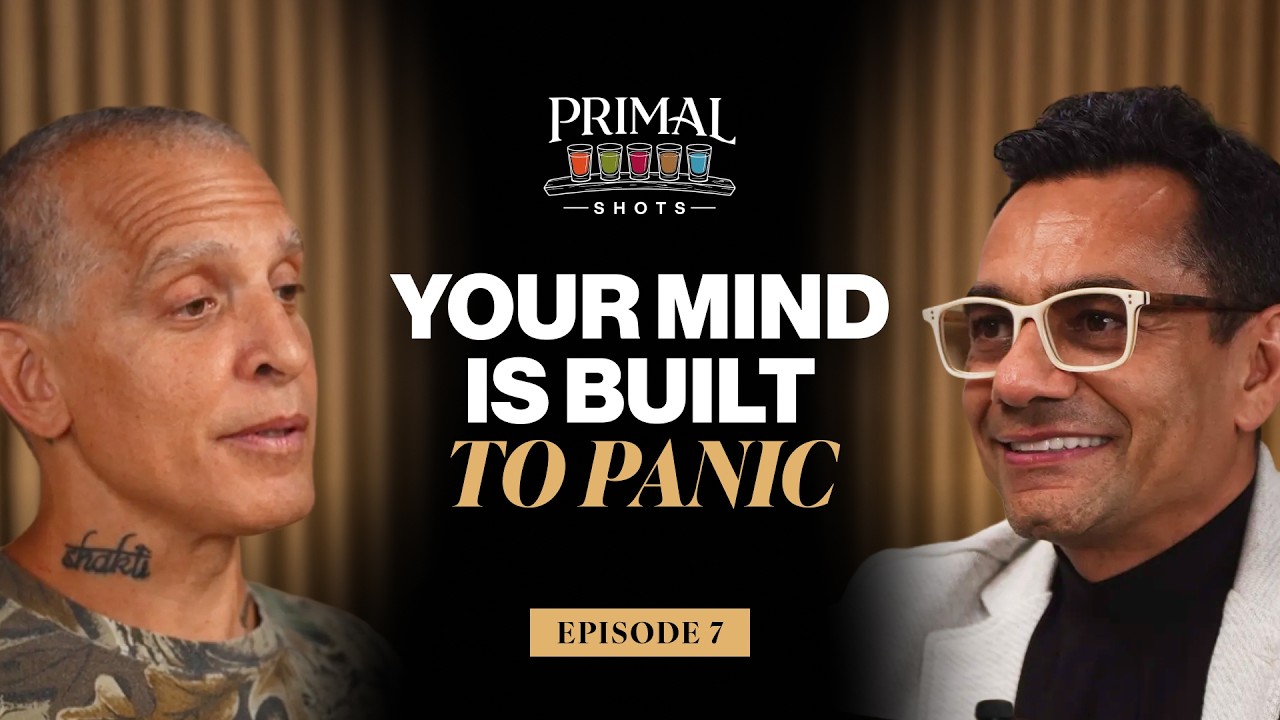
You can be surrounded by silence and still be distracted. You can jump from an airplane and feel completely absorbed in the moment. For Marcus Antebi, the difference is not the setting. It is where you direct your attention. In this Primal Shots conversation, Dr. Kavin Mistry and the founder of Juice Press and goodsugar move from Marcus's 2,300 skydives into presence, nervous-system responses, recovery, morning reflection and meditation. The episode challenges the idea that feeling present requires an extreme experience or a complicated ritual.
highlights
What You'll Learn
- Why Marcus says presence is something you direct yourself toward, not a state guaranteed by an activity.
- How he describes the relationship between skydiving, attention and distraction.
- What his morning prayers, meditation and gratitude practice have meant to him.
- How he distinguishes automatic fear responses from ongoing anxiety and reactivity.
- Why his simplest entry point to meditation is stopping, reflecting and noticing the breath.
I think you're present in life only if you direct yourself there.
— Marcus Antebi
Listen on:




Key Takeaways
Presence is an act of attention. Marcus contrasts a prison cell, a meditation retreat and skydiving to show why external circumstances alone do not determine whether someone is present.
1/3
A survival response is not a personal failure. In discussing anxiety and the startle reflex, Marcus emphasizes the body's automatic reactions rather than treating them as evidence that someone is doing wellness incorrectly.
2/3
Meditation does not have to begin with an elaborate technique. Near the end of the episode, Marcus suggests starting with the question, “Am I breathing?” and describes stopping to reflect as the beginning of meditation.
3/3
Guest Bio
Marcus Antebi
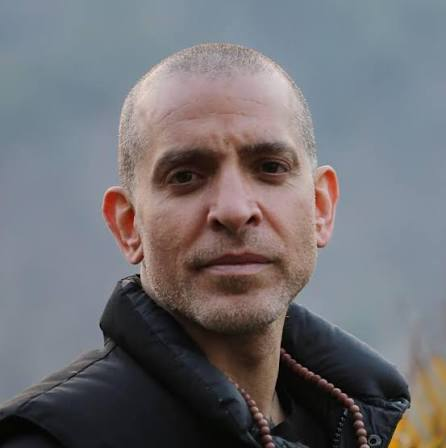
Marcus Antebi is an entrepreneur and wellness communicator who founded Juice Press and later goodsugar. His experience spans food entrepreneurship, skydiving, meditation and recovery.
Resources
SUBSCRIBE TO ALIGNED LIFE
Aligned Life Newsletter
Discover rituals, routines, and neuroscience-backed insights in Aligned Life, Dr. Kavin Mistry’s monthly newsletter, to help your brain and body thrive together.
You'll get an archive of all past newsletters!
More Episodes and Blogs


Share With a Friend
Transcript
Dr. Kavin Mistry & Marcus Antebi
00:00Welcome & Introduction: Skydiving, Presence & the Nervous System
Marcus Antebi:
The human mind is a machine designed over millions of years of evolution. It is designed to think all the time. The planet is spinning at 17,500mph. We drank too much coffee. We have bills to pay. It’s noisy as fuck out there. We want to be popular. We want to be rich. We want to be the most beautiful. That’s what is designed to compete to do.
It’s not a flaw. It’s a survival mechanism. There’s no hack. Just stop. Stop moving, stop doing anything. If you stop and reflect, you’ve just begun meditation. This is crazy stuff. Okay?
Dr. Kavin Mistry:
Welcome to Primal Shots. As we journey from the ground to the cosmos. And as the shots get healthier, the questions get deeper. And today, I’m so excited to have Marcus and Tibby. He is the founder of Juice Press and then later on Good Sugar. But beyond all that, he is such a an incredible voice in the wellness space, and I cannot wait to get into conversation with him and peel the layers of the onions back.
So Marcus, thank you for this. Welcome.
Marcus Antebi:
I hope.
Dr. Kavin Mistry:
That.
Marcus Antebi:
I live up to that intro. I really appreciate it. First of all, it’s amazing that you got that whole thing on one take. And second is, um, I just hope that I can live up to that standard.
Dr. Kavin Mistry:
Marcus, you have such an incredible background. And what stood out to me was the skydiving that you’ve done. I think you’ve done, what, more than 2000 dives. That’s right already. That’s right.
Marcus Antebi:
I’m retired from that. So it’s past.
Dr. Kavin Mistry:
Tense. But 2000 is an incredible number.
Marcus Antebi:
2300.
Dr. Kavin Mistry:
2300. More precise.
Marcus Antebi:
That was well, you know, just it’s a it’s a big it was a big time in my life. In fact, just yesterday I met a young person in the Good Sugar store, and she told me that, um, she asked me, like, a couple of years earlier, where can I go? Skydeck and I skydiving. And I said, go upstate New York to the ranch. And then we bumped into each other yesterday, and she has a couple of hundred skydivers now, so she really got into it.
So I was so happy to geek out on skydiving. You know, that was a part of my life. Somehow it makes sense to people like us who do that kind of stuff to do it. And then I feel like, you know, your consciousness just changes after a while, you know? So that’s it.
Dr. Kavin Mistry:
So, Marcus, I know when people do extreme sports, like I would say, skydiving is one of them right now. And and and when, when when you’re there, it makes you present. Right? It makes you in the moment. Did you feel that?
Marcus Antebi:
That’s not entirely.
Dr. Kavin Mistry:
True. Did you feel that that brought you more into the present?
Marcus Antebi:
No.
Dr. Kavin Mistry:
We’re sky. No.
Marcus Antebi:
I think you’re present in life only if you direct yourself there so you can be present, sitting quietly in a prison cell. You can be distracted in a vipassana, which we were talking about, you know, classic fasting and deprivation and stuff like that. So skydiving is the ultimate distraction from everything because you’re honing in on life and death matters.
You’re trying to slow down things that are moving hundreds of miles per hour. There are moments of presence, but it’s also distracting. Otherwise, why would we keep doing it? And also, I don’t think you can be really present in, um, the sympathetic nervous system I think it’s actually against the design of those systems.
I think specifically sympathetic nervous system doesn’t allow for presence, where it’s only in parasympathetic and in advanced practices of that, that we can actually enter into parasympathetic, which by default is present moment. So I’m not sure that that I had presents the answer to your question.
Well, you’re a neuro guy, right? I am. We can talk about this. I am.
Dr. Kavin Mistry:
Sorry, Guy. What you said about parasympathetic versus sympathetic and presence. So true. It’s so true.
Marcus Antebi:
Is it proven true?
Dr. Kavin Mistry:
It’s true in their sense that if your sympathetic tone is high, it is very difficult to experience the stillness, to experience the presence?
Marcus Antebi:
Freeze. I just learned I was misstating it. Fight, fight, fight, flight. I thought that freeze was part of the sympathetic nervous system. And then I researched it because I something didn’t feel right. And I saw that the best neuro says that, that the freeze mechanism is actually part of the parasympathetic nervous system.
So I started to think about it and I said this. There’s no real absolutes when we talk about parasympathetic, sympathetic, you know, perfect rested states and things like that. It’s really good for metaphor for explaining some concepts within there. The way I like to look at it is just say that. For me, for at least 30 years of my life, without knowing there was a name for it, the hypno state was something I was doing without even knowing that it was a thing, which is when I would wake up in the morning, I would go through my prayers and meditation gratitude list. My eyes weren’t open. There was no stimulation.
I was thinking of the dream the night before and saying, why did I need to see that? And then I would wake up and the world would start. For me, the way that I look at it is I’m either in that state which is a zero, which is I’m in complete parasympathetic or I’m I could be at level ten, which is sheer panic. Right? So I’m not really a sheer panic kind of guy. I would say, um, the first time I had a parachute malfunction and I had to cut it away and pull the reserve handle, which drops you back into freefall for a moment as your reserve has to come out and open.
Um, I would say I was probably at somewhere between a two and a three. That’s how relaxed I was.
Dr. Kavin Mistry:
Very.
Marcus Antebi:
Okay. Very interesting. In my marriage with my wife, when she says something that triggers me, like my mommy, I go to number eight. So. So think about that. Yeah. And so that’s an interesting dynamic. And I also believe that the mind was designed in nature not to do this work because it’s not necessarily best for survival of the fittest.
So I think that has to change as the environment changes and the circumstance changes. I think that we’re now becoming smaller. We’re not as ferocious. I think the human body could the male could technically design to not need testosterone or aggression as much. So I think these are all things that haven’t occurred yet.
So if we’re doing this kind of work, then we’re really pioneering it for our species through collective thought.
07:21Grounding Shot: Waking Up, Morning Rituals & Calming the Mind
Dr. Kavin Mistry:
You know, it brings us to our first shot. Marcus here. Thank you. Which is it.
Marcus Antebi:
Makes me hallucinate.
Dr. Kavin Mistry:
This is so. This is our grounding shot. Okay. How we begin our journey here. So I know you said let’s pick an a a another word, then. Cheers. And so we’ll go with Namaste. Namaste. Okay.
Marcus Antebi:
Here you.
Dr. Kavin Mistry:
Go.
Marcus Antebi:
That’s a very positive word. Yeah. What’s in it?
Dr. Kavin Mistry:
You’re going to tell me. Okay. You’re the expert. There we.
Marcus Antebi:
Go. It’s vegan.
Dr. Kavin Mistry:
Tell me.
Marcus Antebi:
Well, I mean, before I took a sip of it, I assumed it was carrot juice because it was milky and orange.
Dr. Kavin Mistry:
The color gives that away for you.
Marcus Antebi:
Well, you could produce that result with a nut milk, too, using spices. But I figured in my mind that it was carrot juice and I could taste it at the end. And then there’s, um, some unknown spices. I wouldn’t know what those spices were. I’m not like, I can’t get spices out of it.
Dr. Kavin Mistry:
So turmeric is is is a great grounding component. The anti-inflammatory aspect to start your day with, you know.
Marcus Antebi:
What do you mean by grounding.
Dr. Kavin Mistry:
And that is a definition I want to throw out to you. Oh, that. How do you you know, you’re you build great businesses. You’ve had all these experiences in terms of skydiving. I know you were in the martial arts. Little bit. What is. How do you with all that? What is when you start your day? How do you start your day?
These days?
Marcus Antebi:
Well, it changes throughout the ages, right? You know, now, at the stage of life, I’m in at 57. Very, very precisely. It probably begins with I wake up from the dream and I keep my eyes closed. And I’m looking for something. In those moments between the two consciousnesses. Because that’s where I get all my cheats.
I solve problems there. Or I remember a parking ticket I have to pay today, which I would have totally forgotten. So I need that space. Hmm. Okay. Um, I go to the bathroom. I wash my hands in my face, I drink some water, and I open my laptop, and I have about one hour to write. Hmm. And, uh, it’s it’s it’s just a lifestyle habit. It’s not. It’s never. It’s so deep. Like, I, I I’m doing it. I just do it. I’ve been doing it since I’m 15, and, um, it’s my way of just calming myself down, first of all. And I feel like every day we wake up, you have to, like, first check in at the office and say it’s only temporary. Death is imminent. Don’t take yourself too seriously. Be of service. Don’t get hit by a bus. You know, there’s like 60 things you have to say to yourself to begin the day. And like starting a new day without the hangups of yesterday, but at the same time not forgetting the mistakes of yesterday. So that’s a process, and I think that we can only interrupt it by adding too many things in the morning.
I think it’s a very important process for me to remind myself today that I don’t know anything. I know a little tiny bit. It has no value. If I don’t teach it. I should not be attached to the teachings. I should not be attached to students. I should not project myself in that way. And I should go home on time and be a good father and be a good husband. And that’s just the rules, right? Like, I have to think of that every morning when I wake up.
Sorry, that’s a long answer.
Dr. Kavin Mistry:
You know, one of the things you mentioned is that you start off your day and you’re right. And I believe that we’re we’re you know, I come from the neuro side. And when we wake up, we had that window where our brain is in that alpha state. Right. It’s in it’s in that in-between state where you’re not fully awake, but you can still access parts of your brain, which during the day you can’t.
So how do you. Do you think.
Marcus Antebi:
Super parasympathetic state. That’s you neuro guys don’t say that to you because they only know that they don’t know that much unless they’re meditators like Donald Hoffman, you know, or, uh, what’s his name? Uh, I’m sure he’s a meditator. It’ll come back to me. I’m sorry. He talks a lot about how we have no free will. He studied, uh, chimpanzees. Uh, Robert Sapolsky. Mhm. Okay, so we don’t know that much. Trust me, if you know how to open a brain, that’s, you know, that’s totally different than you’re dissecting. Something has nothing to do with how the mind thinks when you go into mind activity.
It’s theoretical. And a bunch of smart guys with degrees happened to agree. Or somebody like Joe Dispenza, you know, puts music in the background and he talks about the nature of reality. And it’s hypnotic because he says words like quantum. And, you know, he does organize a lot of stuff, right? He’s a hyper genius.
It might be too much. All that stuff. You know, I I’m not sure that it’s right. I think now in 2026, you and I have to really actually apply humility and say, okay, strip out all the garbage, all the nonsense and just teach people how to relax their nervous system.
Dr. Kavin Mistry:
Yes.
Marcus Antebi:
That’s it. How do we do that? I don’t know. Sorry.
Dr. Kavin Mistry:
No, you are totally. You’re totally on point. And, you know, one of the one of the aspects of that is that, you know, as we start the day in that kind of grounded state, as you said, you know, we leverage the alpha state. But then it also shows us that what are what are.
Marcus Antebi:
The important things that we need to focus on. Change the language that you used. You’re too smart. That’s your gift. Dumb down the language dumber than you actually think it could be. When you say leveraged and things like that. Remember, we’re all in a sympathetic state. Were terrified of death. The planet is spinning at 17,500mph. We drank too much coffee. We had bills to pay. It’s noisy as fuck out there.
Yes. You don’t have people in Shavasana where you’re doing yoga nidra with them, and you’re explaining to them how to relax their arms into the ground. You’re talking to the frightened beast.
14:21Focus Shot: Purpose, Reactivity & Daily Self-Check-Ins
Dr. Kavin Mistry:
So, Marcus, that brings us to our focus shot. Focus. Focus shot. Now, why are you calling these things that name?
Are you trying to hypnotize me? I am trying to. You could easily call this energy sleep. You could have called it something like good fortune or depression. Why did you call it focus? Because we’re going to find out what you’re focusing on. And it’s a weight, okay? It’s a way to segue. It’s a way to weave, way to segue into that zone. I don’t stay.
Marcus Antebi:
Not much. You know what? I’m sorry. I don’t know you well enough to understand. And now I said, oh, he’s using a brilliant tactic. Do you understand what I mean by tactic?
Dr. Kavin Mistry:
I do okay. I do it.
Marcus Antebi:
And and you know, here you’re cheating. In here I taste. Um, first of all, I taste alcohol. If I may mistake alcohol, and it’s not. I tasted, uh, strong root extracts. So I confuse that sometimes with the. Because most of those are made in distilled alcohol, which I’m not opposed to.
I’m just saying that’s what it tasted like. Uh, if there’s green juice in there, it’s extremely faint. And again, you’re loading me up on some, uh, spice on there that I can’t identify. My drink is starting to blow. Ginger. Ginger.
Dr. Kavin Mistry:
Is the secret spice in there? Yeah.
Marcus Antebi:
You have. By the way, I didn’t ask you with the turmeric. Did you have black pepper in there?
Dr. Kavin Mistry:
Very good question.
Marcus Antebi:
And, um.
Dr. Kavin Mistry:
Why did you ask that? I know the reason, but tell us.
Marcus Antebi:
Well, I mean, it’s it’s probably one of the few things that there’s some trail of medicine behind, which is that, uh, you absorb curcumin better with black pepper.
Dr. Kavin Mistry:
Absolutely.
Marcus Antebi:
Absolutely. So, I mean, is it a guaranteed. It’s all going into the stomach. So when it goes through that vehicle, it’s not a guarantee you it’s going to actually get into the bloodstream.
Dr. Kavin Mistry:
Thank you. So with the focus shot Marcus what with everything you’ve done so far. Where is Marcus right now.
Marcus Antebi:
I want to make $1 billion so that I can take it to the back of a cargo plane and dump it all over the place. Just throw it out the back window and camera, see how many hits I get on.
Dr. Kavin Mistry:
Uh, there you go. Social media. I, I think that would work. That would do.
Marcus Antebi:
It? No, I would never do that. It’s a waste of energy. But, um, you know, the real me is I have mouths to feed, so I definitely have to. I take work really seriously, and I create things that I like to do. And then the other side of me is, uh, I’m really grateful that I’m going on this journey and that I have cultivated my mind one day at a time, uh, with gratitude. Um, I’ve. I have to say all those things just to, you understand, um, I’m cultivating these things that I feel like they’re first of all, helping my reactivity. Right? Because we we skipped all this. We didn’t really talk about it. Let’s just say the ultimate purpose in any of this self-help work is for me to be able to observe the reactive mind, and for me to be able to delay my reactions in life. You ask me morning process. I check in with myself to make sure that I’m not a homicidal, narcissistic maniac.
So the first thing my body tells me is you’re not anyone’s guru. Do not promote that. What are my children thinking? What? How do I show attention and love to my wife? Are my fingernails clipped? Did I brush my teeth today? These are, like, really super baseline self-examination things that I think it’s really important to check in with every day. Because you never know when you might get in the hit or get hit in the head.
And those questions might become hard to remember. So it’s just a practice. What am I doing with my flesh? Do I need this? That’s what I look at and that’s my sanity check. Then you know what? I listen to other people’s bullshit on this stuff. I go through. Like later in the day. I listen to my lectures. You know, I went through a month of, like, just listening to Ram Dass, trying to figure out if he was just a drug addict taking LSD, or was he a genius?
And I said, you know what? The guy was a fucking genius. He was an absolute genius. He had a wonderful presentation. He promoted such beautiful, positive messages to me. He was just a great life and he told his story and I enjoy listening to him. You know, there’s like, let’s say, if I’m lucky, there’s 20 guys like that that I’ll investigate on social media.
You know, I’ll do a deep dive into you and I’ll say what a great message this person is teaching. Now forget about them. Let me go live my life.
Dr. Kavin Mistry:
I love the way you examine things, Marcus.
19:12Endurance Shot: Primal Fear, the Monkey Mind & Why the Mind Resists Change
Dr. Kavin Mistry:
And it brings us to our third shot. Marcus here. This is our.
Marcus Antebi:
We’re only taking a small sip. I’ll tell you. I told you before we tape this that if I go crazy with too much drastically different information, I’ll probably feel a little nauseous. And this is obviously beet juice, which is one of the most powerful communicators. Yes, yes. So Namaste. Which one is this called?
Dr. Kavin Mistry:
This is our endurance shot.
Marcus Antebi:
Endurance? Oh. Like if you. If you could drink this much, you got good endurance. There you go. You know, I don’t know if you’re doing it on purpose, but, uh, I accept the challenge. All right. Okay. So tell me that felt like, uh, a combination of drinking blood and horseradish. And, um, it’s entirely unnecessary in life, but it’s a contrast. It’s one of the conditions of the universe that there must be an opposite to the other thing. Do I have to taste it? No. I probably would never drink that if that was a beverage that you served me. Because it’s too much information for me. Yeah, but it’s a fun game, I accept. So, ingredients. What do you think? You know what? You’re doing some kind of voodoo on me. Because, you know, I am not like a connoisseur.
Like I the way my diet is, I’m just happy to be eating something with substance like broccoli can be completely bland. And so when things that we make at the restaurant have different ingredients, I need to be told or reminded. I mean, obviously I know ginger because I drink a ton of it and turmeric, you know, I’ll notice, uh, you know, vanilla, obviously, but you’re putting some stuff in there.
I don’t even know the name of that stuff.
Dr. Kavin Mistry:
Well, the color gave the in a way, in terms of the core ingredients, right? So certainly beet and there is pomegranate in there which gives. Oh there you go. The bloody deeper red. The there’s a touch of cayenne.
Marcus Antebi:
Pepper in there. That’s the extract. That’s the, the is it an extract. It’s not an extract okay. but that’s the opposite. That’s right. You are talking about vasodilator. Vasodilator, which is which is which is too much for me to handle, which is what we talk about in terms of endurance.
Dr. Kavin Mistry:
Right? When we talk about endurance and keeping us going and, you know, opening of our vessels from a cardiovascular point of view.
But the deeper question, Marcus, is. What’s the thread.
Marcus Antebi:
Behind everything that you’ve done here? We’re talking about juice press.
Dr. Kavin Mistry:
We’re talking about good sugar. What what what made you go down that path?
Marcus Antebi:
I’m not trying to be cute here, but I get the impression that, uh, you’re a very conscious person, and therefore your audience is probably conscious. And so I’ve. I’ve cursed. Right. Just to show you how I talk on the street. I’m not trying to pretend I’m anything different. Um, you know, so I’m not. I’m not being a wise guy if I try to answer that the way you’re asking it. Okay, so on a Macrocosm. The endurance is programed in my DNA. I’m a human with a brain and a spine and is programing it. And I woke up one day and I said, let’s fight. Come on. So I know that’s in there. Primal fear is probably the most powerful part of the design. What we experience in it, the chemistry of it, not the narrative we put on it, the narrative we put on it is unique, but the physical concept of fear, it’s the same thing and you can’t run from it.
You can’t hide from it. In fact, every dumb mistake humanity has ever made was made by men jacked with testosterone and adrenaline who said, don’t be afraid. And they ran into a firewall, right? So, um. And fear that primal fear is the thing that branches out into the remaining thing that we experience is anxiety. So you’re never going to get rid of the fear. And if you you get rid of you can get rid of anxiety sensations and reactivity, but your fright reflex never goes away. Dalai Lama if if he’s on an airplane and suddenly drops 20,000ft, I don’t think he’s going to go like this. You know, I think he’s going to feel the startle response because his nervous system works. So what we’re talking about in the health and wellness movement is having the endurance to stay on focus.
What are we teaching? What is the subject matter? It’s to regain control over the nervous system that you did not have when you were a child because your caretakers were dysregulated? Also, generationally. That’s all we’re trying to fix here. Wake up. Although everything else is just too much talk. It’s nonsense. It’s. Look how smart I am. Let’s get to the root of the problem. The root. The root of the problem is that you did not come with an instruction book on how to raise a complicated creature for the 7,000,000 minutes there awake in the first 20 years.
Life itself is startling and traumatizing. The anxiety system is on overload. We cannot make sense in that brain. That’s the teaching.
Dr. Kavin Mistry:
It is such a stark reality for a lot of people, right? When you actually, you know, one of the things we were talking about is, um, uh, the concept of vipassana and just silence and whatnot. And one interesting thing, and it just segues into what you just mentioned is, um, anybody who’s tried to meditate and I know, I know, you can speak a lot to that. One of the things thing that scares people when they sit down to meditate is they realize how much of a monkey mind they have. And and to overcome that hurdle of actually facing that monkey mind is is is the first hurdle.
Marcus Antebi:
Can we break down the monkey mind? Let me break it down with you. Okay. The human mind is a machine designed over millions of years of evolution. It is designed.
Dr. Kavin Mistry:
To think.
Marcus Antebi:
All the time. In the yoga traditions, I’m not a master of these things, so I might misquote them. Uh, there’s the varieties, the five different mind states. It shows in that example that the mind is thinking even when we’re sleeping.
Dr. Kavin Mistry:
Mhm.
Marcus Antebi:
Here comes along this hippie quiet observer in you that says, hey, I want to be more aware. I want to be more groovy. The mind does not like that. The observer wants to see, maybe try some new things, maybe let go of some neuroses, some anxieties. The mind does not like that because it’s a machine designed to think.
The example I use is. I don’t know if you’re familiar with this. The movie Space Odyssey 2001, a Stanley Kubrick film. Yes. Okay. The premise is that somewhere in the future that there’s a spaceship with some kind of artificial intelligence that encounters an object deep in space, and that object took over its consciousness.
And so now the the computer on the ship became a malevolent creature that killed everybody on the ship. So they sent a psychiatrist up into space to salvage the equipment and try to convince the a the brain to be good again. So it’s basically an analytical study. I don’t think the audience really gets what’s actually happening in this film is that that artificial intelligence that goes crazy just represents the mind desperately clinging and wanting to be the greatest, the most recognized.
We want to be popular. We want to be rich. We want to be the most beautiful. That’s what is designed to compete to do. It’s not a flaw. It’s a survival mechanism.
Dr. Kavin Mistry:
Yes.
Marcus Antebi:
It’s perfect. Praise it. We would not exist if those things thus were not in existence. The downside of this design is that it is not independent. It requires exterior humanoids to care for it in its development. It’s a fucking stupid system. It’s not like what crocodiles have. They come out of the egg and they go right for the goldfish.
You don’t have to tell them anything, right? Right. The experiment is trying to prove, in my view, that the free will creature with less instinct that’s tethered to past, that’s more reaction changed now is a better survival mechanism. So, in other words, you as a creature can change your entire existence with choices that you make today.
It’s a great design. It’s very adaptable. It’s phenomenal. It goes haywire because think of all the circumstances in life, right? Trauma. Anxiety. Child abuse, neglect. Exposure. Just life. Okay, so this is my understanding of this stuff. And the way I bookend it is just to say that it’s so unbelievable now to just be able to describe the problem so that when we start talking about the solution, the solution just really seems extremely easy.
29:05Tribal Shot: Tribe, Loneliness & Getting to the Root
Dr. Kavin Mistry:
So, Marcus, you know, we talked about the journey and we talked about you mentioned your wife, your kids and family and whatnot and what other things, you know, you’ve you’ve spoken about and is about recovery, right? It’s been recovery. And when people go through that, I think that it’s never a solo journey. There’s always, you know, we we we we we’re pulling people up. But there’s always a hand we’re looking for to pull us and guide us. And as we get into this next shot, Namaste. There must.
Marcus Antebi:
Well, people going to hate us.
Dr. Kavin Mistry:
Mm. I love that one.
Marcus Antebi:
All right, I’m going slowly.
Dr. Kavin Mistry:
So when you speak about the tribe, Marcus, is that who would you attribute that role to in terms of being there to help you through that journey? Because I know that it’s not a solo journey for you. Right?
Marcus Antebi:
It’s not a it can’t be a solo journey for two reasons. One, there’s a lot of people on the earth. You’re bound to crash for somebody. So that’s one problem. Two is that one of the features of our survival mechanisms is a container called character. Okay, you it is very difficult to build most of the fundamental characteristics unless you’re in relationship to another person. So in other words, if you were on an island all by yourself, generosity is irrelevant. So you would develop over the years as a self-serving person. Generosity might not be the thing unless something happened to interrupt that where you were sharing your portion of food with a rabbit.
Dr. Kavin Mistry:
Hmm.
Marcus Antebi:
The journey is limited on how much awareness we have, if we can’t dig deeper and deeper into the self. And when you get past the superficial layers of the identity and all the things that you’re doing and all the things that you want, and all the things that your senses are perceiving. When you get down to the next layer in there, it’s really very different.
It’s really very different. You know, the first thing is, if you can hold it, we want to live in communion naturally with all creatures, all life.
Dr. Kavin Mistry:
Yes.
Marcus Antebi:
And as you can see, let’s say, for example, with the Janus, um, they had a contract. They had a philosophical conundrum back in the, in those days where they’re like, okay, non harm. We got it. Ahimsa, baby. Let’s do it. But then they said, if I take a step I’ll crush something. Mhm. So they had to sit in a group and meditate on it for a few centuries.
Dalai Lama if a mosquito lands on him he’s going to hit it. He’s going to kill it and he’s going to tell you why. The human to survive has to kill the parasite. I sighed with that. I tried to be more tribal. The other reason why we need tribe and people is because if we didn’t have that, that means that each and every generation would have to come out and learn how to make a fire all over again, and then everything in between.
So the right tribe is a tribe that is in presence and has agency and is also enlightened as a collective group. Right. Of what they’re doing and how we would look at that is we would see the first thing is you and I would come in and say, is it non harm okay, done. And then watch, watch how they celebrate life. Look at how they look at the stars, the campfires, the way that they grow food, the way that they praise everything.
The way that, you know, 25 mothers help all the newborn children. You know, make sure their needs are met. You know, we don’t what do we have in our modern cultures that, that, that imitate that, that design us to feel relaxed on the planet? Right. What do we have?
Dr. Kavin Mistry:
Not too many. Not too many outlets.
Marcus Antebi:
I don’t want to say. I don’t want to leave that on a negative note. It’s a question that’s open ended. It’s not a negative question. It’s a question saying to the individual to reflect on the life that you’re creating. What do you have around you as people that you can support? Because if you don’t support people and you just take, then you’re a you’re a leech.
Nobody wants you around. Right. So the idea is that is a social training. You learn like, oh, you know what? I really want the tribe to give me stuff. I gotta give them lots of stuff. Right? So you learn that. What happens when we don’t have that? We become self-centered because we’re in anxiety states. And self-centered is a really great survival mechanism because you’re just spending all your time worrying about stuff, thinking that that’s the way to get out of the anxiety.
Dr. Kavin Mistry:
So, Marcus, I grew up in Africa. My childhood was in Africa, and, um, my dad was with the United Nations, and I spent with his work involved working in the rural areas where the African tribes were. And one of the tribes there is the Hadza tribe, who I spent time with, and they took me in as one of their own. And I used to play with the children and be with the tribe.
And one of the things I came away from that.
Marcus Antebi:
Very light and Guy.
Dr. Kavin Mistry:
Marcus was that and this is, this is something that I, I see, you know, from. I’m, I’m, I’m coming from the neuroscience medical side. But then the child in me grew up in Africa with the tribes.
Marcus Antebi:
Well, you’re, you’re you’re a walking, uh, repeat story of Mohandas Gandhi. Except he went into law.
Dr. Kavin Mistry:
He did not.
Marcus Antebi:
Not for long. Not for long. And. Well, you see, the I, I don’t I don’t mean that even a little bit facetiously. I actually mean that literally that I’m when I’m thinking about your path that you’re on, I see the, I see first of all, the parallel. And I also see the collision they create with each other.
Dr. Kavin Mistry:
And it’s been a great collision because I get to see what I, what I, what I see is that when, when I was with the tribes, there was a ecosystem, right? It wasn’t about the hunter thinking I am the best the, the, the guys who hunted the food. They didn’t think that, oh, I, you know, I’m the I’m the best in the tribe or the people who were gathering the tubers and the berries.
They didn’t think that it was about an ecosystem. It was about everybody had their role. Everybody had an equal role in that tribe. And we all collaborated, and everybody did what they needed to do for the greater good of the tribe. Right? So it was the tribe that that what we were fighting.
Marcus Antebi:
Did it have the tribe have abundance or was it, did it feel like there was in deprivation or poverty?
Dr. Kavin Mistry:
I don’t think they looked at it that way. I think they looked at it as that. Today is a great day. Let and let’s let’s just celebrate. Right. And we’re not we’re not trying to achieve something. We’re not trying to get anywhere. We’re just trying to appreciate what is in front of us. And look, I’m a hunter. I’m going to hunt what I need to hunt and feed the tribe. And it wasn’t about my survival alone.
It wasn’t about me. It was about us. It was about the tribe. And there was an ecosystem. And what I. What I felt was when I growing up as a child, I mean, I was young and I couldn’t absorb the depth of what was going on. But now I look at that, one of the things that I see is that people are lonely. In this day and age, and they’re lonely because we don’t have an assigned role.
Marcus Antebi:
I don’t know about that. They’ve been lonely for since all of time. Have you looked at the history of humanity? It’s coming from the fact that there is an inner loneliness, that the child is not getting the rich experience it needs from its caretakers. That is the. That is what that’s that is the reverb. That’s the. Let me let me let me hold on a second because we’re going deep. I wasn’t aware that we were going this deep. Sorry. Thank you. This is crazy stuff. Okay. What you said is accurate. It’s as accurate as me saying that. There’s a hand right here. But in truth, there’s cells, there’s tissues, there’s atoms, there’s molecules. Keep going down to the Planck scale. Okay. Big deal. The same thing in the mind. You described a layer of what’s happening, but let’s just keep going back, because if we’re looking at the surface of the problem, we only have surface remedy.
We never get to the root of the problem. The root of the problem is, were you hugged enough as a child? Did your parents play with you? Did they pay attention to you? Did you get that? If you did, by the time you’re older, you. You don’t feel the lack of that. We all have to be very willing to look at what happened to us in our childhood.
In easy psychological terms, you don’t have to do a 55 year deep dive. It’s just little tiny things. For some people, the first question is, was there a really big trauma? Right. Like, because that a lot of people are going to say no. They’re like, what do you mean? I had a great childhood. Did you have a great childhood?
Dr. Kavin Mistry:
Awesome child.
Marcus Antebi:
See what I’m saying. Now, if we talked in depth for hours, I could point out hundreds of areas of your life that you were sitting angry and confused, dumping adrenaline into your your bloodstream, and you had to work it out for yourself.
Dr. Kavin Mistry:
As we end this, we’re going to unpack that a little bit.
39:26Cosmic Shot: Bitter Melon, Pain & Legacy
Dr. Kavin Mistry:
And that brings us to our last shot here.
Marcus Antebi:
And this is this is our.
Dr. Kavin Mistry:
This is our cosmic shot. This is the healthiest shot.
Marcus Antebi:
It’s a poison.
Dr. Kavin Mistry:
Ivy is a all poison ivy. Namaste.
Marcus Antebi:
It looks like red wine a little bit. That’s a tricky one. You know what? It’s it’s it’s there. I just it’s such. It’s so unusual. It’s not sparkling. I feel like I’m drinking. Literally. I feel like I’m drinking. Grinded, juiced. Tree branches and bark like there’s. It’s so strong with, like, it could be like sarsaparilla and, you know, all these different really bitter herbs and roots.
I don’t I don’t really know what that is. Bitter is the word.
Dr. Kavin Mistry:
And it’s bitter melon and that’s that. That’s where it’s coming from.
Marcus Antebi:
You know, I never had bitter melon.
Dr. Kavin Mistry:
You never had bitter melon. I don’t even well, I don’t even know why. My eastern background, it’s a big.
Marcus Antebi:
Yeah, I’m gonna steal that. It’s stealing that.
Dr. Kavin Mistry:
It’s a big ingredient. Um, a lot to do with the metabolic health. You know, bitter melon helps with the glucose control and everything like that. The only challenge is it’s very bitter. And so you have to break it and pair it with, uh, with something that, uh, that, uh, you know, can make it more palatable and usually something like a green apple.
Marcus Antebi:
Uh, will why not will do it, but it takes away some of the. Yeah, but but it takes. Yes. So it’s like people who drink scotch. There’s something about it because it’s disgusting. Right.
Dr. Kavin Mistry:
So, Marcus, the bitterness is symbolizes the bitter truth in life. We have a finite life,
Marcus Antebi:
but we want to make an infinite impact. And leading with that, knowing that we are mortal, which is the bitter truth.
Dr. Kavin Mistry:
As you look back at your life and the journey through many different things here, you look back and say, What is Marcus about? What what what what, what is, what is. What does Marcus want to leave here?
Marcus Antebi:
Well, first of all, thank you for having me on this podcast. I’m nobody important. And the fact that I get to sit with this microphone and the lights makes me feel really special, and I appreciate it. And I hope that I did a good job. Um, you know, everything that you’ve said, If we were, if I would like everything in that statement that you just made.
It is something that I communicate very differently to myself, which is what I recognize is every time you have a good question, the first answer is there’s only the present moment. Mhm. Which means that question was stupid in the first place. Now we still have to live and we’re still talking. We’re still teaching. Those who speak do not know.
Really what it means is in my view, laugh at the question and also laugh at the answer. So I have to break it down into the simplest things. Pain sucks. It hurts, feels really bad. It’s the design I don’t I if I was being ripped apart by horses right now, I wouldn’t be like, wow, this is great. More pressure please. Okay. It’s also very, very uncomfortable for helpless creatures like our children and most creatures that humans come in contact with. So pain sucks.
So it seems like with an intelligent brain and evolution were designed to move away from pain. It’s a great starting point in all philosophy. If there’s somebody with a problem with that. I probably would not even debate them. I’d say, okay, you figure it out, we’ll meet. We’ll intersect at some point.
Right. So, you know, once you establish that pain sucks, we can say is the point of all this is to avoid pain and not die. Don’t get over attached. It’s like walking a tightrope. Because how do you not get over attached? How do you not become a hypochondriac who’s like, analyzing every ingredient? No judgment.
I’m not trying to shame. I’m just making a statement that you can get so caught up in protecting yourself that you’re in displeasure at life. Hmm. Because it’s so it’s it’s terrifying. Everywhere you go, you can get hurt. You can get sick. You can die. There’s tragedy, there’s murder. It creates, like, another sympathetic nervous system problem, right?
So you got to let go and you got to reset every day. You got to take it into perspective. At the end of the day, I made it through another day. There may not be another. Did I do okay today? Right. Start with that. And if the answer is no, let’s say you’re just a shitty person and you’re doing really shitty stuff. If you’re doing that action, you’re on your way. The journey is beginning, right? You’re saying, okay, did I do really shitty stuff today? I did, didn’t I? Okay, I better write it down and I’ll talk to a therapist.
I’ll make an amends. Uh, you know, I’ll give chair. I don’t know, but you’re working on that stuff. That’s the whole that is it. Just do that. And then life is happening around you, and you got hands so that you can manipulate some stuff for a moment. It’s so unbelievably temporary. Because when you see me and I’m 99 and I’m on my deathbed and I’m frail and weak, I’m going to be looking at you and I’m going to be jealous of you. I’m gonna say he’s a young kid. He’s 93, right? And I’m going to see everything in your face that I remember, and I’m going to see your white hair, and you’ll probably appreciate me differently.
And you’ll be holding my hand. Mhm. Those types of relationships are the relationships that we work every day to create with new people. Where if, when you see me at the end of the road, you’re grateful to see me. If you. I feel like if you truly try to live that as best as you can, you’ll probably be doing a good job in most of your life.
45:50Closing: One Change for Tomorrow & Final Thoughts
Dr. Kavin Mistry:
I think for me, anyway, if somebody wanted to implement something tomorrow, let’s say one Change that really made a difference in your life. And you could, you could, you could give somebody a jumpstart and you could say like, you know what? This is one thing. What would you say tomorrow? I need to do this.
Marcus Antebi:
What I do for myself works for me today. It might not tomorrow. And the best technology in all my thinking is always what I learned the day before. It’s never from ten years ago. If I could say. The best thing I learned was ten years ago. I’m not doing anything right. So on the way over here, I was thinking about this writing that I had completed that I’d been working on for a very long time in my life, and I’m getting ready to send it off to a publisher.
And I was thinking I didn’t start the book off with an emergency. Right now you want to meditate. You’ve never meditated in your life and you need it. I started off the book with bullshit like here’s who I am and blah blah blah blah. And I said the guy jumped off a bridge already by the time we got to the beef, right?
And so your question is very direct. The, the, the you must first surrender to the idea that in our emotional realm, there is an equal and opposite feeling for every feeling. If we can feel the absolute pit of despair and kill ourselves, suicide, depression, mental illness, there must be something on the other spectrum.
And for the purpose of language, we’re just going to call that space enlightenment. We’re not going to mystify it. It’s going to be really simple to break it down and say, here’s the condition. It’s different for everybody. Your enlightenment is always improving with expansion of consciousness, with age.
Okay. The concept of it is that you just need to stop what you’re doing. When you feel overwhelmed. Stop. Just stop. Stop moving. Stop doing anything. Sit on a chair. Lay on your back in Shavasana. Do a headstand. That’s too much work. Just stop what you’re doing and start with the question. Am I breathing? Not how to breathe. Am I breathing? We hold our breath when we’re anxious. We do it all the time. It shifts consciousness. You know it. You’re in the neuro business. What happens to the brain instantaneously? Where does it go from? To? Where does it go when the heart rate increases? What happens? Where does it go?
Dr. Kavin Mistry:
The brain goes where your attention is.
Marcus Antebi:
But doesn’t it go from the prefrontal cortex to the amygdala almost automatically.
Dr. Kavin Mistry:
When it’s worried and stress?
Marcus Antebi:
Yes. Okay, that’s what I’m saying. There’s a lot of really good hypothesis of what’s going on in those brains. Plus, I don’t need any of that, I live it. I could tell you what’s in that brain. I’ve lived it my whole life. And I could tell you what’s in the other brain now, because I’ve touched it and I touch it all the time.
So if you stop and you slow it down, and you take some deep breaths and you believe that that brain is available to you, then you have to practice. There’s no hack. You don’t get a hack that you’re not going to get a guy with muscles with six pack telling you you’re.
Dr. Kavin Mistry:
Going to meditate in 24 minutes, three days, two minutes, drink.
Marcus Antebi:
This does not work like that. Meditation and expansion of consciousness is time in. And what is your karma? What’s going on in your life? Right?
Dr. Kavin Mistry:
Absolutely.
Marcus Antebi:
So the practice is to slow down and ask yourself those questions all throughout the day. And if and if, if, if you have that you’re in the game. If you can’t do that, you need some kind of intervention or join a cult or something. You know, like if you can’t self-help, that’s a reality too, right? There’s people that can’t help self-help. They need Intervention of some kind. What we’re talking about is only to do with self-help. You must have the capacity to self change.
Dr. Kavin Mistry:
Yes.
Marcus Antebi:
Yes, that’s that’s the rules of what we’re talking about. I’m not saying this applies to all of humanity, right? It just does not. And it also applies to us at specific ages. A 15 year old does not have agency the way a 50 year old can. It’s impossible, in the exception of children who are not damaged and who actually just happen to be enlightened and intelligent.
Dr. Kavin Mistry:
Totally agreed. Totally agreed. And Marcus, thank you. But what you said, I think, is such a pivotal point for people to create that gap. So you can you can be present.
Marcus Antebi:
It’s also meditation.
Dr. Kavin Mistry:
Yes.
Marcus Antebi:
It’s not a long meditation. You’re not getting the medal. It’s not like you, you know, sat in Lotus for seven hours and all the priests and monks are looking at you going, wow, he must be the teacher. No. If you stop and reflect. You’ve just begun meditation in my mind. If you add the breath, you’re doing it well.
If you stay in it for a few minutes. Wow. You’re like a black belt, right? And it just gets better and better with time.
Dr. Kavin Mistry:
Marcus and I know that we can go much deeper into this, and I look forward to future conversations where we can take people at your service, even even deeper into this. But thank you, Marcus. Thank you so much for your time and your presence. And I know people listening to this will gain a lot out of it. And and we’ll be we’ll be enlightened to some capacity and in their own way.
Marcus Antebi:
I just hope people like me.
Dr. Kavin Mistry:
But thank you, Marcus.
Marcus Antebi:
Thank you.