Staying Human Is Now a Competitive Advantage
Key Takeaways
- The signs & symptoms of burnout in the AI age are often subtle: mental fatigue, distraction, emotional flatness, and loss of meaning.
- Many high performers feeling burnt out are also experiencing AI anxiety and fear of becoming replaceable.
- Burnout symptoms today are less about workload and more about cognitive overload and misalignment.
- Staying present, focused, connected, and purpose-driven is now a strategic advantage.
- You are not broken. You are likely misaligned, and don’t worry, that can be corrected.
Why So Many High Performers Feel Off, But Can’t Explain It
The age of AI is rising, and so are the signs & symptoms of feeling burned out.
Not the kind where you can’t get out of bed.
Not the kind where everything falls apart.
Not the kind everyone can see.
Something more subtle.
You’re still functioning.
You’re still performing.
You’re still showing up.
But your focus isn’t what it used to be.
You sit down to work and within minutes you’re switching tabs.
You finish the day exhausted, but not satisfied.
You scroll at night even though you know you should disconnect.
If you’ve been catching yourself quietly asking “Am I burnt out?” — this is probably why.
This isn’t weakness.
It’s what happens when your nervous system lives in constant acceleration.
And no one is talking about it clearly.
So, let’s talk.
What Are the Five Symptoms of Burnout in the Age of AI?
1. Mental Fatigue That Sleep Doesn’t Fix
You wake up tired. Not physically wrecked, just mentally dull. Coffee helps for an hour. Then the fog returns. – read my blog on caffeine’s healthy alternative, Mushroom Coffee
2. Fragmented Focus
You can’t stay with one task. You’re toggling between windows, checking messages, scanning instead of thinking deeply.
3. Emotional Flatness
Wins don’t feel like wins. You’re less reactive, but also less energized.
4. Irritability or Low-Grade Anxiety
You feel slightly on edge. Small things bother you more than they used to. Often this overlaps with AI anxiety or fear of AI replacing jobs.
5. Loss of Meaning
This is the deepest one. You start questioning why you’re doing what you’re doing. You may still be productive, but internally, you feel disconnected.
Burnout rarely starts with collapse.
It starts with drift.
And drift is harder to notice, especially when you’re still succeeding.
Even AI Users Are Showing Burnout Symptoms

Recently, TechCrunch published an article titled:
“The first signs of burnout are coming from the people who embrace AI the most”
What makes this observation so important is who is experiencing this first.
It’s the optimizers. The early adopters. The ambitious professionals who move quickly, adapt quicker, and embrace AI tools with enthusiasm. These are individuals who value growth, efficiency, and staying ahead of the curve. They invest in learning. They experiment. They refine their systems.
And yet, many of them are describing a similar internal experience: shorter attention spans, rising mental fatigue, and a subtle loss of depth.
That tells us something meaningful.
When capable, forward-thinking professionals begin to feel scattered, the conversation shifts. This becomes less about effort and more about cognitive load. The modern environment carries tremendous informational weight, and even high performers absorb that weight over time.
Acceleration feels energizing at first, but over time, it asks more from the human system beneath it.
That’s where AI fatigue comes in.
No one says it directly, but your nervous system absorbs it.
What I’ve Seen After 25 Years Studying the Brain
Let me step out of theory and speak from experience.
I’ve spent over 25 years as a board-certified neuroradiologist, studying the brain through imaging. I’ve seen how stress and overload affect cognitive function long before visible damage appears.
And in recent years, something has changed.
Not just in pathology. In attention.
High-performing professionals increasingly tell me:
“I don’t feel as sharp.”
“I struggle to focus deeply.”
“I feel constantly distracted.”
These are intelligent, capable individuals. But they’re operating in an environment that constantly pulls their attention outward: notifications, comparison, productivity pressure, now AI acceleration layered on top.
In medicine, we know that function declines before structure does. First, performance slips. Then deeper changes follow.
The same pattern applies psychologically.
First, attention fragments.
Then depth erodes.
Then confidence declines.
Layer AI acceleration into that environment, and relevance anxiety sets in.
The issue isn’t that AI is inherently harmful, it’s that we are strengthening our tools faster than we are strengthening ourselves.
And that gap is where modern burnout lives.
Why I Created PrimAI

I created the PrimAI framework because I care deeply about where this is heading: for you, for your family, and for the next generation growing up inside this acceleration.
In my clinical work, I began noticing something that unsettled me. Not just fatigue. Not just distraction. But a quiet erosion of depth. Capable and intelligent people were optimizing everything, from workflows, communication, to efficiency, and yet slowly losing their internal stability. They were achieving more while feeling less anchored.
And I kept asking myself a larger question:
If technology keeps accelerating, what happens to us?
What happens to our ability to sit with complexity without outsourcing it?
What happens to our attention span?
What happens to our judgment? The kind that only comes from lived experience and deep focus?
In a recent reflection, I wrote about what truly makes someone stand out in the age of AI. It isn’t speed or automation. It’s the ability to remain deeply human. To cultivate mastery, build trust, and operate from alignment instead of anxiety. What started as a physician’s concern about society’s trajectory became a responsibility I felt compelled to act on.
This is why I host live events and workshops, to create space for real conversations about focus, presence, leadership, and human development in the AI era. I share practical, life-shaping conversations that determine how we lead, parent, build, and live.
On March 5th, I’ll be speaking on this directly in a session titled The Human Edge in the Age of AI. This will be a deeper exploration of how we strengthen the capacities machines cannot replicate.
| You can find all past and upcoming events on my Events Page
I look at where society is heading through several lenses at once.
- As a neuroradiologist, I study how the brain adapts under sustained stimulation and pressure.
- As a longevity expert, I think in decades and trajectories.
- As a father of two, I observe children growing up in a world filled with constant input and constant connection.
Across those perspectives, a pattern becomes visible.
Professionals measure themselves against rapidly advancing systems. Leaders optimize performance at extraordinary levels. Expectations expand alongside technological capability. The pace continues to increase, and the human system works hard to keep rhythm with it.
As our tools become more powerful, the pressure on us quietly increases. The speed rises. The expectations rise. The volume of information rises. And if we don’t intentionally strengthen our focus, clarity, and judgment alongside that growth, we begin to feel scattered and drained.
When technology accelerates faster than our ability to think deeply and stay grounded, burnout becomes more likely. But when we develop our attention, our emotional steadiness, and our sense of purpose at the same pace as innovation, we stay sharp. We stay stable. We stay in control.
From a medical and leadership perspective, this pattern makes sense. The brain responds to overload predictably. And once we understand that pattern, we can train differently. We can structure our days differently. We can strengthen the capacities that keep us clear instead of overwhelmed.
When I introduced PrimAI publicly, I said something that continues to guide this work: the real question isn’t how intelligent machines become. It’s how we remain human in the process.
Learn more here
PrimAI is my answer to that question.
How Do You Treat Burnout?
Most people think burnout is solved with time off.
Rest helps, but it doesn’t fix misalignment.
If your attention remains fragmented and your effort lacks direction, burnout symptoms return.
Treating burnout in the AI age means rebuilding what modern life erodes.
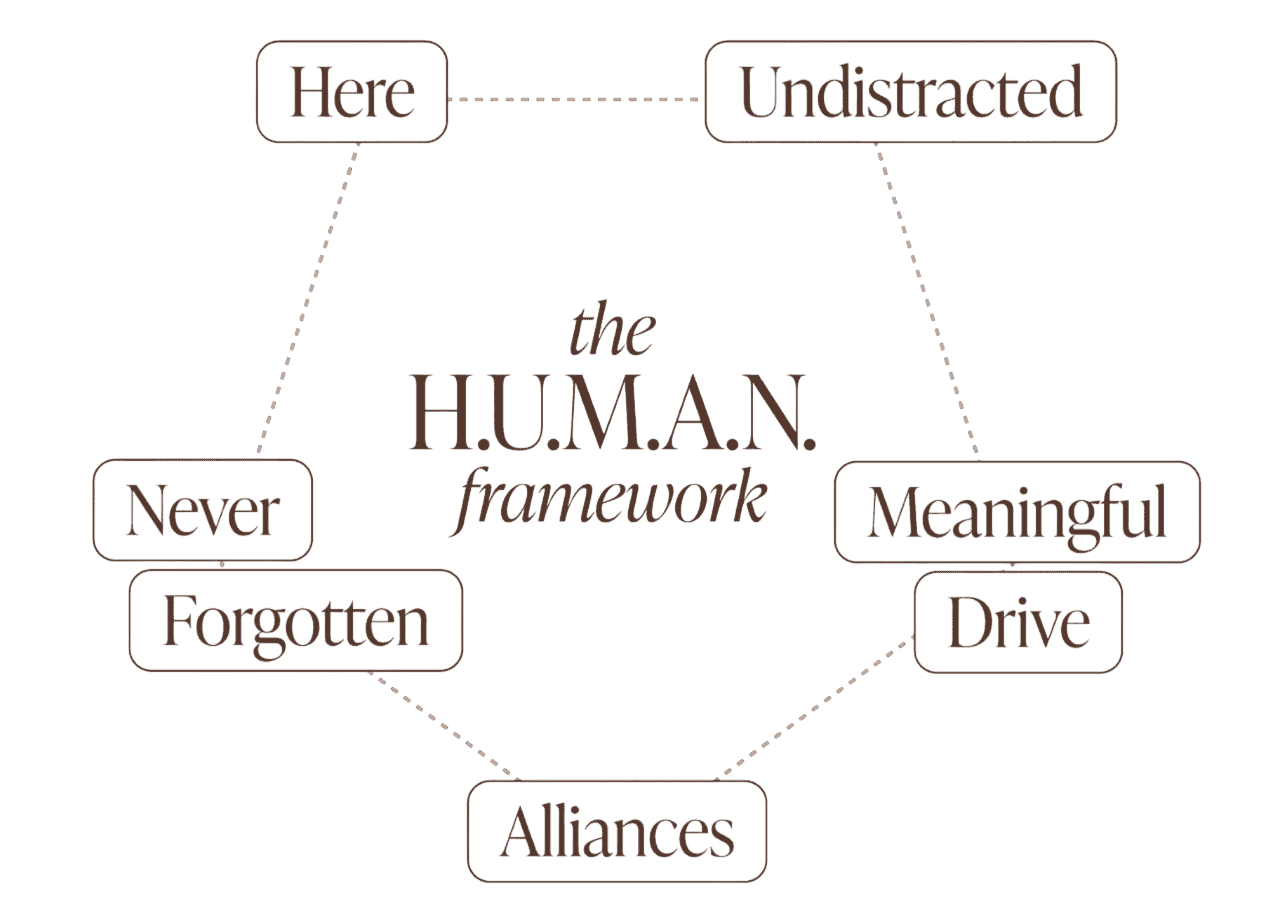
That’s where the HUMAN framework comes in.
-
H — Here
Presence stabilizes your nervous system. It’s about being physically, mentally, and emotionally engaged. Without it, clarity, trust, and leadership disappear.
-
U — Undistracted
Deep focus rebuilds confidence. Protect your attention. Distractions make humans too reliant on machines. Focus turns noise into insight.
-
M — Meaningful Drive
Aligned effort restores energy. Let meaning fuel you. Purpose creates energy that pressure never can. Follow what drives you to get out of bed in the morning.
-
A — Alliances
Connection regulates stress. Build meaningful connections. Humans weren’t made to work alone. Giving and earning trust gives teamwork meaning and greater results.
-
N — Never Forgotten
Purpose reduces anxiety. Live for what you’ll leave behind. Legacy thinking sharpens ethics, courage, and leadership. Let AI optimize the present, while you build for the future.
If You’re Feeling Burnt Out Right Now
Pause for a moment.
If this felt uncomfortably accurate: if you recognized yourself in the distraction, the fatigue, the quiet relevance anxiety, then that awareness matters. It’s the same realization that led me to build PrimAI and the HUMAN framework. Trust your gut. It often knows before your mind catches up.
- You are not lazy.
- You are not weak.
- You are not falling behind.
- You are living in a time that constantly accelerates attention, compresses timelines, and quietly raises expectations.
Most people sense that something is off, but they don’t know how to articulate it. They assume they need more discipline, a better productivity system, or another optimization tool. Burnout in the AI age is rarely a motivation problem. It is usually an alignment problem. It’s what happens when your environment evolves faster than your internal structure does.
The first step forward is not doing more. It’s acknowledging what’s happening.
Recognizing the signs & symptoms of burnout without judgment. Understanding that AI anxiety, distraction, and low-grade fatigue are signals, not personal failures. That shift alone begins to restore clarity.
From there, you need structure.
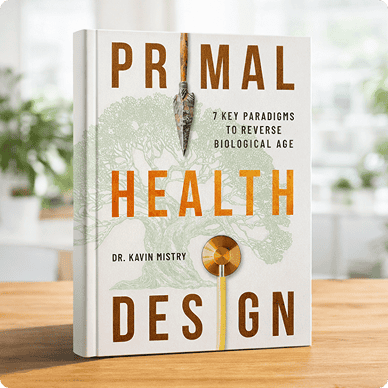
In my book Primal Health Design, I lay out a complete framework for rebuilding focus, resilience, and meaning, not through hacks or shortcuts, but by reconnecting to how you are designed to operate. The book gives you the philosophy and the blueprint. It helps you understand what’s happening and why.
The Primal Reset Course ecosystem takes it further. It translates those principles into daily practice. Into habits and rituals that rebuild attention, strengthen presence, and anchor your direction.
The book creates understanding. The course creates embodiment.
You don’t need to compete with AI. You need to deepen yourself. That begins with awareness. Then structure. Then deliberate action.
Start with the book.
Then reinforce it with the course.
- The world will continue to accelerate.
- Let’s remember to stay human.
The neuroradiologist designing human durability
FAQ: Signs & Symptoms of Burnout in the Age of AI
Q. What are the signs & symptoms of burnout?
A: Common signs include mental fatigue, distraction, irritability, emotional flatness, and feeling burnt out at work despite ongoing productivity. Acknowledging the feeling of burning out is the first step.
Q: How do I know if I’m burnt out?
A: If rest doesn’t restore your energy and your focus feels fragmented, you may be experiencing burnout.
Q: Can fear of AI cause burnout?
A: Yes. AI anxiety and fear of AI replacing jobs can contribute to burnout symptoms.
Q: Is burnout reversible?
A: Yes. Restoring focus, boundaries, meaning, and connection can significantly reduce burnout symptoms.